The Philippines: Life After Typhoon Haiyan
In November 2013, I arrived in the central Philippines after completing an assignment for the World Food Programme (WFP). Typhoon Haiyan - known locally as “Yolanda” - had struck the Visayas on 8 November as one of the most powerful storms ever recorded to make landfall. Its winds and storm surge tore through Leyte, Samar, Tacloban, Palo, and nearby coastal communities, leaving thousands dead, many more missing or injured, and millions affected across the Philippines.
I stayed for another two months after the assignment ended, continuing to photograph for myself. What remained in front of me was not only destruction, but the long, exhausted life that followed it. In Tacloban, ships had been lifted from the sea and thrown onto land. Families cooked by candlelight beneath the shadows of wrecked vessels. At the airport, mothers nursed children while waiting for evacuation, surrounded by bags, silence, and the uncertainty of whether they would be able to leave.
In Palo, churches, homes, schools, convents, and entire neighborhoods had been torn open. Catholic sisters walked through damaged streets, offering prayer and presence to communities still trying to stand again. In broken church grounds, people lit candles before saints and prayed among roofs ripped away by the storm. Faith was not separate from survival; it moved through the ruins with the people who remained.
Relief was slow, crowded, and uncertain. Survivors queued for hours beside trucks carrying food aid, often with no guarantee that supplies would last until they reached the front. WFP’s emergency operation was designed to assist millions of people affected by Haiyan, including large-scale food assistance in the months after the storm. Yet on the ground, every bag of rice, every bottle of water, and every temporary shelter became part of a daily struggle to keep living.
The dead were everywhere in the early weeks. In some areas, bodies were recovered day after day and brought to temporary burial sites. Authorities and aid workers struggled to manage the scale of death; mass graves were prepared as morgues, roads, and local systems were overwhelmed. In one field, body bags lay under an open sky, marked by words meant for relief supplies: “Not for sale. Used for dead bodies only.” The storm had pushed even the rituals of death beyond what communities could hold.
But the photographs are not only about loss. Boys played basketball with a makeshift hoop in a neighborhood of stripped palms and ruined homes. A man washed clothes in front of a damaged church. Families rebuilt small routines inside landscapes that still looked impossible. In those moments, survival was not heroic in a simple way. It was quiet, repetitive, and deeply human - cooking, washing, praying, waiting, burying, playing, and beginning again.
Haiyan changed the land, but it also revealed something about the people who endured it. In the ruins of Leyte, life did not return all at once. It returned in fragments - a candle, a meal, a queue for food, a child at play, a prayer spoken under a broken roof. These images were made in that fragile space, where catastrophe had already passed, but survival was still unfolding every day.
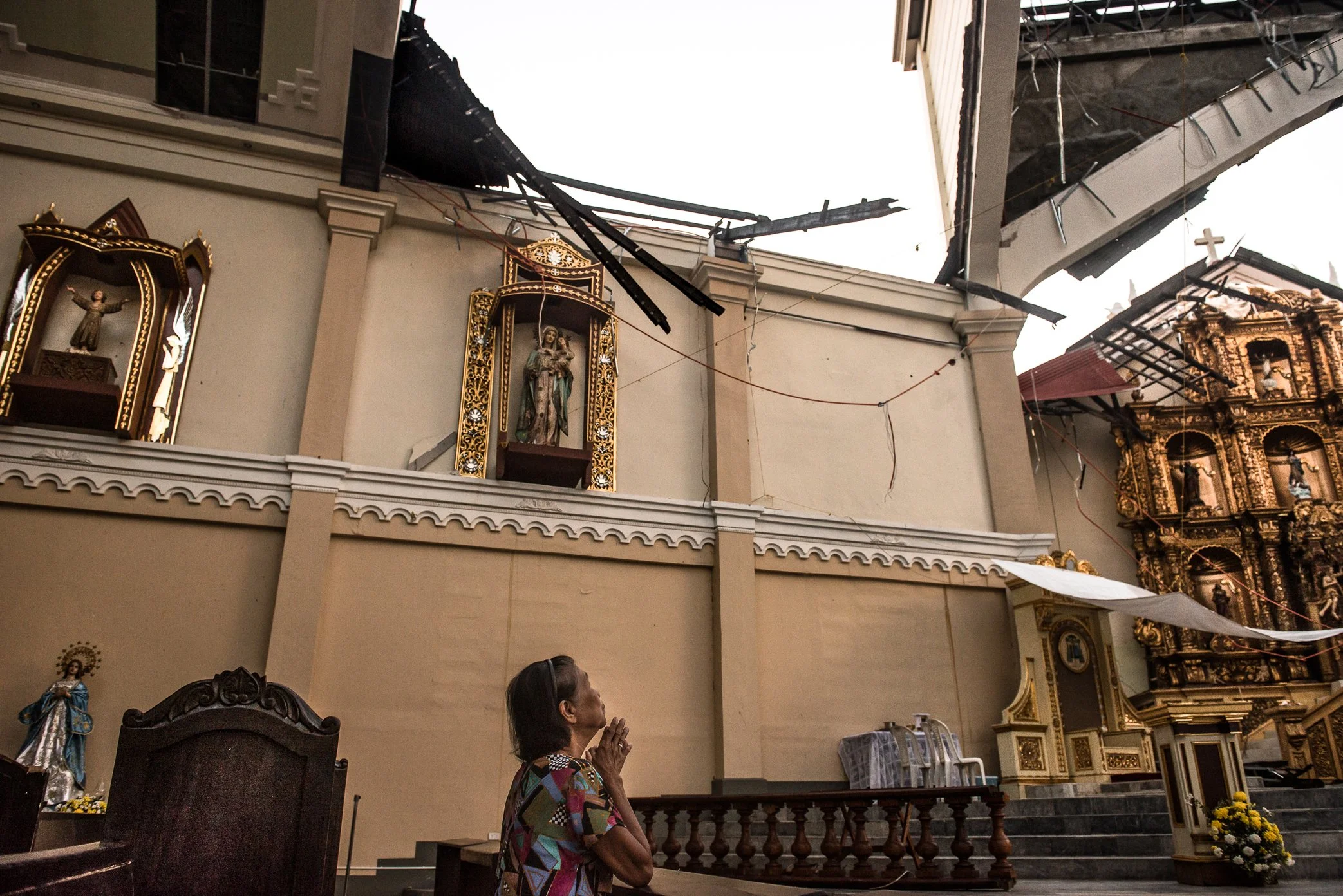
Palo, Leyte, Philippines, 2013 - A woman prays inside a church damaged by Typhoon Haiyan. Around her, the roof has been torn open and sacred figures remain exposed beneath the broken structure - a quiet image of faith held in place amid loss, ruin, and the long work of beginning again.
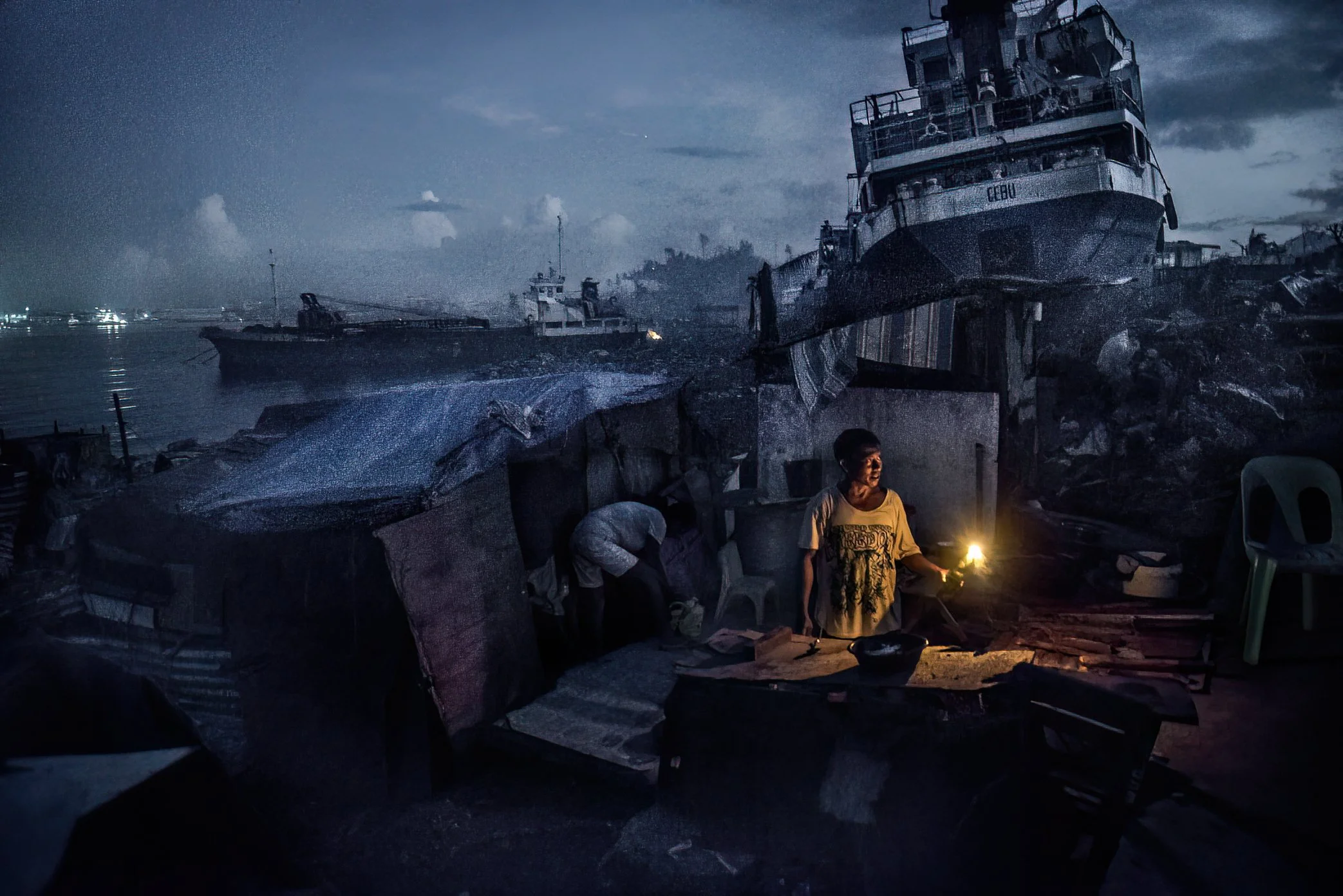
Tacloban, Philippines, 2013 - In the port area of Tacloban, ships driven ashore by Typhoon Haiyan loom over homes reduced to makeshift shelters. By candlelight, a man prepares food for his family, cooking beneath a surreal landscape of wrecked vessels, broken structures, and a city still without power.
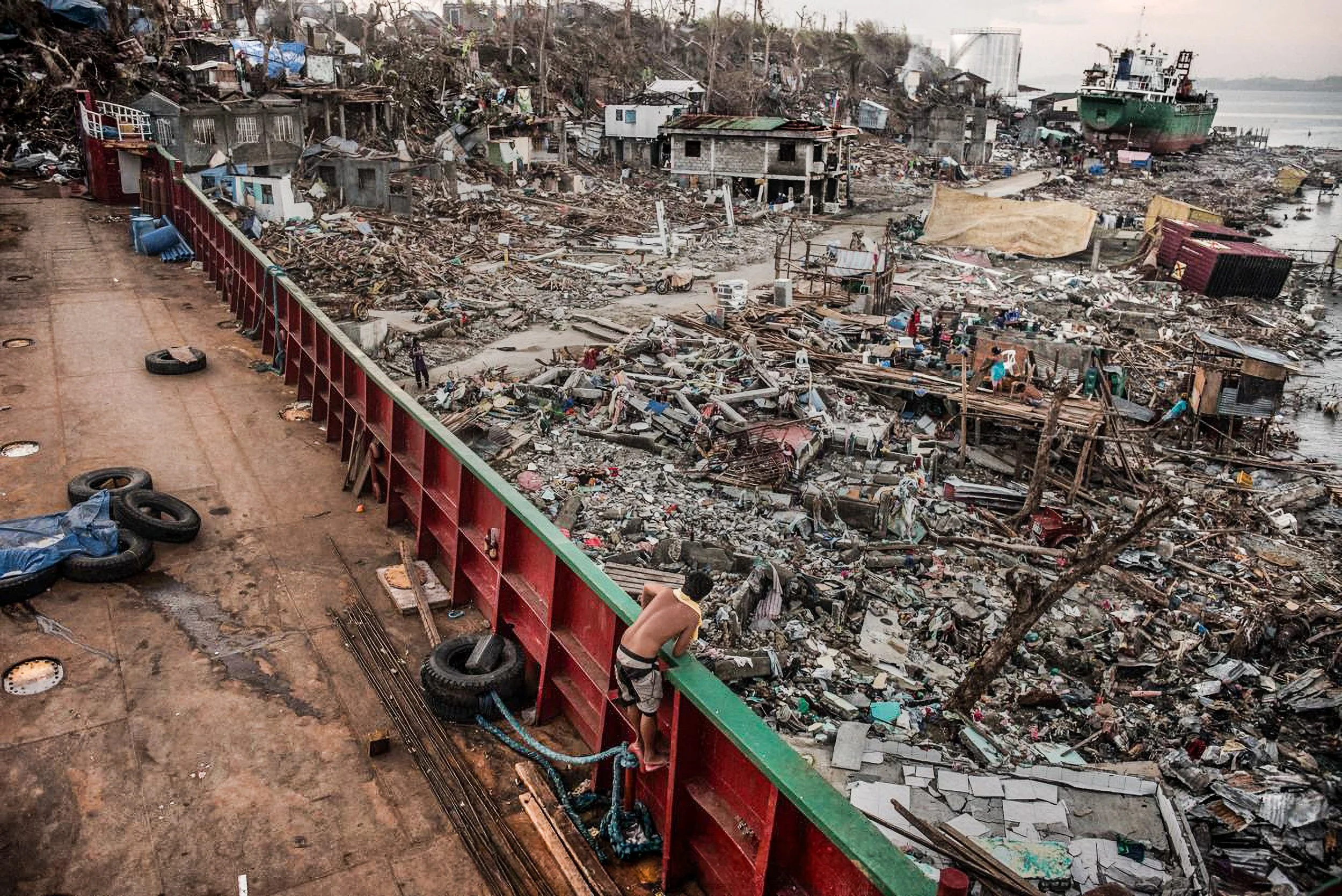
Tacloban, Philippines, 2013 - From the deck of a wrecked ship where survivors had taken shelter, the scale of Typhoon Haiyan’s destruction stretches toward the sea: flattened homes, scattered debris, and other vessels driven ashore by the storm.
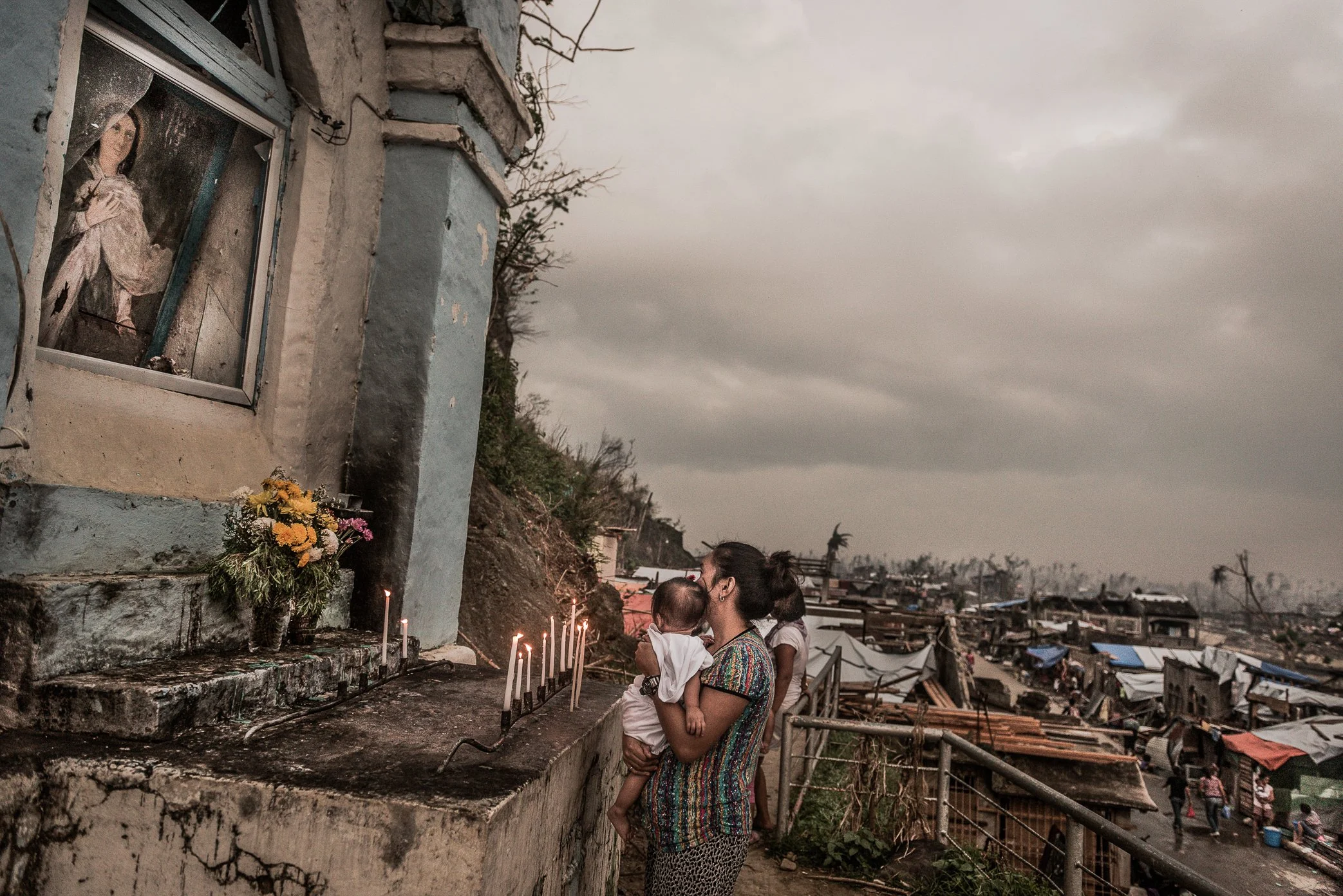
Palo, Leyte, Philippines, 2013 - At a hillside shrine overlooking a town scarred by Typhoon Haiyan, a young mother holds her child and lights candles in prayer. Below them, families rebuild among damaged homes and broken trees, while faith becomes one of the few things left standing.
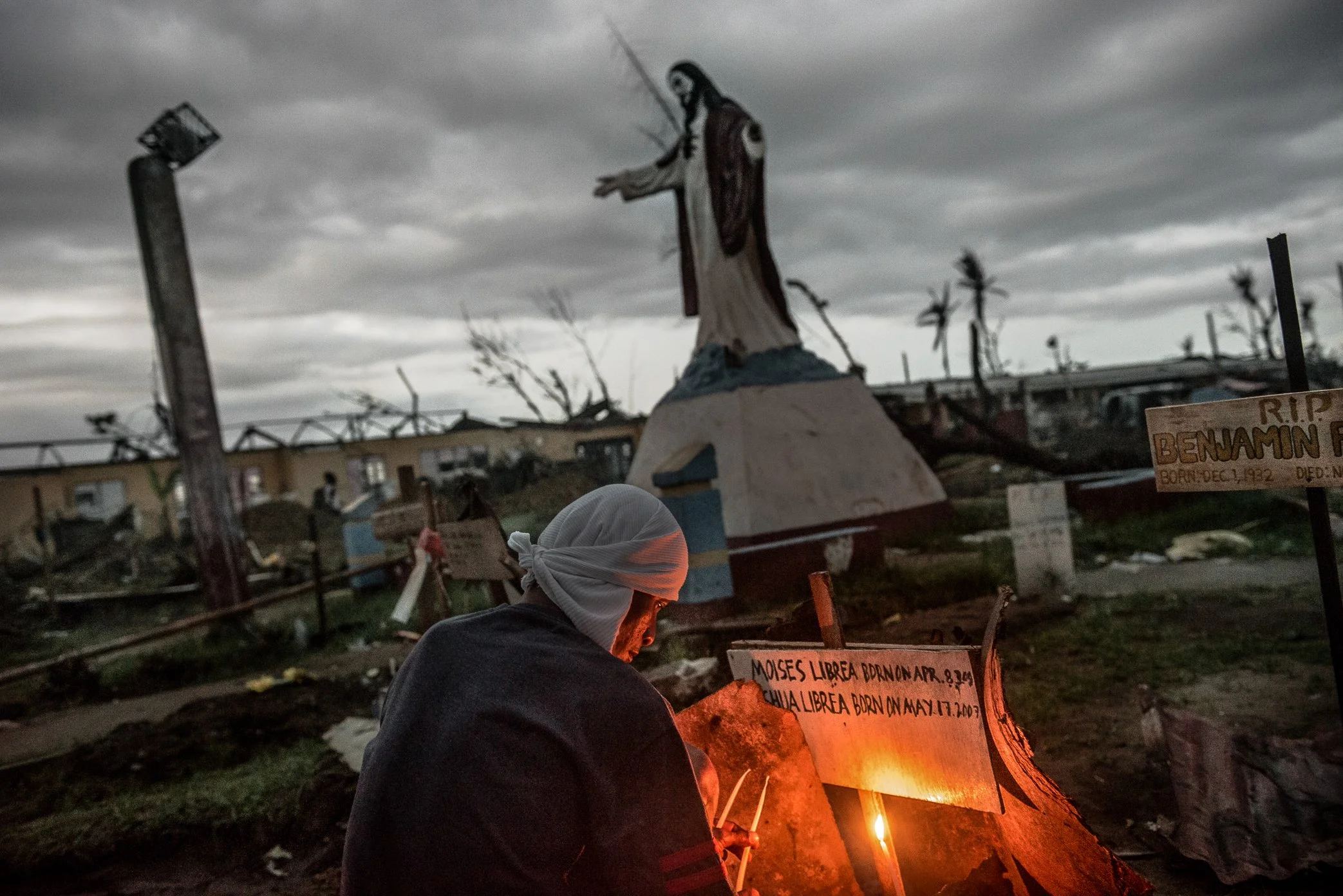
Palo, Leyte, Philippines, 2013 - At dusk, candles burn in a makeshift graveyard for victims of Typhoon Haiyan. Some graves mark entire families; in some homes, no one survived to mourn them. Behind the candles, broken trees and damaged buildings remain, holding the storm’s violence in the landscape.
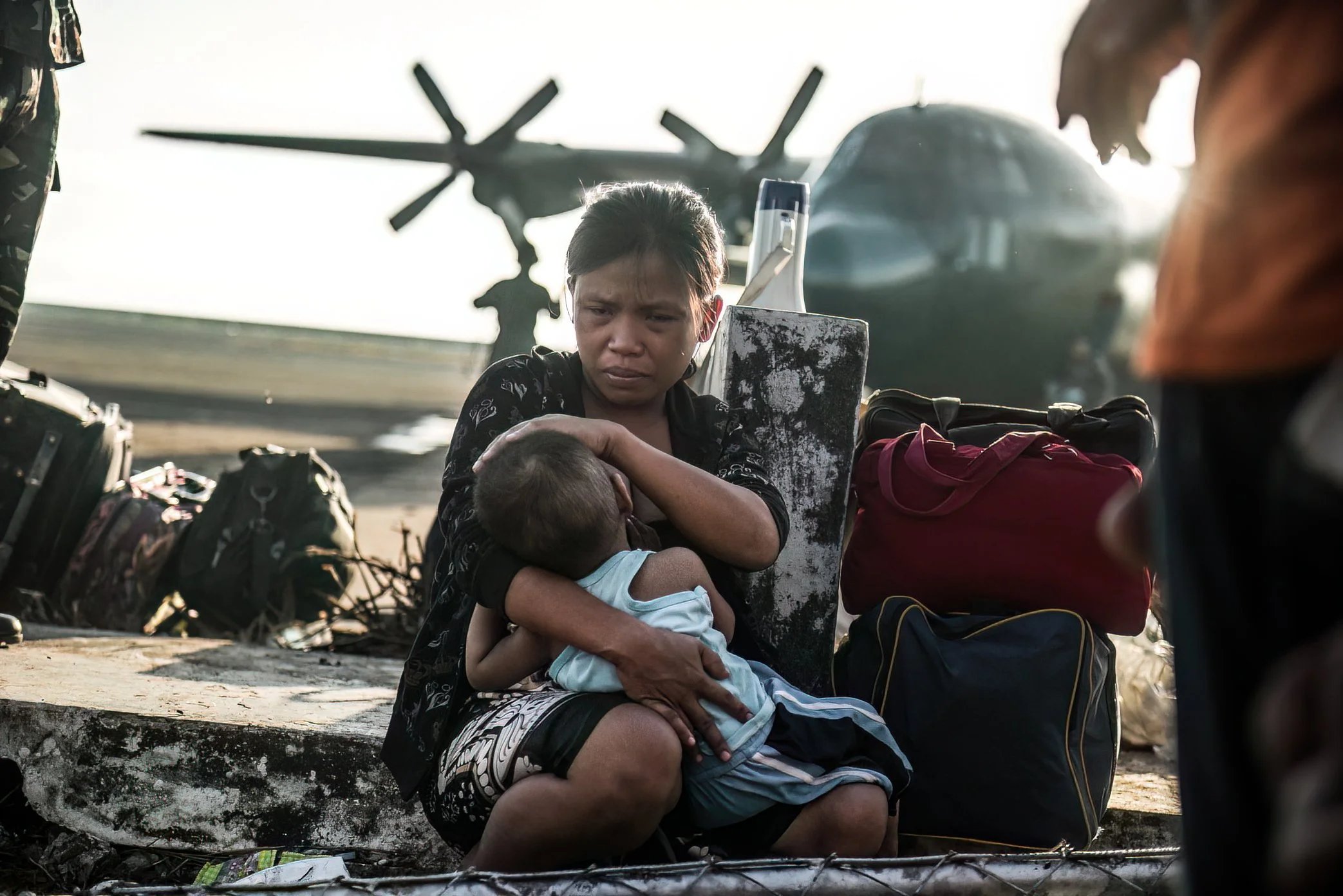
Tacloban, Philippines, 2013 - At Tacloban airport, a mother nurses her child while waiting for evacuation after Typhoon Haiyan. Around her, families sit with what they were able to carry from the ruins, hoping for a flight out of a city where survival continued long after the storm had passed.
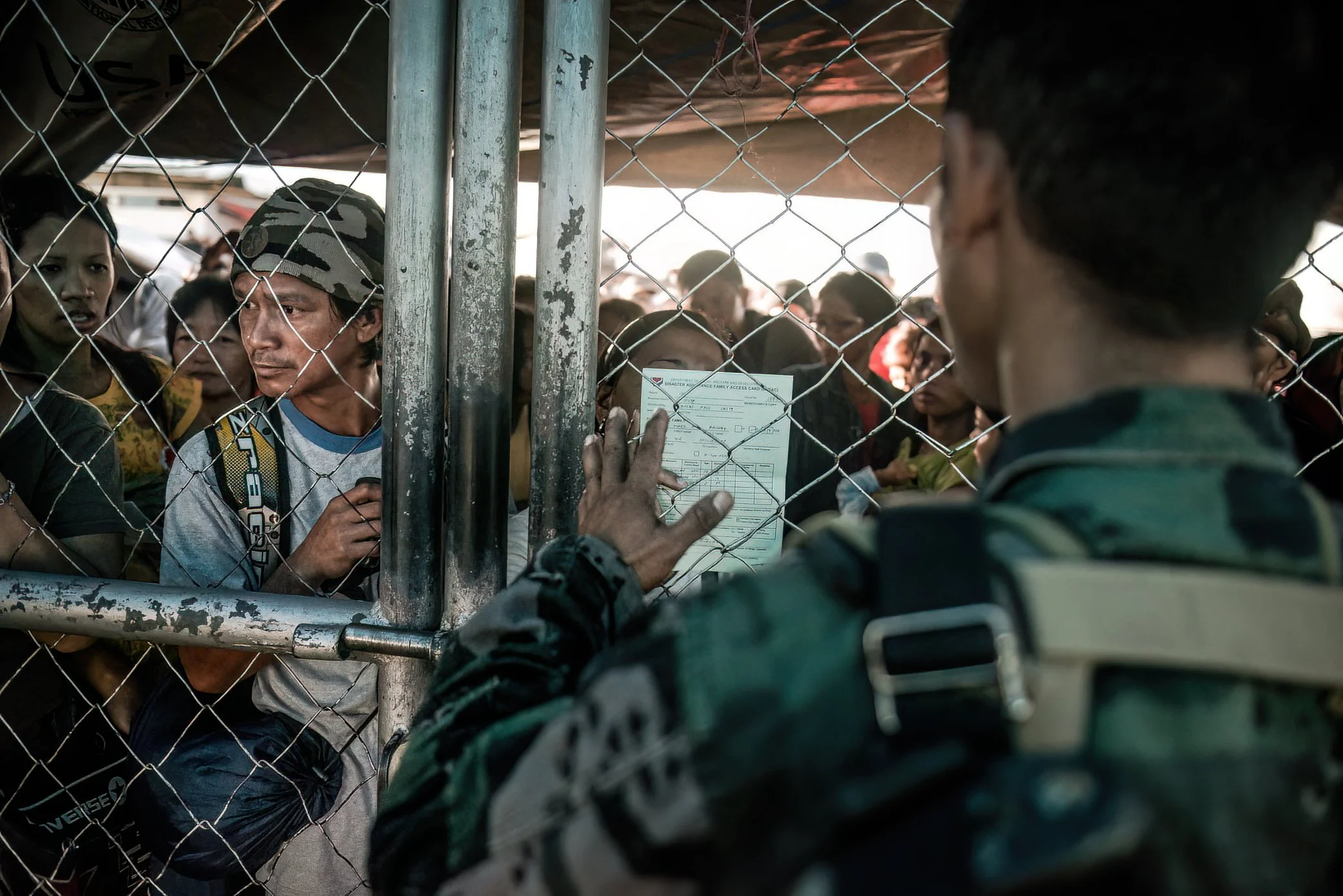
Tacloban airport. Hundreds of people struggle to evacuate. Exhausted and stressed soldiers try to maintain control.
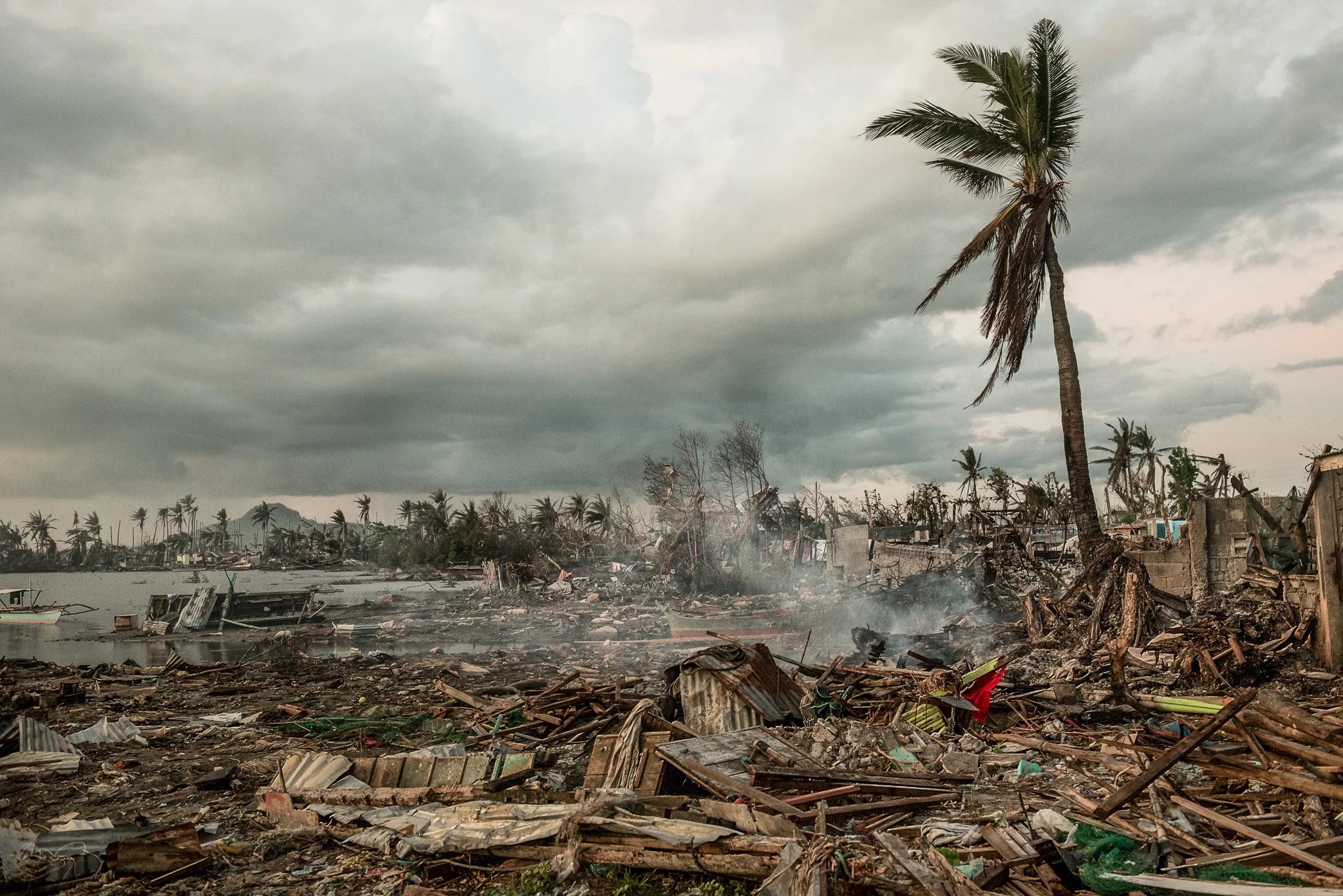
Barangay Alimasay, Leyte, Philippines, 2013 - In the “crab zone” of Barangay Alimasay, storm surge from Typhoon Haiyan swept through a coastal community of about 600 people. Nearly half the village was lost. Weeks later, smoke rose from the wreckage, and the landscape remained stripped open - boats broken, homes erased, and a single palm standing over what the sea had taken.
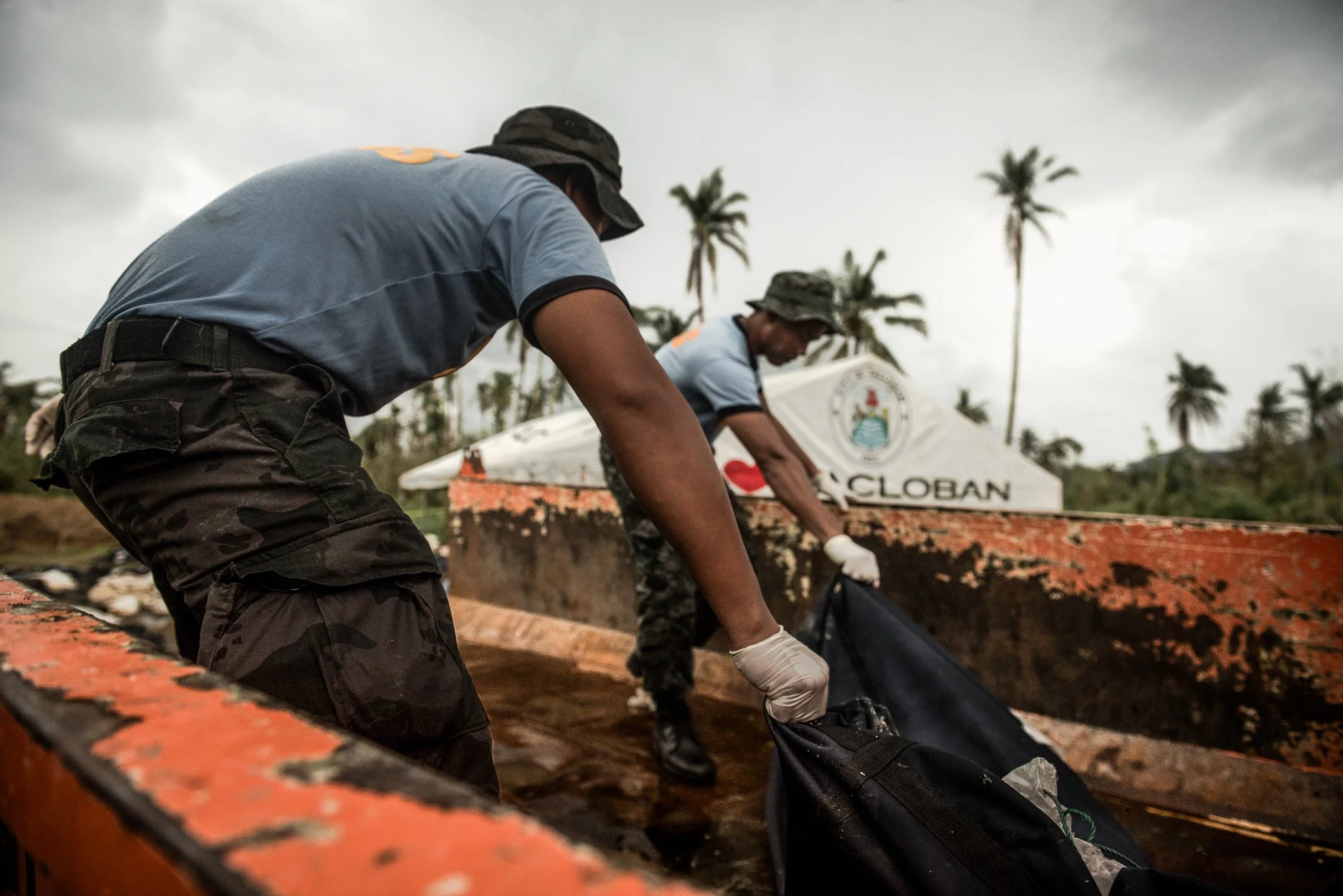
Philippines, 2013 - Three weeks after Typhoon Haiyan, members of a special police unit unload bodies recovered from the ruins. Each day, more victims were found and brought to burial sites like this one, where the scale of loss overwhelmed ordinary rituals of mourning and the dead were placed in mass graves.
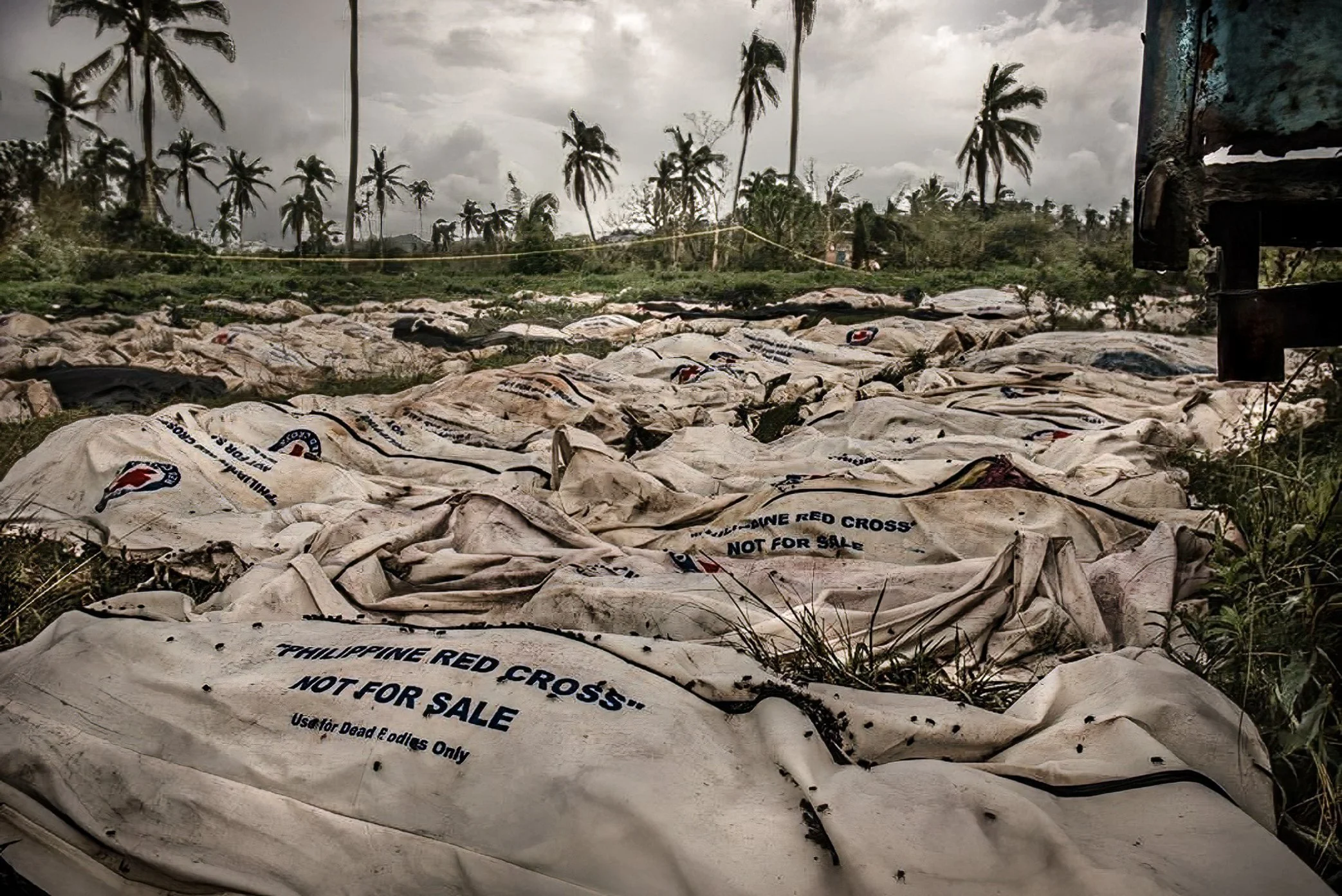
Leyte, Philippines, 2013 - Body bags lie in an open field weeks after Typhoon Haiyan tore through the central Philippines. With morgues, roads, and local authorities overwhelmed, many of the dead were held in temporary sites before burial in mass graves. In places like this, the scale of loss exceeded the rituals that normally give death its dignity.
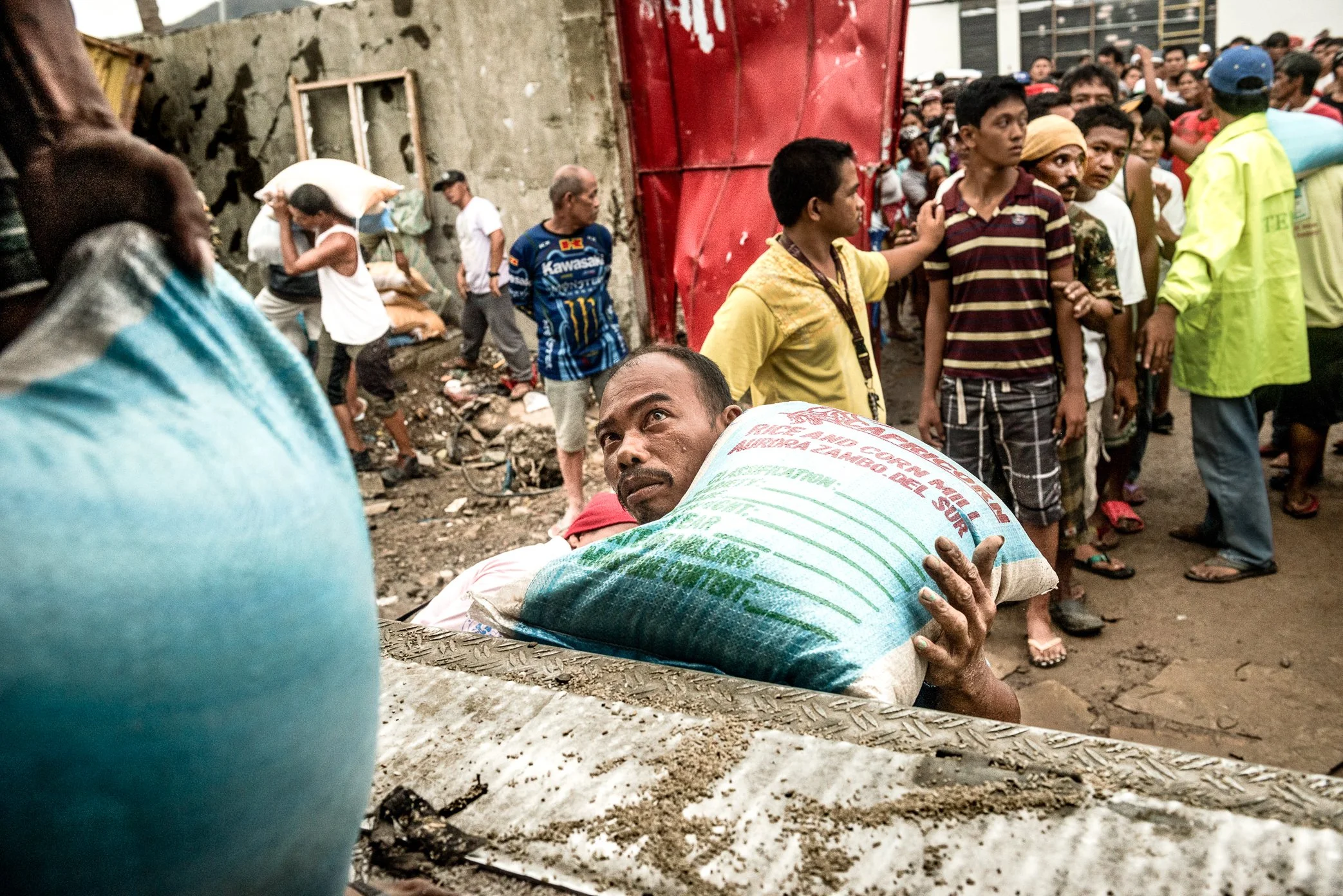
Tacloban, Philippines, 2013 - Police secure a truck carrying food aid as hundreds of survivors wait in line for relief supplies after Typhoon Haiyan. For many families, standing for hours became part of daily survival, with no guarantee that food would still be available when they reached the front.
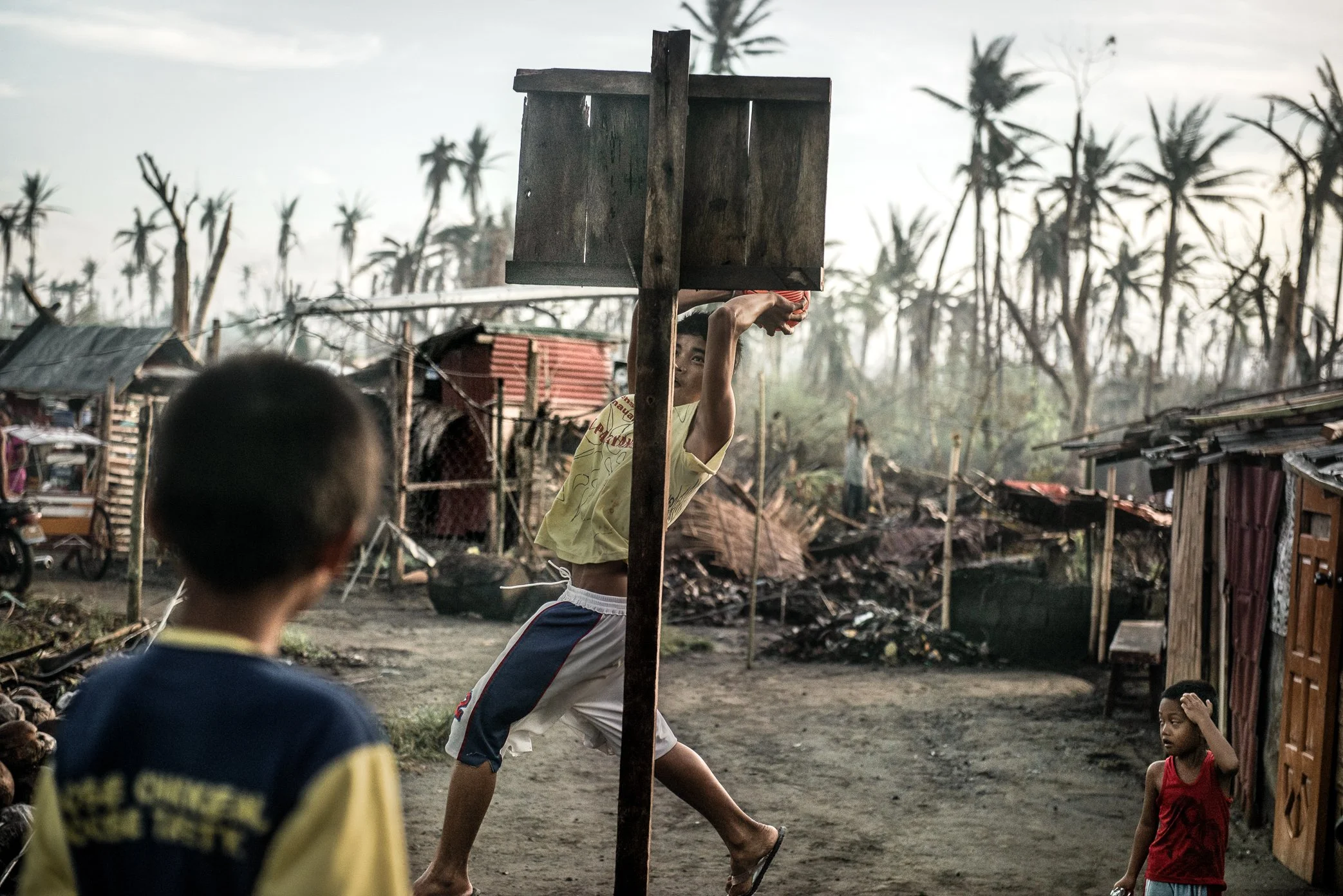
Tacloban, Philippines, 2013 - Boys play basketball with a makeshift hoop in a neighborhood devastated by Typhoon Haiyan. Around them, homes are damaged, trees stripped bare, and the landscape still carries the force of the storm. Yet in the middle of ruin, play returns - a small sign of resilience, and of a community trying to hold on to ordinary life.
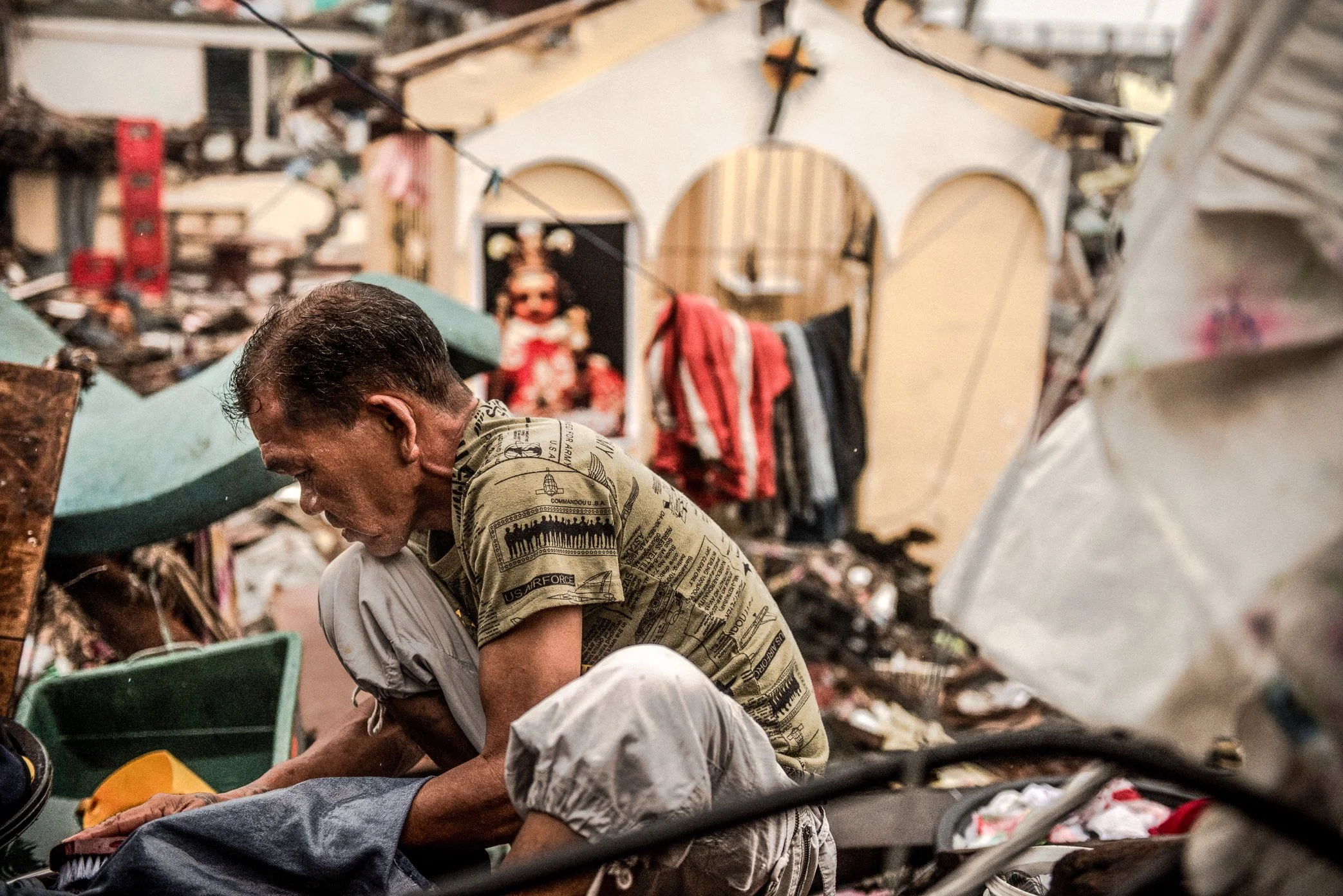
Leyte, Philippines, 2013 - A man washes clothes in front of a damaged church after Typhoon Haiyan. Around him, debris, broken structures, and sacred figures remain exposed to the open air, while daily life slowly resumes in the ruins. In the aftermath of the storm, survival was built from small acts like this - cleaning, repairing, waiting, and trying to make ordinary life possible again.
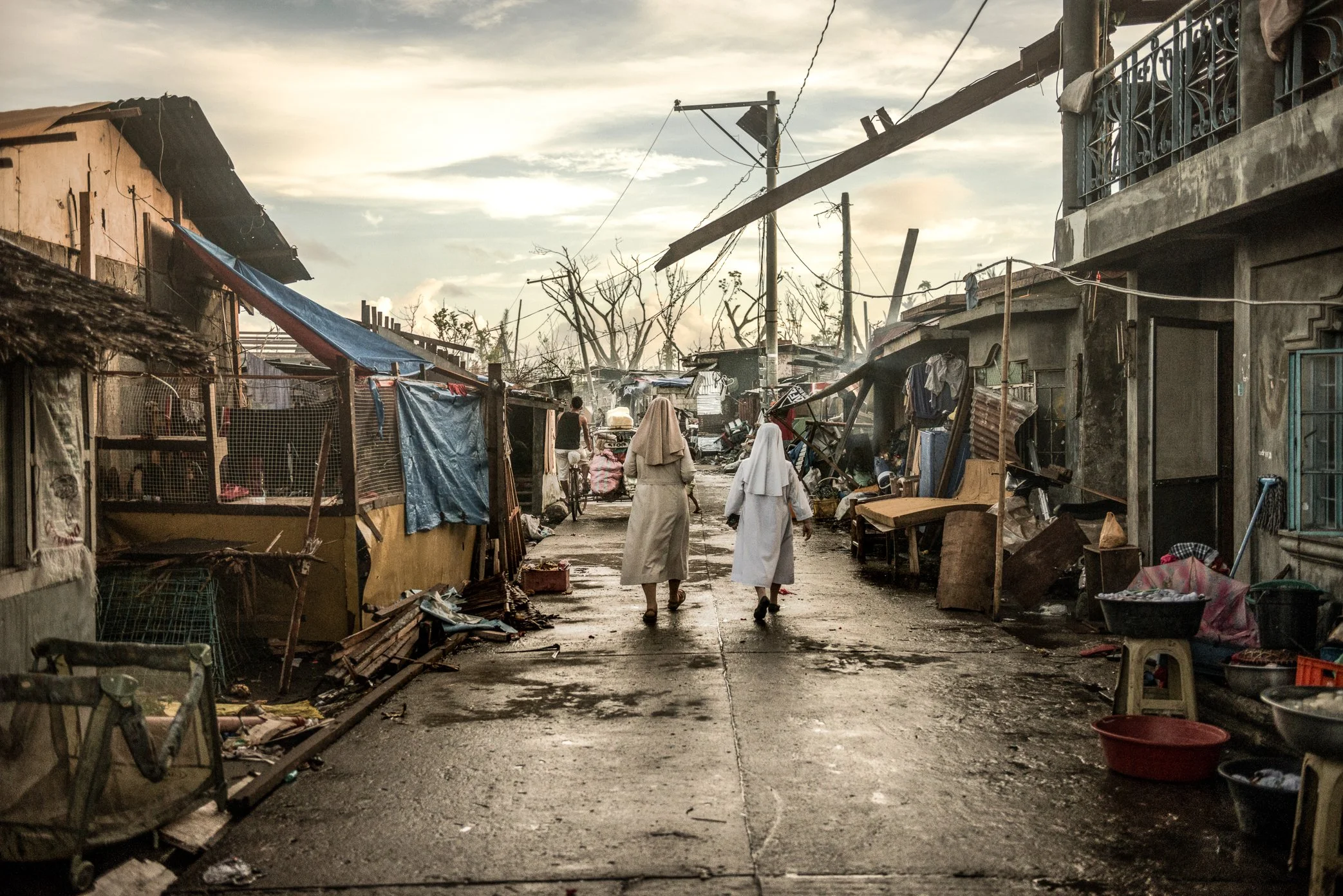
Palo, Leyte, Philippines, 2013 - Catholic sisters walk through a neighborhood devastated by Typhoon Haiyan, visiting families and offering support in the days after the storm. Around them, homes remain damaged and streets are lined with debris, but their presence carries a quiet form of care - faith moving through a community still trying to stand again.
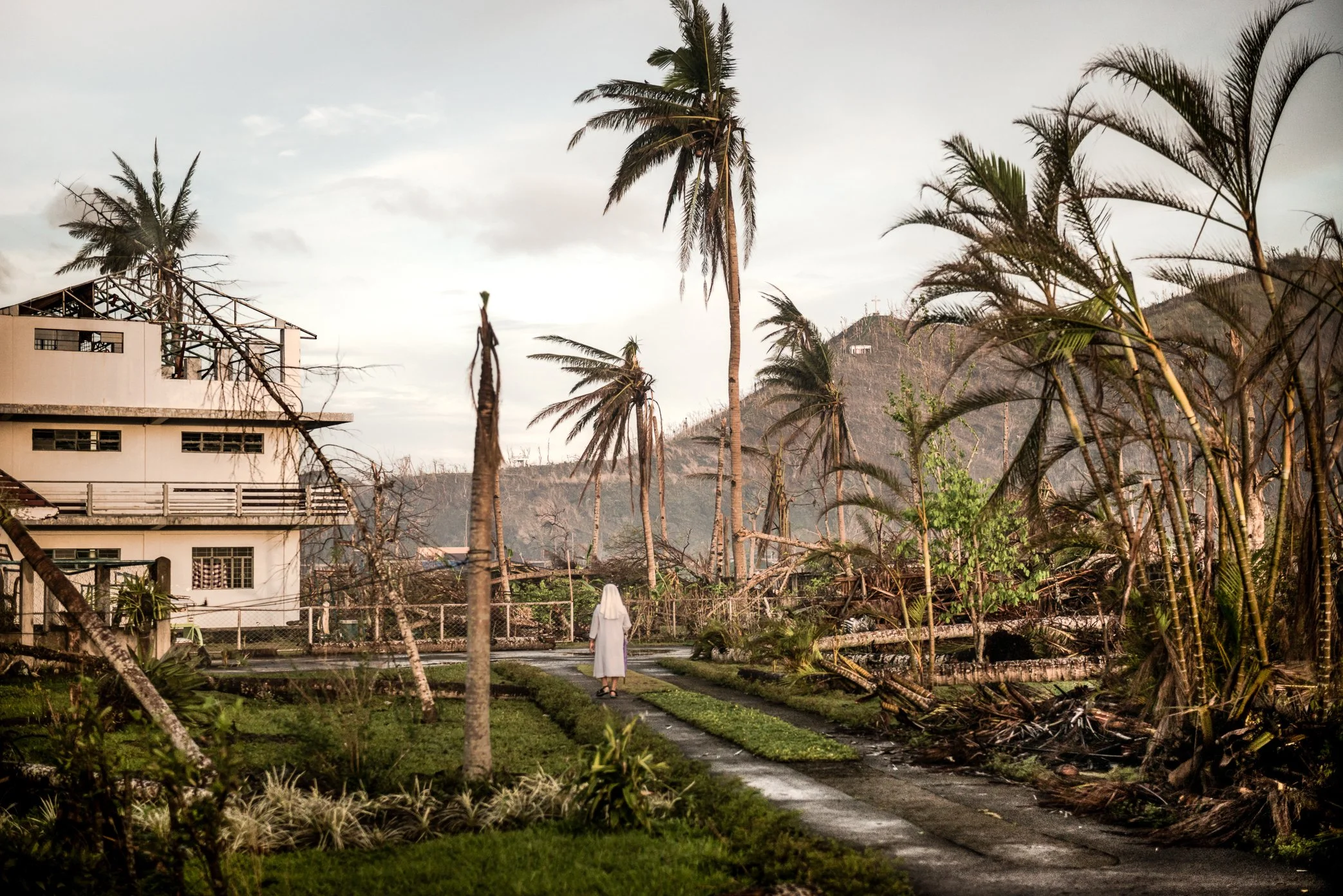
Palo, Leyte, Philippines, 2013 - A Catholic sister walks through the damaged grounds of a church complex after Typhoon Haiyan. Across Palo and nearby Tacloban, homes, churches, schools, and convents were damaged or destroyed, leaving religious communities to offer prayer and support amid the ruins.
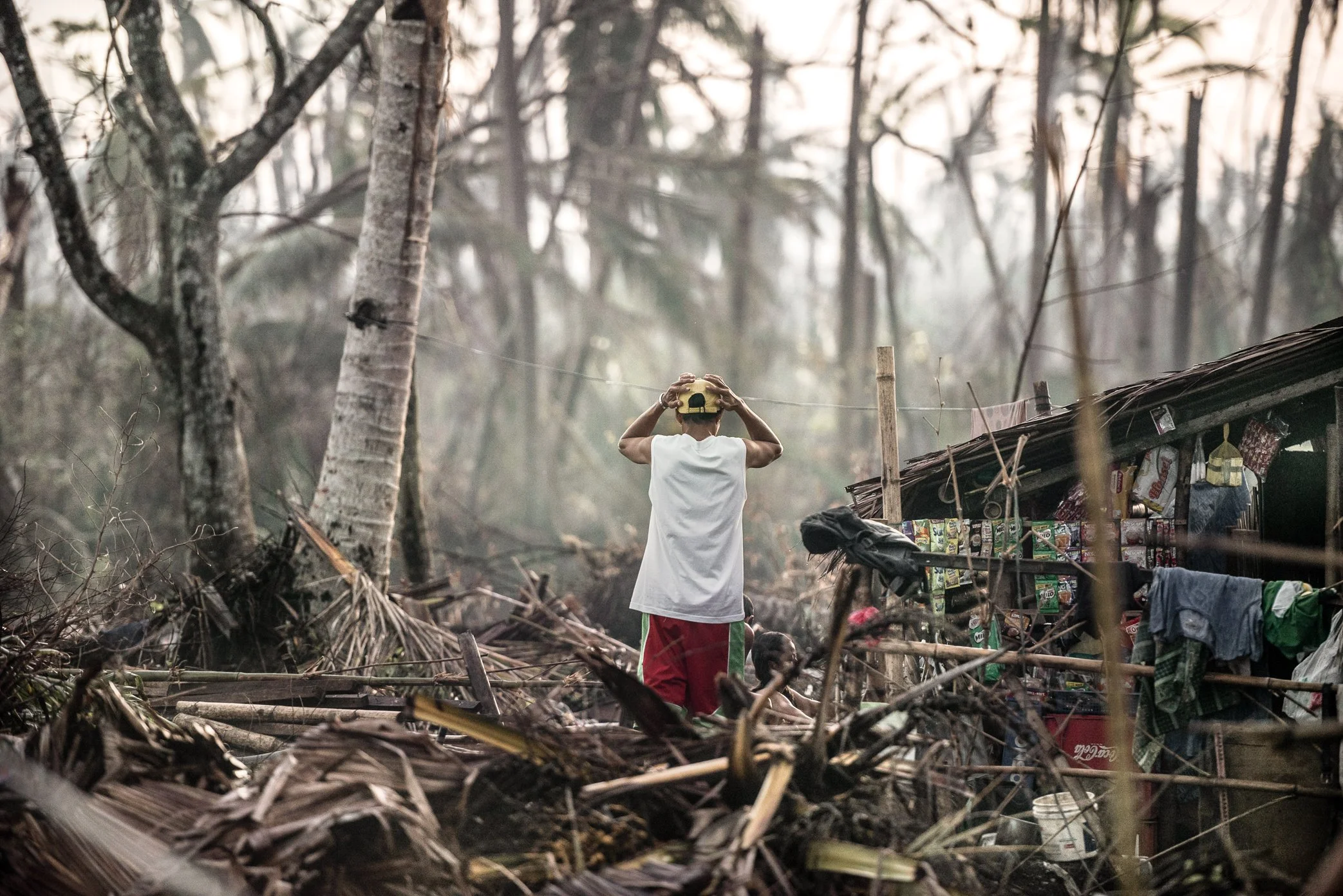
Palo, Leyte, Philippines, 2013 - A man stands among shattered coconut palms and the remains of homes after Typhoon Haiyan. In places like Palo, the scale of destruction was almost impossible to comprehend: familiar streets turned into fields of debris, livelihoods torn apart, and daily life reduced to the first difficult acts of survival.