Nepal Earthquake - After the Ground Broke
On 25 April 2015, a 7.8 magnitude earthquake struck Nepal, tearing through the Kathmandu Valley and surrounding districts. Nearly 9,000 people were killed, more than 22,000 were injured, and hundreds of thousands of homes were damaged or destroyed. Historic towns, temples, and ordinary brick houses collapsed into narrow lanes, leaving families to search through rubble for what remained of their homes and lives.
I arrived in Nepal one week after the earthquake on assignment for UN Women. The work focused on the human impact of the disaster, especially on women and vulnerable communities living through the first fragile days after the destruction. In the aftermath, women faced not only the loss of homes and family members, but also new risks in temporary shelters, displacement, and the struggle to care for children and elders while survival itself had become uncertain. UN Women reported that 55 percent of those who died in the earthquake were women, and humanitarian agencies warned that millions of women and children were facing heightened protection concerns after the disaster.
After the assignment ended, I stayed in Nepal for another month to continue photographing the aftermath as a personal documentary project. It was difficult work - physically, emotionally, and ethically. The streets were filled with dust, broken walls, unstable buildings, and people living between grief and necessity. In places such as Sankhu, old brick houses had fallen into piles of debris. Families returned to ruined neighborhoods not because they were safe, but because there was nowhere else that still felt like home.
“This was not only a disaster of buildings. It was a disaster of memory, family, and place.”
These photographs were made in the days when Nepal was still shaking - from aftershocks, from fear, and from the uncertainty of how to begin again. They show people standing inside the remains of their own lives: women walking through collapsed streets, families salvaging what they could, children moving through spaces where homes once stood, and communities trying to restore dignity before reconstruction had even begun.
What stayed with me most was not only the scale of destruction, but the quiet endurance of the people I met. Many had lost almost everything, yet continued to cook, clean, pray, protect children, and search for missing belongings beneath broken brick and timber.
“In the ruins, life did not stop. It became slower, heavier, and more exposed.”
This body of work is a record of that fragile period - after an emergency, before recovery, and before the world’s attention moved elsewhere. It looks at the earthquake not as a single event, but as a long human aftermath: the moment when disaster becomes daily life, and survival becomes the first act of rebuilding.
ALL STORIES & BIO → NEXT: THE ROAD THAT DISTURBED A CEASEFIRE →
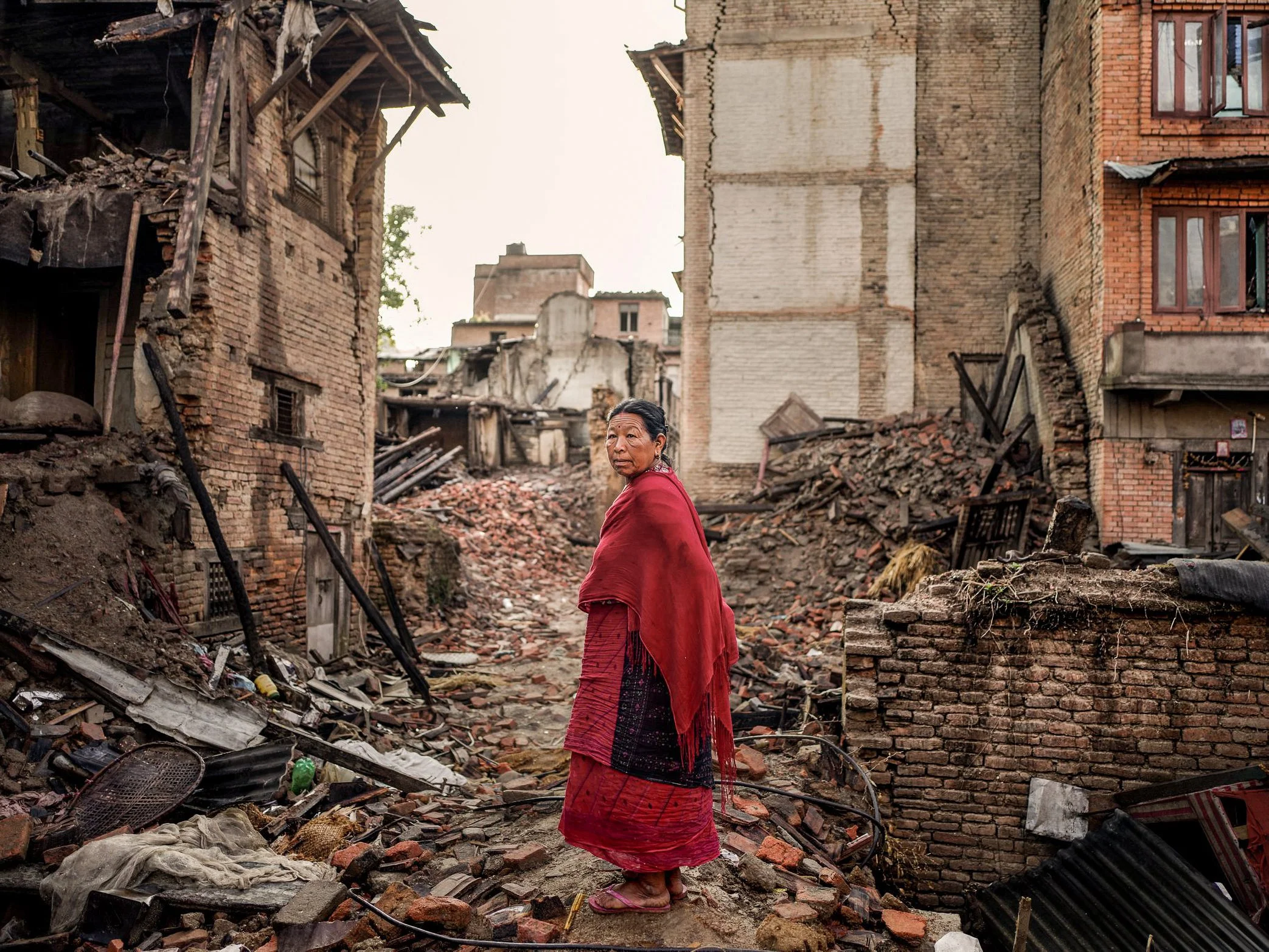
A woman stands among the ruins of Sankhu, a historic town on the edge of the Kathmandu Valley, after the 2015 Nepal earthquake. The magnitude 7.8 quake struck on April 25, killing nearly 9,000 people and damaging or destroying more than 600,000 structures across Kathmandu and nearby towns. In Sankhu, old brick houses collapsed into narrow lanes, leaving residents to search through rubble for what remained of their homes, their belongings, and their former lives.
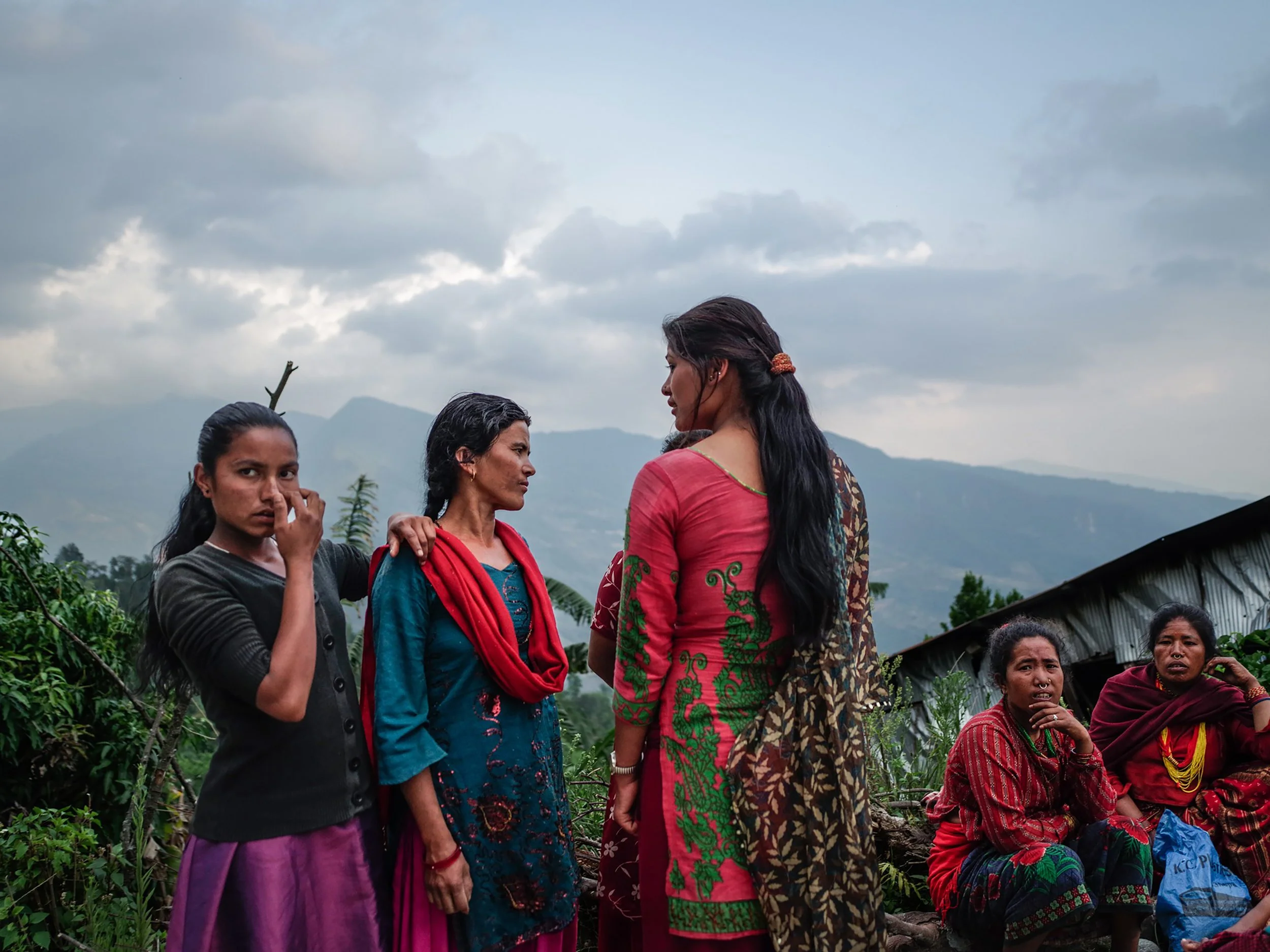
Women wait along a roadside for relief supplies after the 2015 Nepal earthquake. In the hardest-hit districts outside Kathmandu, families gathered wherever aid trucks stopped, hoping food, tarpaulins, blankets, or basic household items would last until their names were called. For many survivors, the line itself became a place of uncertainty - a quiet test of whether help would reach their families in time.
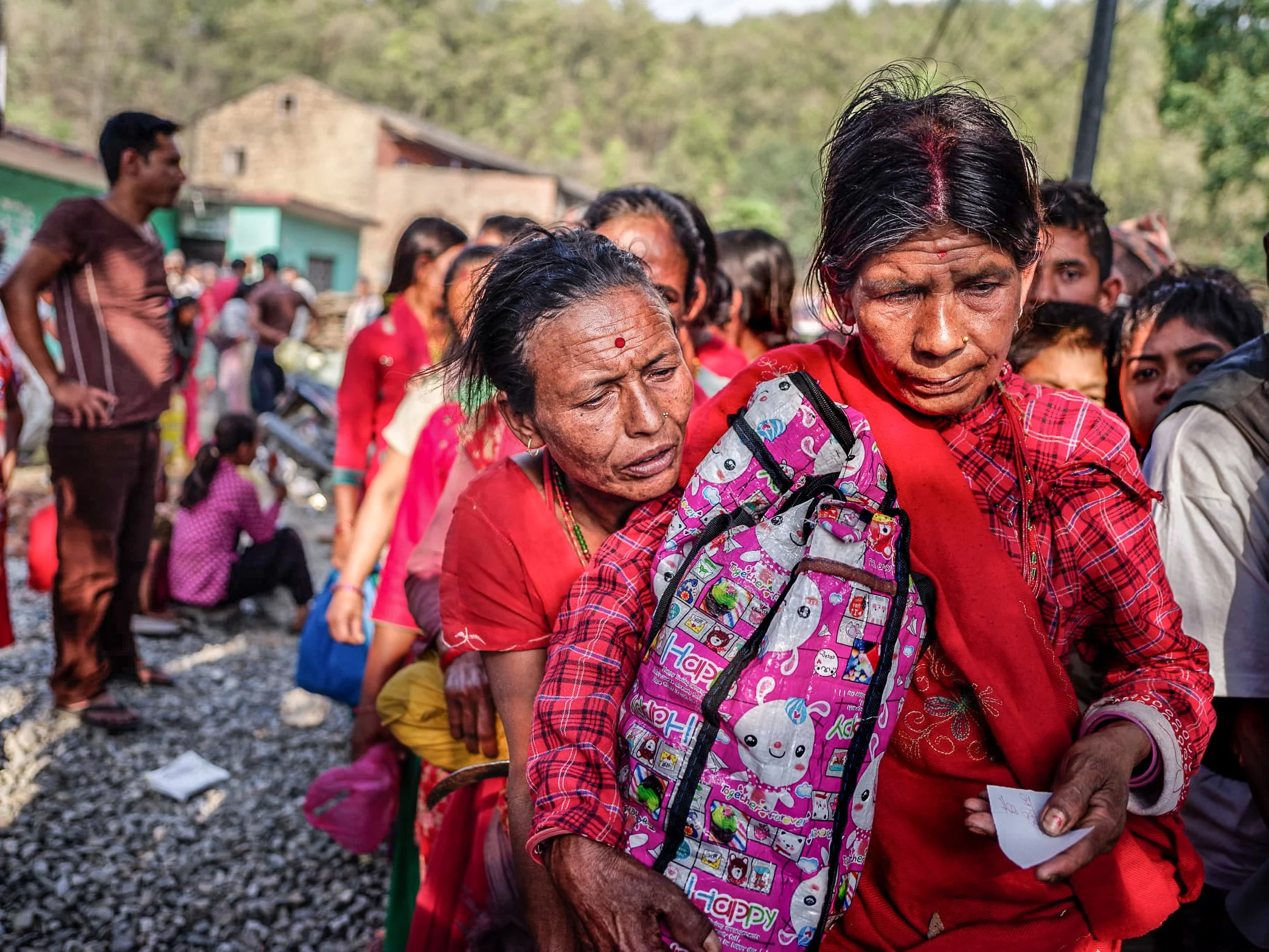
Women wait in line for relief supplies after the 2015 Nepal earthquake, their faces marked by exhaustion and uncertainty. Along the road toward Dhading District, one of the severely affected areas outside Kathmandu, aid distribution became a matter of survival - food, shelter materials, and basic household items moving slowly through damaged roads and crowded queues. In the first weeks after the disaster, many families did not know whether supplies would reach them before they ran out. For women, children, and older people, the wait carried another kind of fear: whether help would be enough, and whether their names would still be called when the line reached them. The earthquake killed nearly 9,000 people, injured more than 22,000, and damaged or destroyed hundreds of thousands of homes across Nepal.
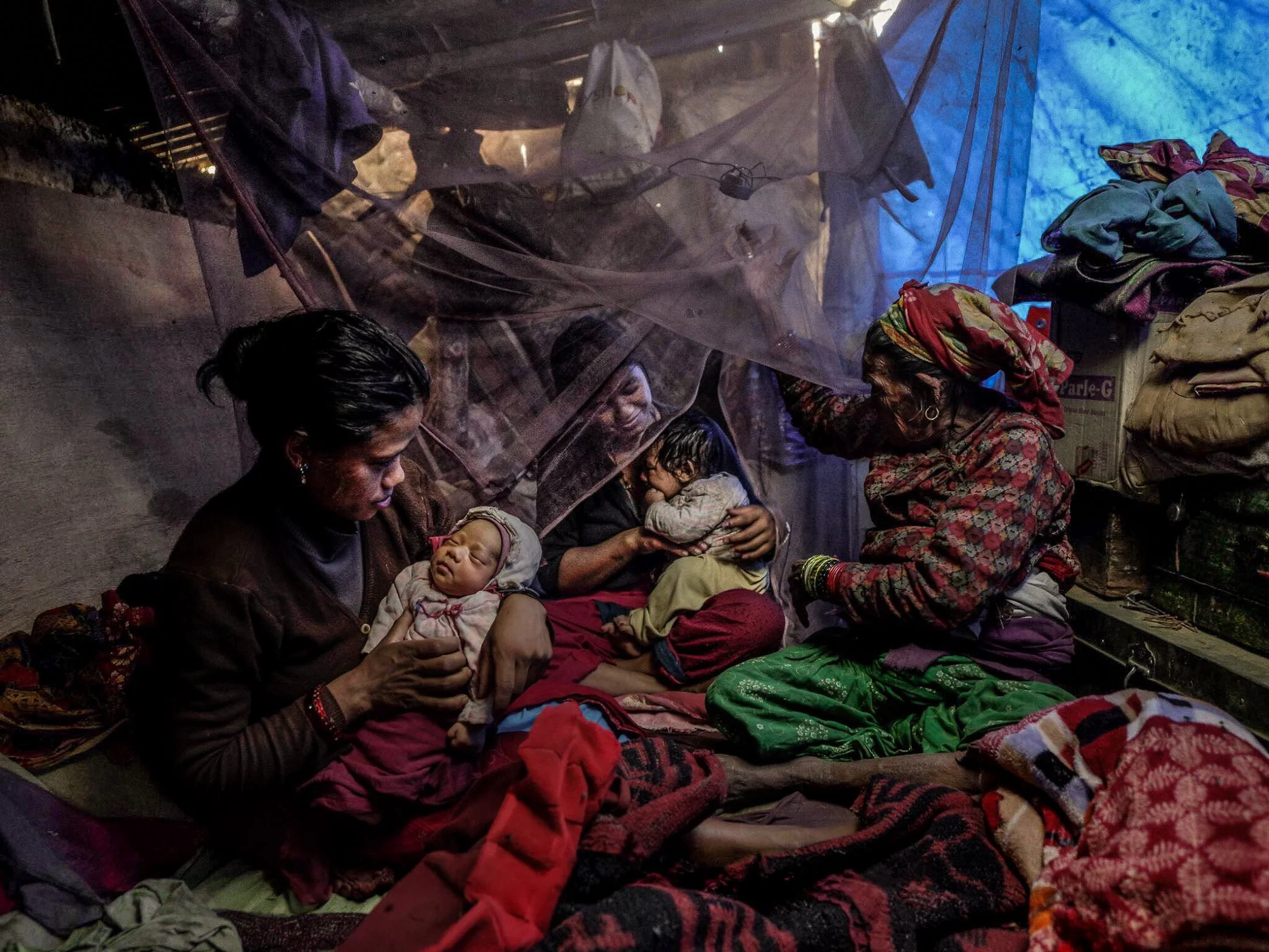
After the Nepal earthquake destroyed her family’s home and belongings, Shanta holds her newborn baby inside a crowded temporary shelter. What should have been a moment of celebration became a daily struggle for space, safety, and dignity, as she and twelve relatives lived together beneath plastic sheets and mosquito netting - Photo: UN Women / Piyavit Thongsa-Ard -Photographed on assignment for UN Women. Used here as part of the photographer’s professional portfolio.
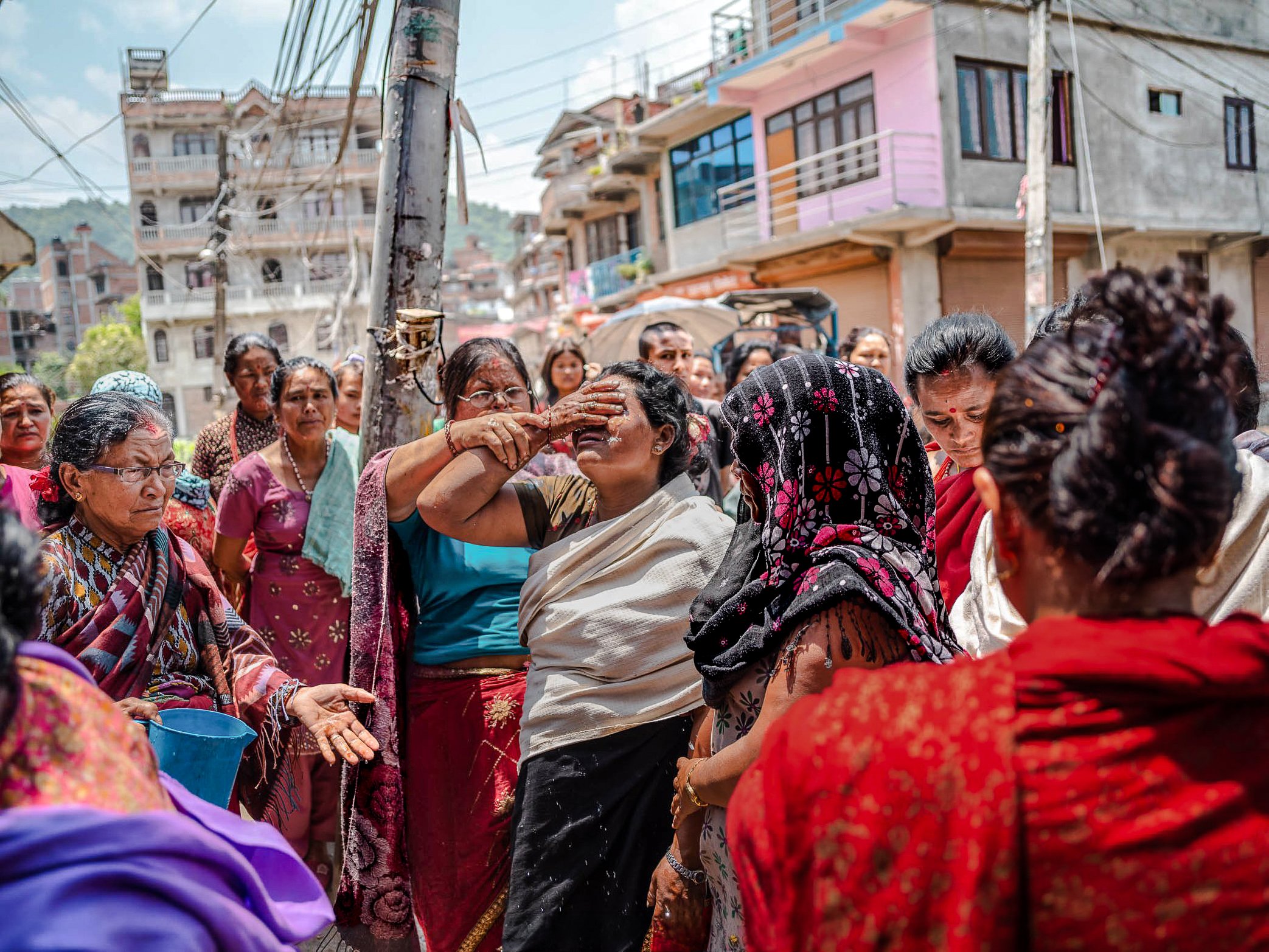
Grief breaks into the street in Kathmandu after the earthquake. In the days and weeks that followed, sorrow was visible almost everywhere - outside damaged homes, beside temporary shelters, and along roads where families searched for news of relatives, belongings, and a way forward. For many, the disaster was not only the collapse of buildings, but the sudden loss of people, security, and the familiar shape of daily life.