Bihar: Beneath the Kiln Smoke
In April 2003, I photographed brick kiln workers in Patna, Bihar, India, where families lived and worked among mud, dust, heat, and smoke. Across the kiln yard, wet clay was mixed, carried, shaped, dried, fired, stacked, and moved again by hand. Men, women, and children were all part of the same cycle of labor.
In India, work like this often exists at the edge of visibility. It supports construction, cities, roads, and the idea of development, yet the people who make that development possible remain largely unseen. At the kiln, labor was not only a job. It was a condition of life shaped by poverty, caste, debt, migration, and limited choices. The body became the main tool of production - bent, burdened, and exposed to heat and dust every day.
Women carried bricks and clay on their heads. Men fed coal into firing chambers and moved fired bricks with heavy shoulder baskets. Children grew up inside this landscape, close to the labor that had already shaped the lives of their parents.
These photographs are not only about brickmaking. They are about how poverty can bind a family to a place, a task, and a future that is difficult to escape. In the kiln yard, childhood, labor, survival, and exhaustion exist within the same frame.
What remains in these images is the quiet weight of work - and the human lives carried beneath it.
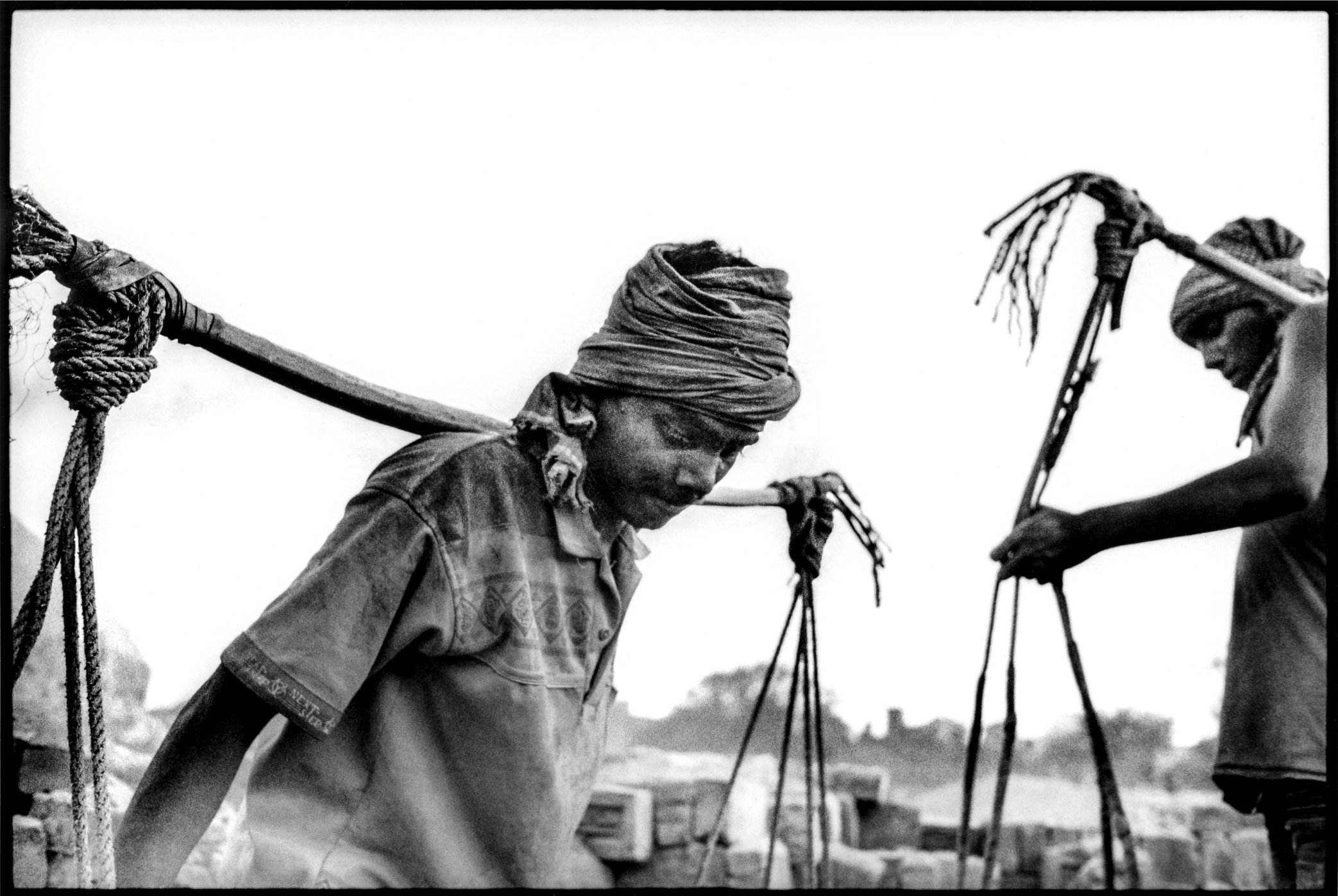
Patna, Bihar, India, April 2003 - Men carry kiln-fired bricks in heavy double baskets slung from shoulder poles, while women move the same material balanced on their heads. At the kiln, the body itself becomes the main tool of labor.
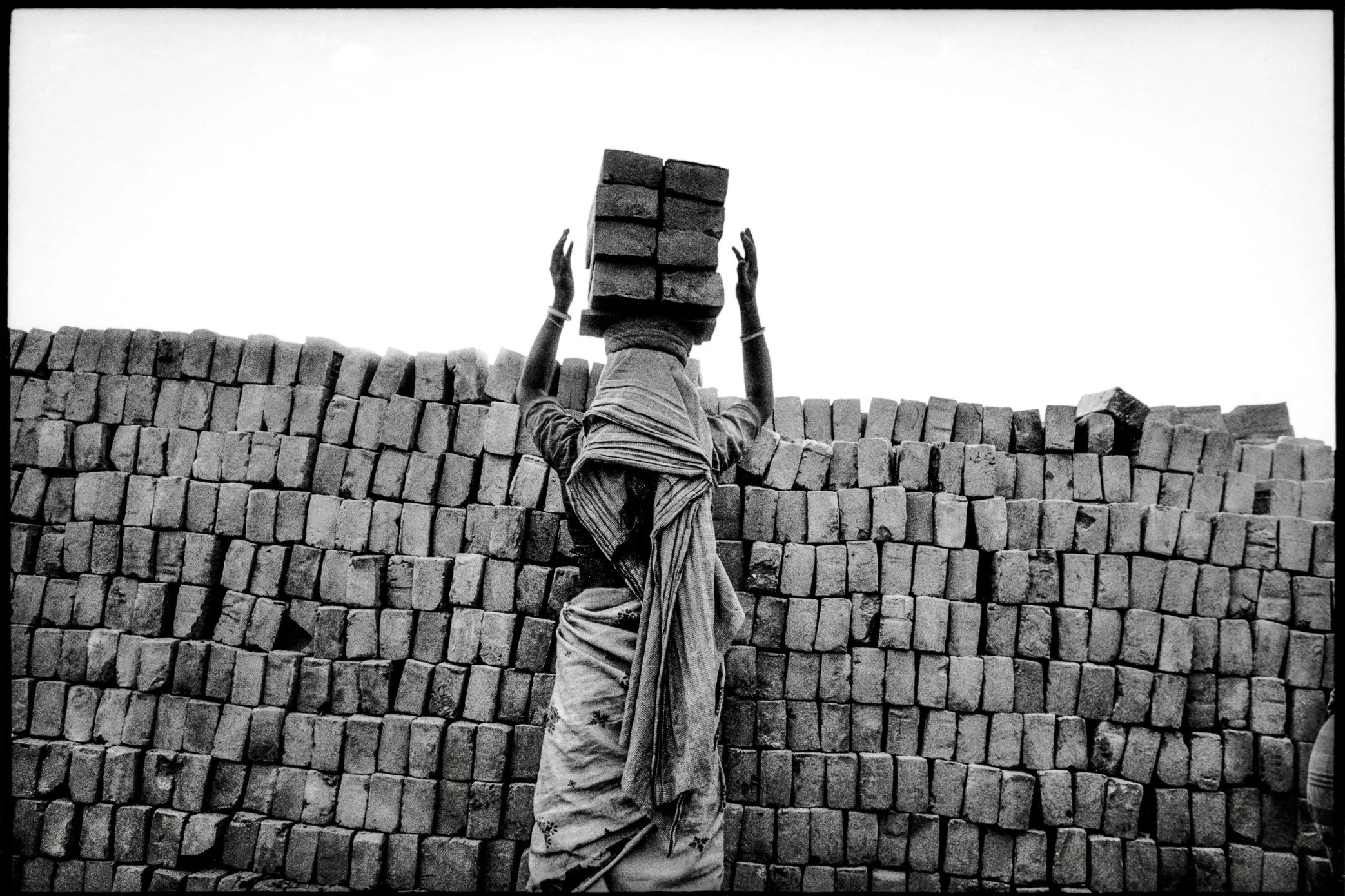
Patna, Bihar, India, April 2003 - A woman stacks freshly fired bricks at a kiln yard in Bihar. Men and women share the same punishing labor here, moving thousands of bricks by hand before they are transported and sold.
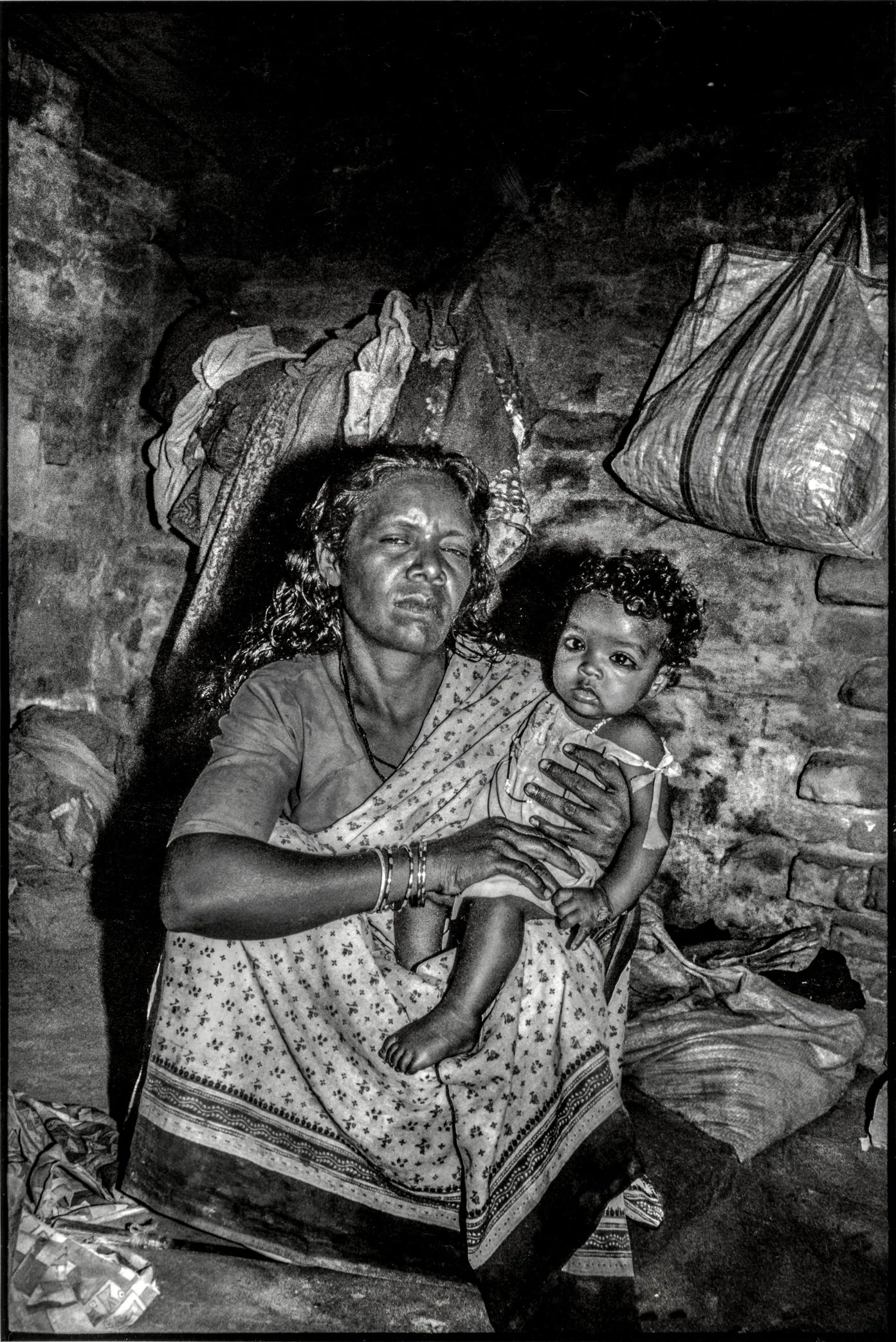
Patna, Bihar, India, April 2003 - Laxshmi, a brick kiln worker, holds her youngest daughter inside their living quarters near the kiln. For many girls born into this labor cycle, childhood offers little distance from the work that shaped their parents’ lives.
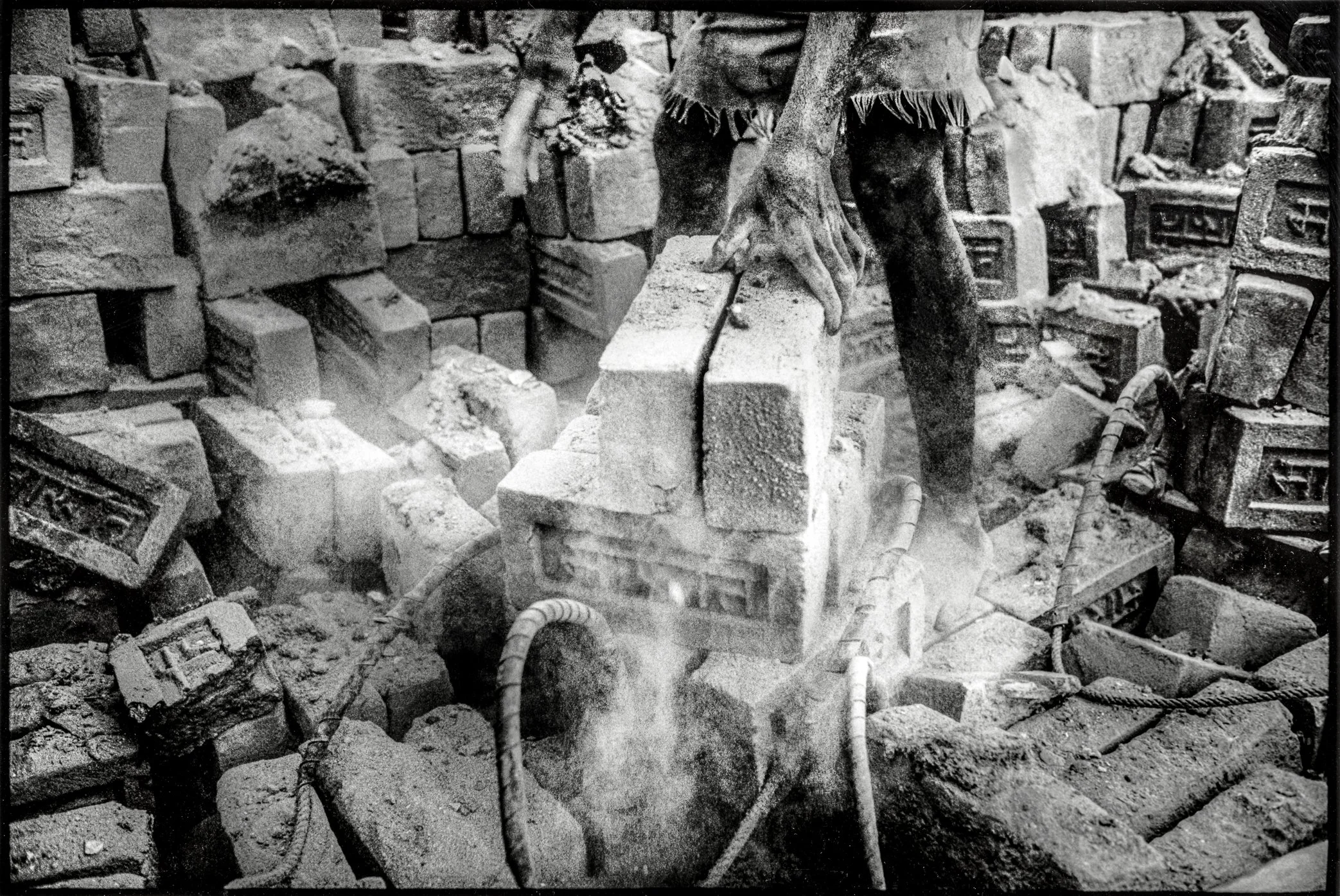
Patna, Bihar, India, April 2003 - Dust rises as fired bricks are lifted and stacked for transport. At the kiln, every movement sends clay and ash back into the air, turning the final stage of production into another layer of exposure for the workers.
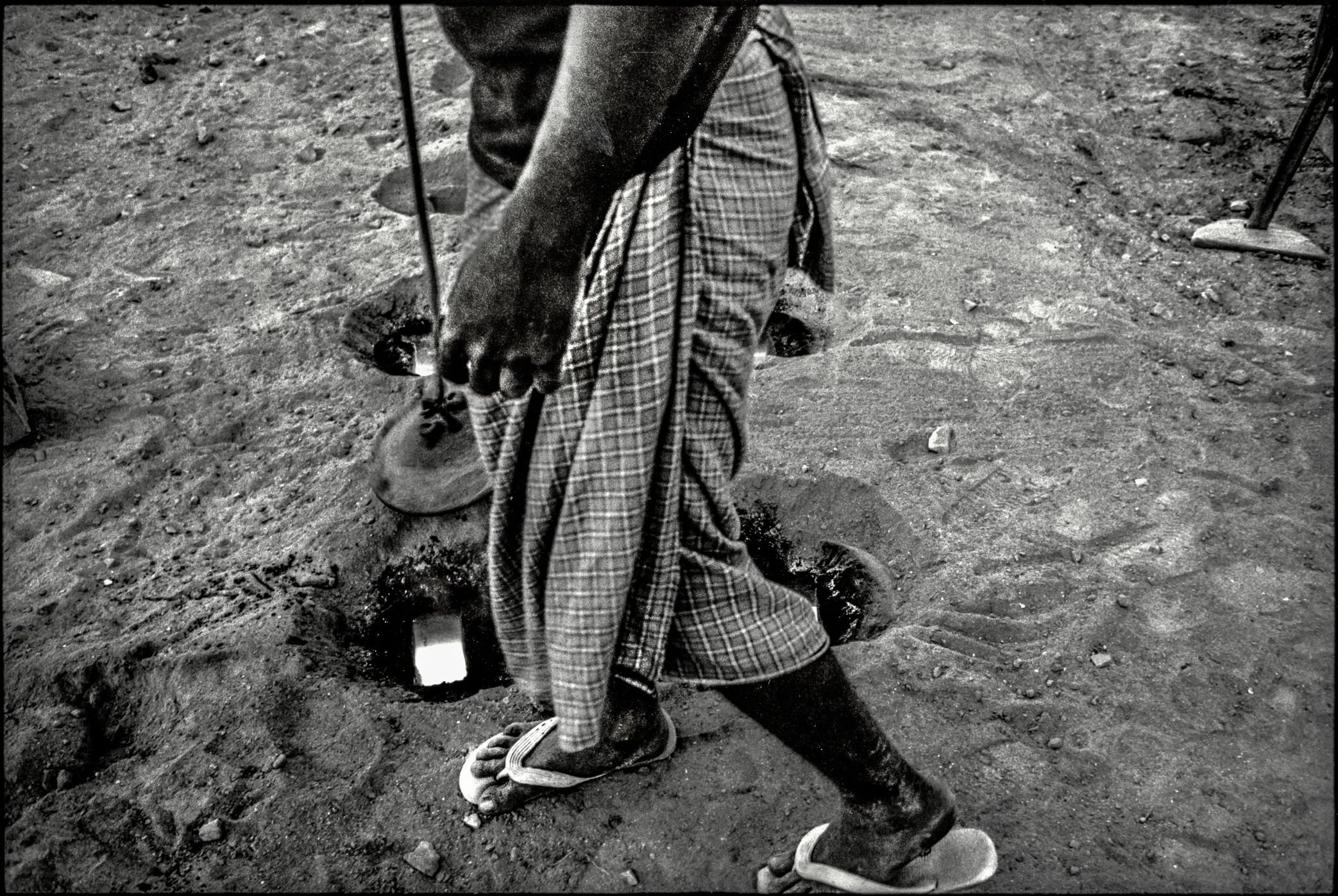
Patna, Bihar, India, April 2003 - A fire stoker prepares to feed coal into the kiln below. Beneath his feet, extreme heat rises through the firing chambers, separated from the workers above by little more than a layer of bricks and sand.
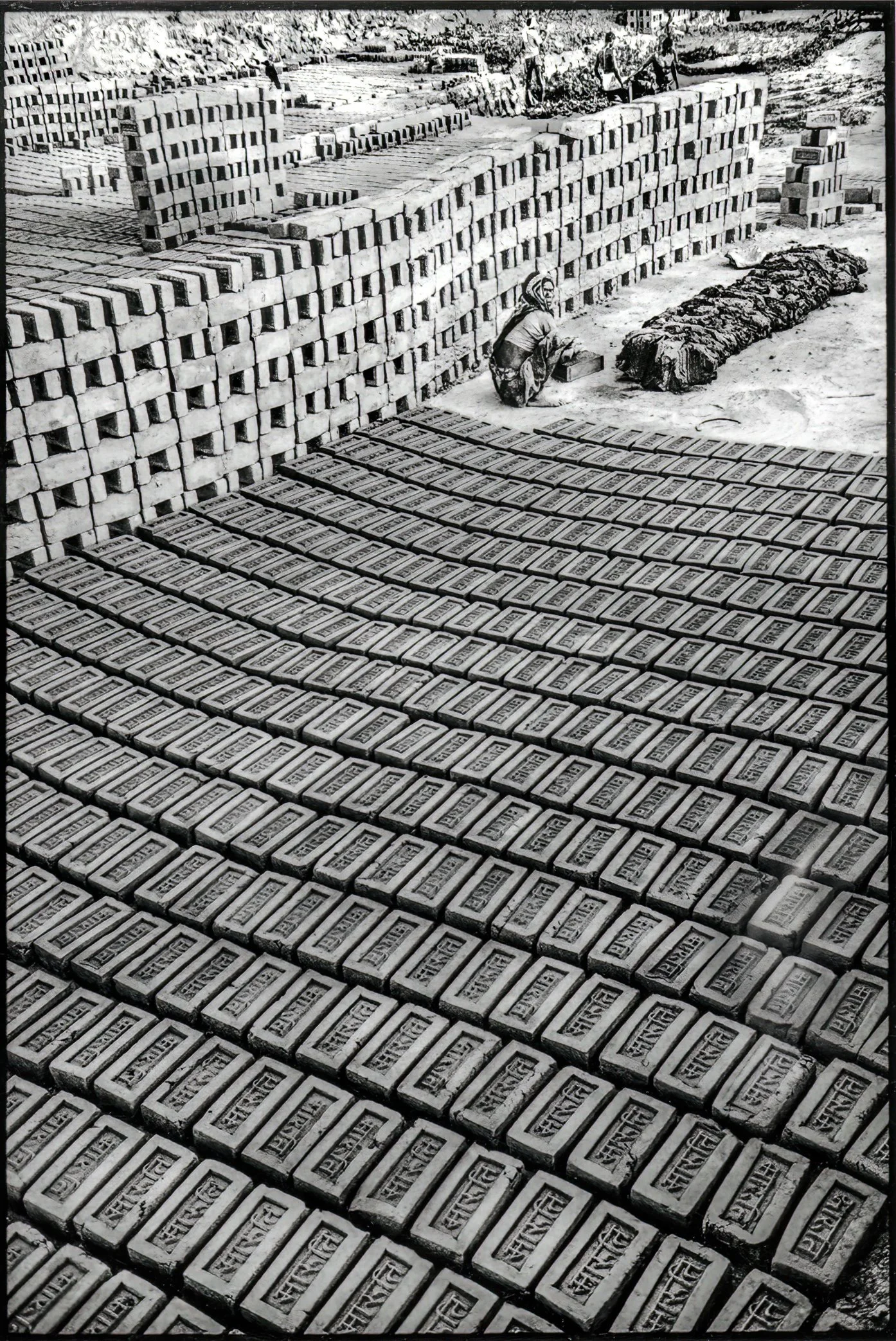
Patna, Bihar, India, April 2003 - A worker shapes wet earth into rows of bricks at a kiln yard in Bihar. Working for long hours in a crouched position, she can produce more than a thousand bricks in a single day.
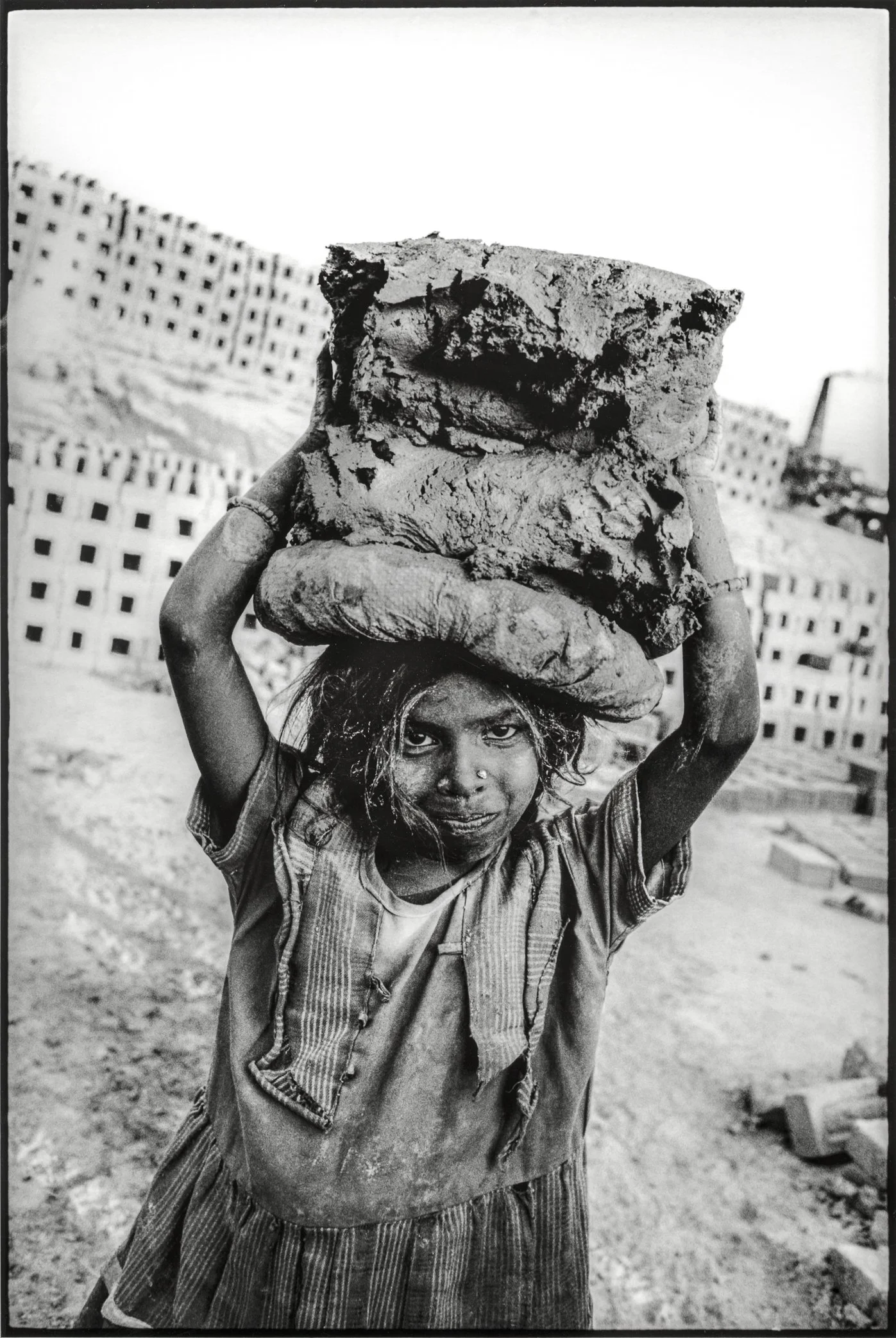
Patna, Bihar, India, April 2003 - A young girl carries freshly mixed clay on her head at a brick kiln in Bihar. Around her, walls of drying bricks rise from the earth, while childhood is folded into the same cycle of labor as the adults beside her.
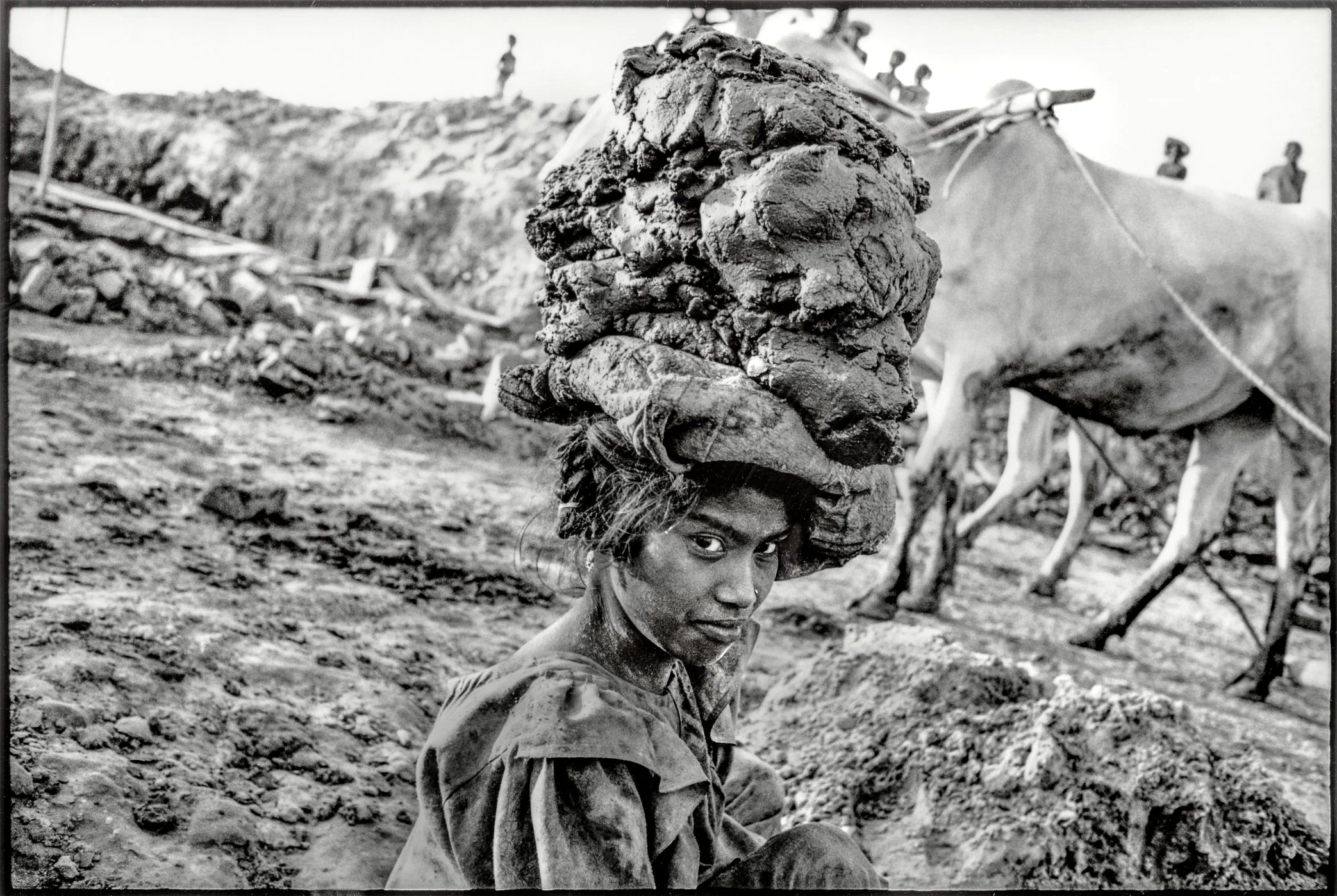
Patna, Bihar, India, April 2003 - A young worker carries wet clay through a brick kiln yard in Bihar. The mud will be shaped by hand into new bricks, part of a family labor cycle that begins before firing and continues until the finished bricks are carried away.
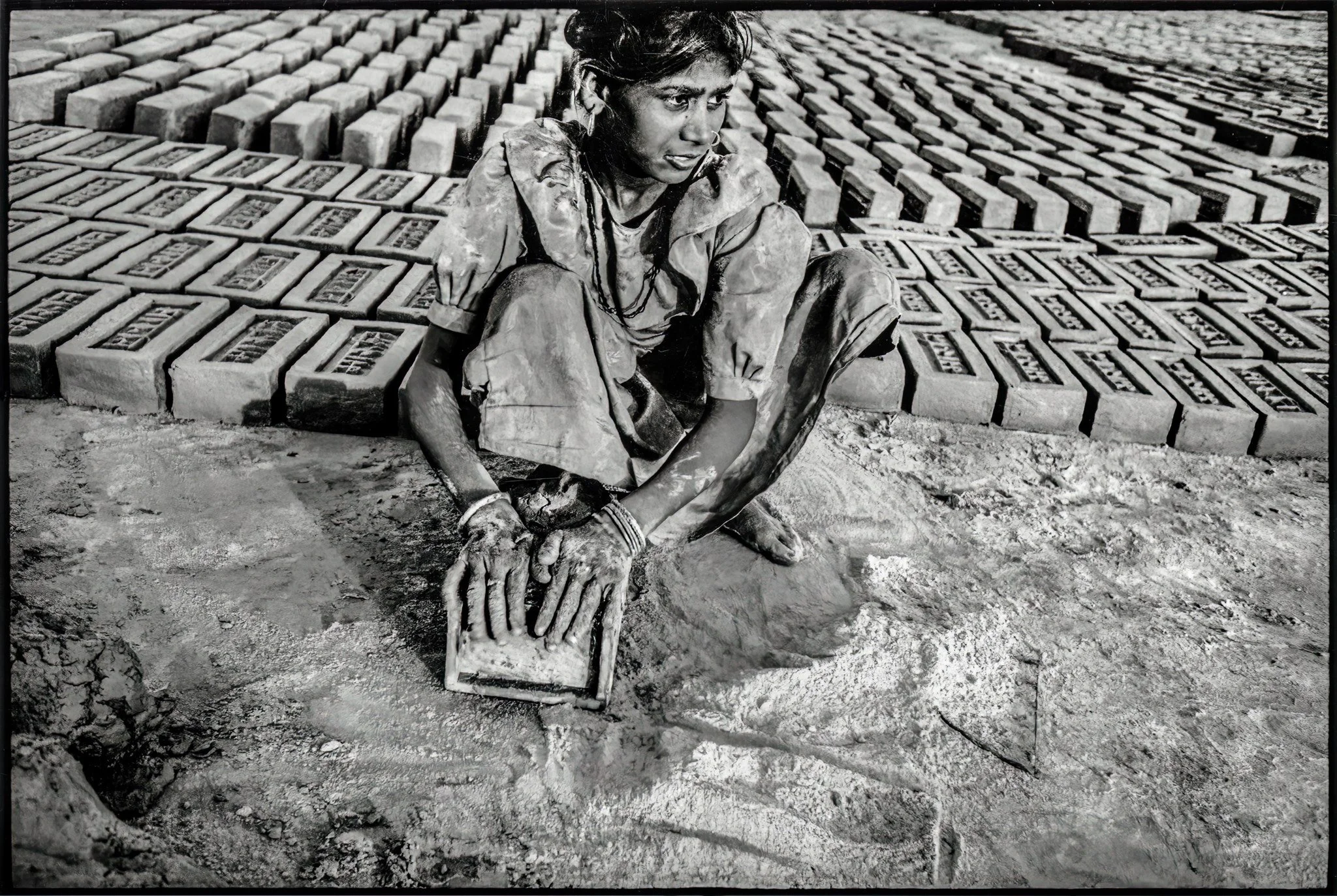
At a brick kiln - Patna, in the Indian state of Bihar, a child shapes wet clay by hand before it is left to dry in the sun. Rows of newly made bricks stretch across the yard behind her, each one carrying the mark of human labour before it enters the fire.
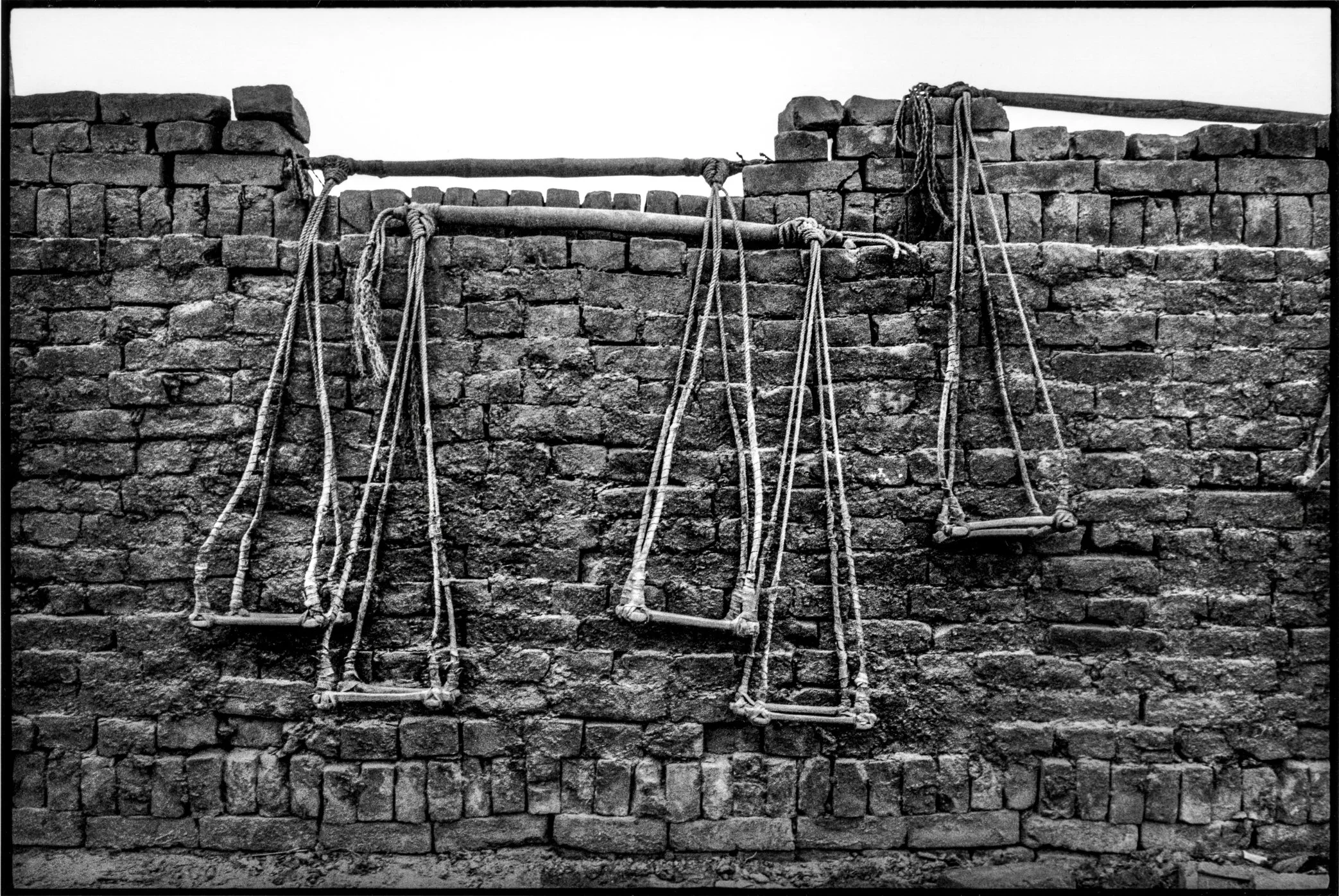
Patna, Bihar, India, April 2003 - After a day of carrying bricks, workers’ baskets hang from the kiln wall. The tools of labor are left in place, waiting to be lifted again with the next day’s work.
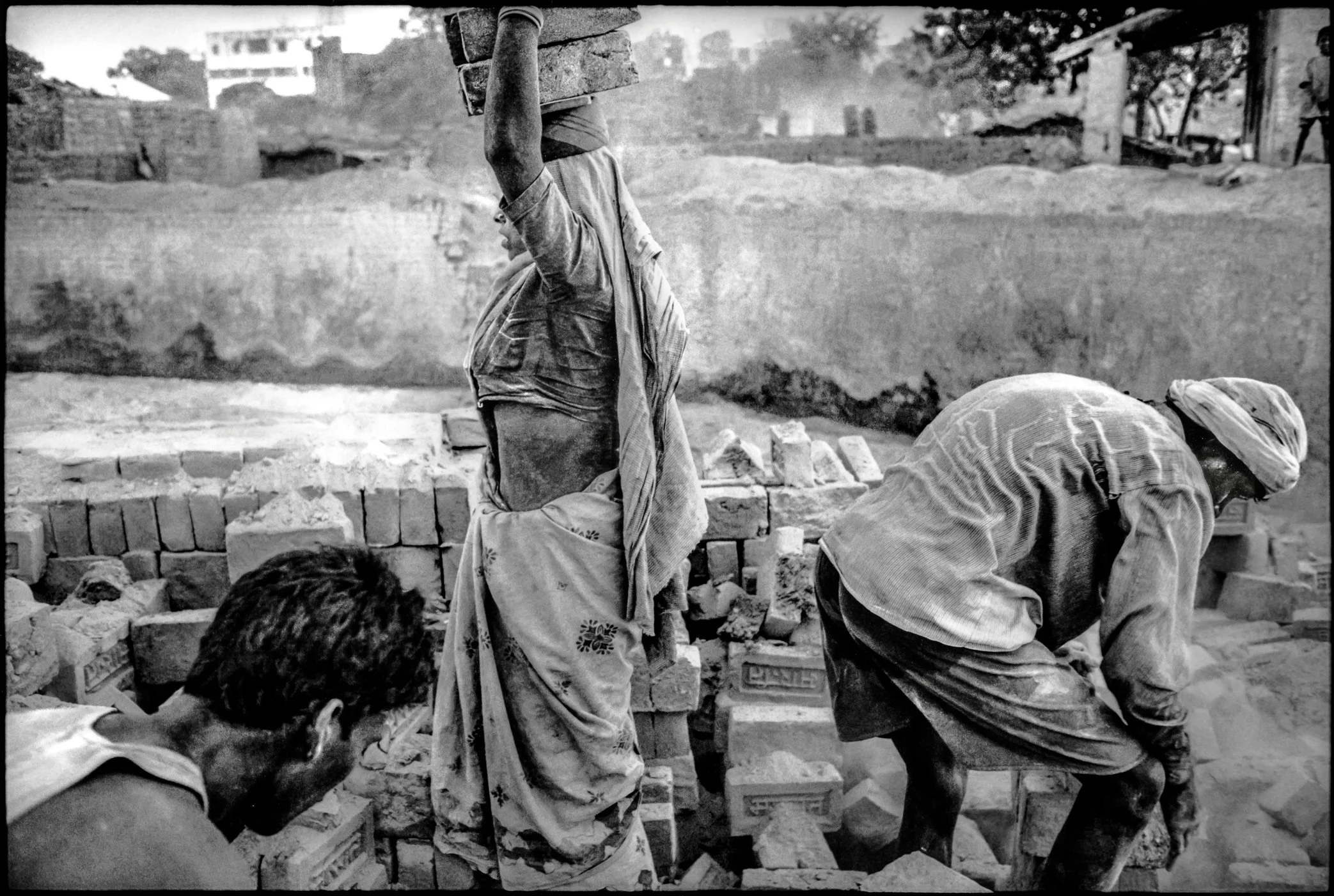
Patna, Bihar, India - April 2003. Under the harsh April sun, workers move bricks inside a kiln pit where heat rises from the ground and dust hangs in the air. Each load is carried by hand, one stack after another, in a cycle of labor shaped by poverty, endurance, and the demand for cheap building materials. In this narrow space of brick and heat, the body becomes the only machine.
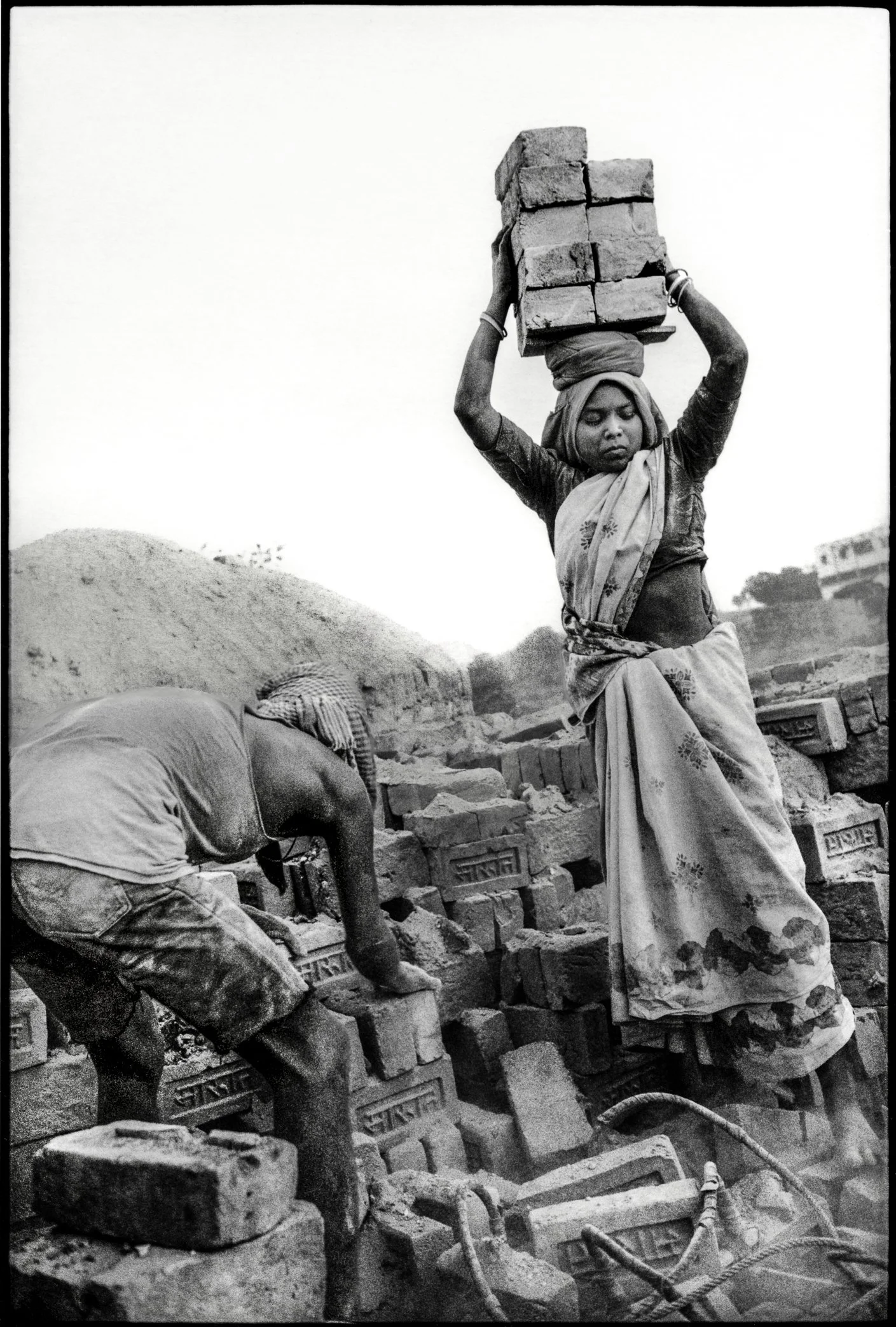
Patna, Bihar, India, April 2003 - Workers move freshly fired bricks from the kiln yard for transport and sale. Each load is carried by hand, through dust thick enough to become part of the work itself - entering the air, the skin, and the lungs of those who labor there.