Laos: The Price of a Falling Kip
An economy measured in waiting, shrinking choices, and daily survival
Across Laos, the economic crisis is not only measured in exchange rates, inflation figures, public debt, or the falling value of the Lao kip. It is visible in quieter places: a shopkeeper waiting behind shelves of imported goods, a child playing beside her mother’s market stall, a fruit seller recalculating prices before the day begins, a hotel worker cleaning a pool for visitors who may or may not return.
“When money loses value, daily life begins to shrink.”
Photographed in Vientiane, Pakse, and Luang Prabang during a period of sharp currency depreciation, this work follows the human cost of an economy under pressure. As the kip weakened, the price of fuel, food, imported goods, construction materials, labor, and basic services rose quickly. For many people, the crisis did not arrive as a single dramatic event. It entered life gradually - through cooking oil, transport costs, market prices, unpaid waiting time, and the difficult decision of what a family could still afford.
In the markets, many products depend on goods brought from Thailand, China, Vietnam, and other neighboring countries with stronger currencies. For small traders, prices became harder to control. A seller might buy stock at one rate and sell it under another. Profit margins narrowed. Customers bought less. Some shops stayed open not because business was good, but because closing would mean losing everything already invested.
“Inflation is not only a number. It is hesitation at the counter, a delayed purchase, a smaller meal, and a longer day of waiting.”
The crisis also reached the tourism economy. After years of disruption from the pandemic, Laos reopened to foreign visitors, but recovery was uneven. Hotels, restaurants, guesthouses, construction sites, boat operators, and small tourism businesses faced rising costs while trying to rebuild. Some workers had already left for better wages across the border in Thailand, leaving businesses short of labor just as they were trying to reopen.
In Pakse, the largest city in southern Laos, the strain appears in hotel kitchens, empty entertainment venues, market stalls, and small street-food shops. Larger businesses may survive because they have more capital, but smaller operators live closer to the edge. For them, recovery is not simply a return of tourists. It is a daily calculation between higher costs, fewer workers, uncertain customers, and the need to keep going.
In Luang Prabang, even sacred and tourist sites are tied to the same economic pressure. At Pak Ou Caves, where pilgrims and visitors have long arrived by boat, rising fuel prices affect boat fares, visitor numbers, and the income of souvenir sellers and families whose livelihoods depend on the river. What looks like a spiritual landscape is also an economy - fragile, local, and deeply vulnerable to costs beyond its control.
“The falling kip did not only change prices. It changed time, labor, movement, and hope.”
These photographs look at an economy from the inside - through traders, workers, monks, children, hotel staff, food sellers, shopkeepers, and families trying to hold daily life together. The images do not show collapse in the dramatic sense. Instead, they show something slower and more intimate: people adjusting, waiting, working longer, earning less, and finding ways to survive as the value of money changes faster than life can adapt.
In Laos, the price of a falling kip is not only paid in markets or banks. It is paid in meals made smaller, shops kept open through uncertainty, workers leaving home, families spending more carefully, and communities learning to live with an economy where tomorrow’s price may no longer be the same as today’s.
“This story asks what happens when a national economic crisis becomes ordinary life — and how people continue when survival itself becomes more expensive.”
Photographed on assignment for Neue Zürcher Zeitung (NZZ), as part of a wider visual report on Laos’s economic crisis, the falling kip, and how inflation, labor migration, tourism, and daily trade reshaped life in Vientiane, Pakse, and Luang Prabang.
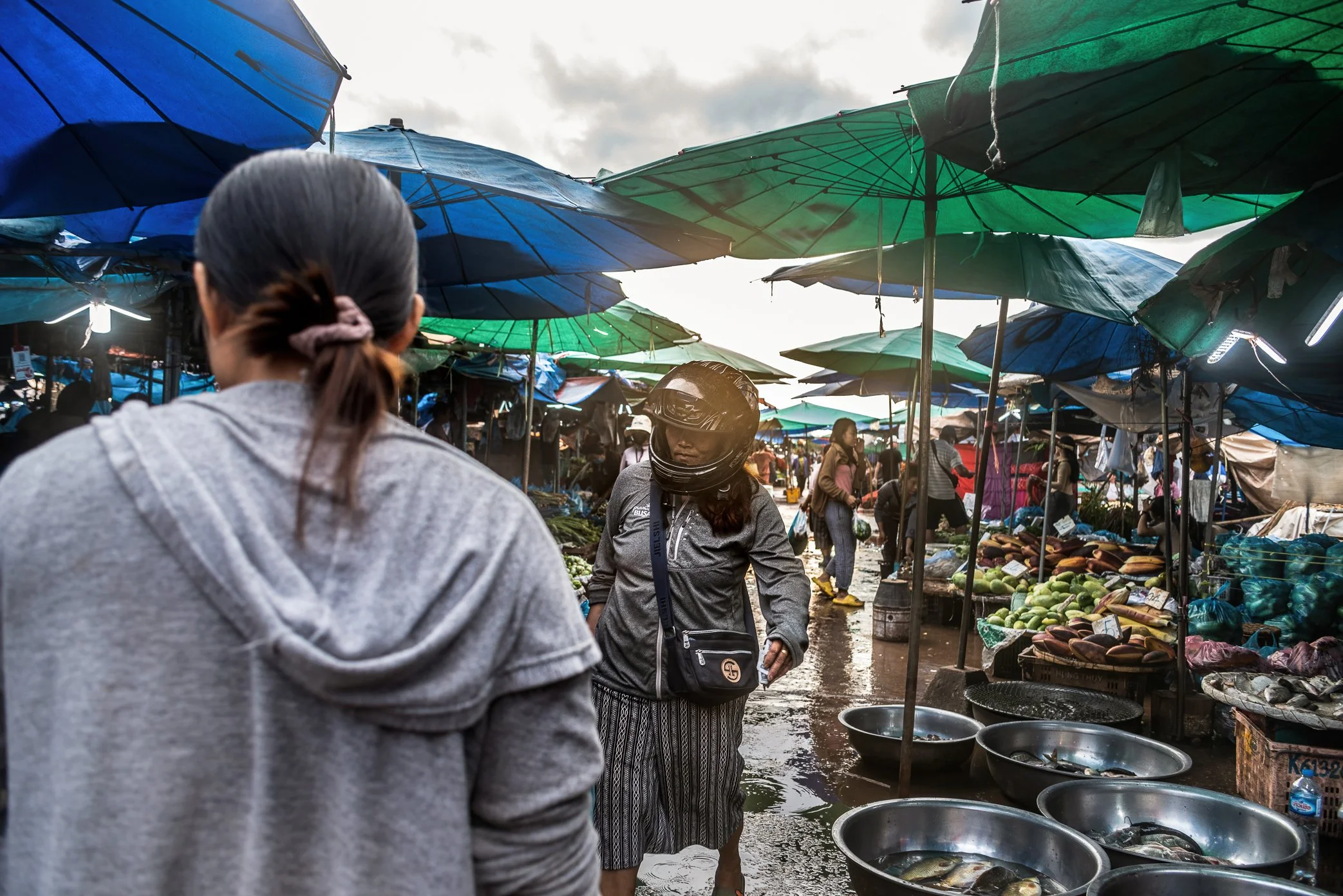
Vientiane, Laos, 2022 - Shoppers move through Oxy wholesale fresh market on the outskirts of Vientiane, once a busy source of produce and daily goods for traders, restaurant owners, and small shopkeepers. As fuel prices rose and the Lao kip weakened sharply against the Thai baht, many imported goods from Thailand became increasingly expensive. For lower- and middle-income sellers, the market became harder to rely on; fewer came to buy, and the cost of basic supplies began to outpace the money they could earn.
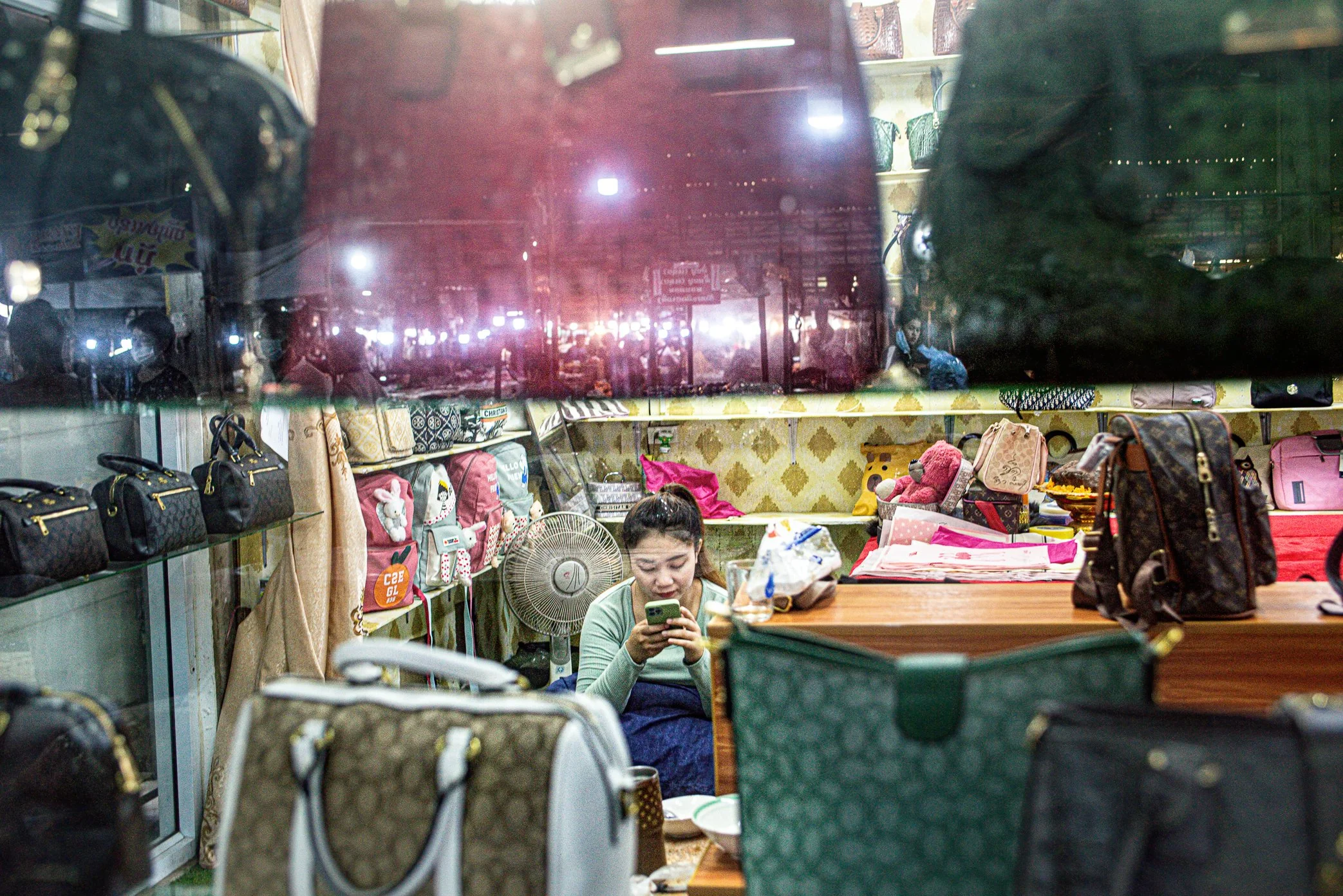
Vientiane, Laos, 2022 - A shopkeeper sits behind a display of copy-brand handbags and fashion goods as traffic lights reflect across the shop window. For many young Lao consumers, foreign fashion remains desirable, but purchasing power has weakened sharply amid economic decline, inflation, and the falling value of the kip. After COVID-19 and the wider global economic shocks that followed, many small shops selling low-cost fashion products have closed; those that remain open often wait through long days with few customers.
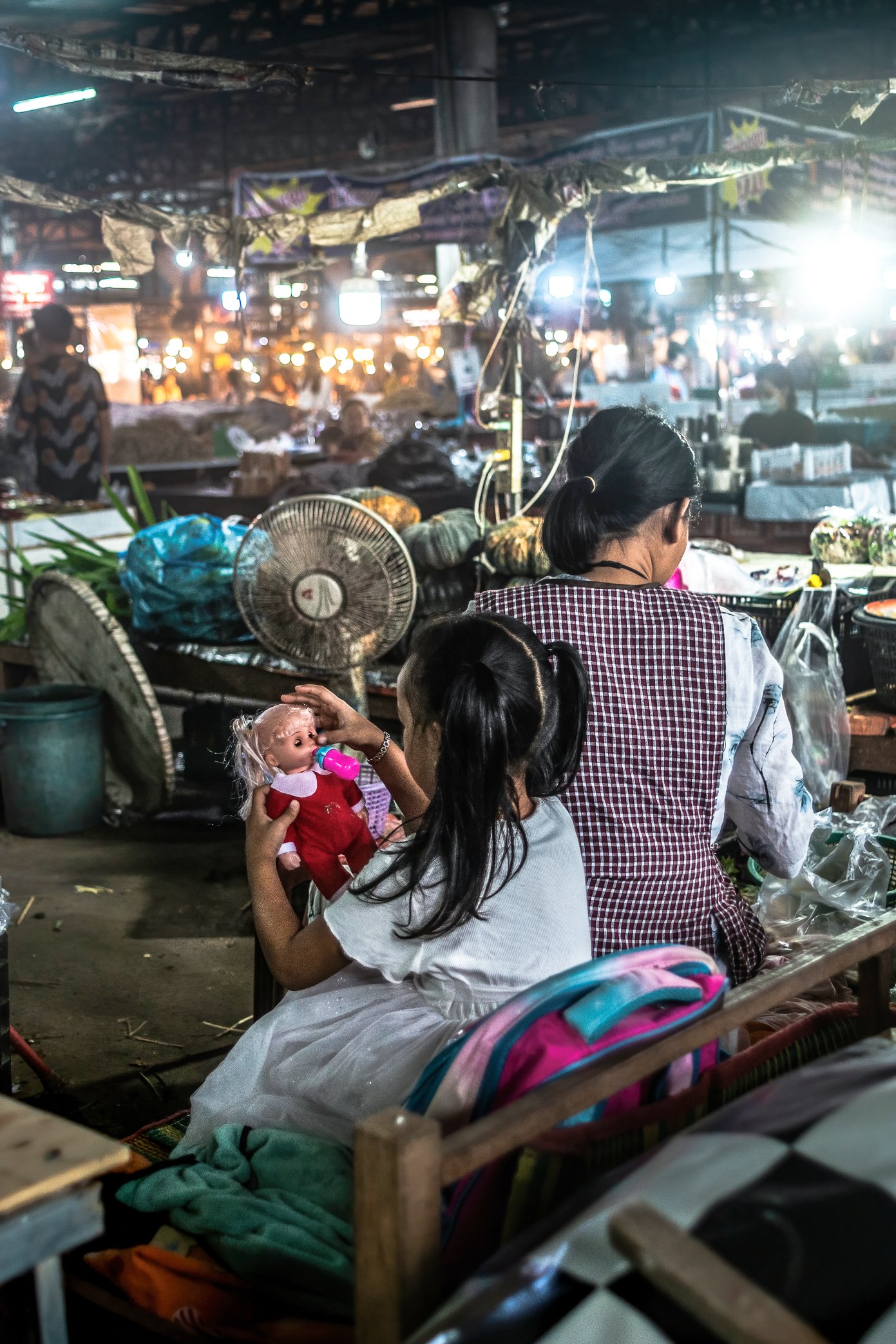
Vientiane, Laos, 2022 - A child plays beside her mother’s stall at Oxy wholesale fresh market. As purchasing power weakens and sales slow, many vendors spend longer hours waiting for customers, often bringing their children and family members with them to the market. What was once a place of quick exchange has become, for some, a place to wait, work, and keep family life close because there is little money left for other choices.
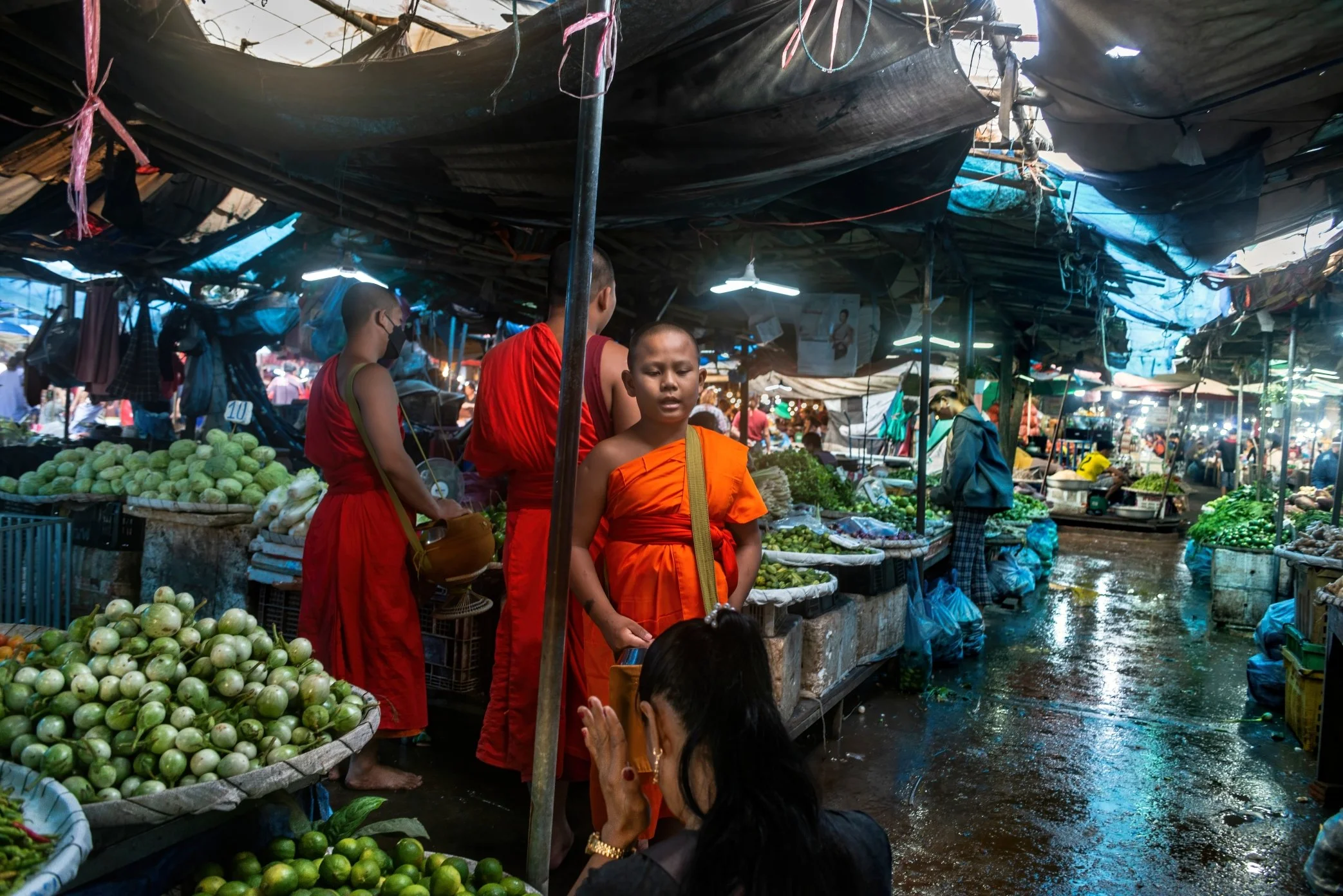
Vientiane, Laos, 2022 - Monks receive morning offerings from vendors at Oxy wholesale fresh market, where faith and commerce meet before the day’s trading begins. As Laos faces rising prices, a weakened kip, and the wider effects of global economic shocks, many market sellers struggle to earn what they once did. For some, daily offerings are both a religious practice and a quiet hope that the day will bring enough customers, enough sales, and enough relief to keep going.
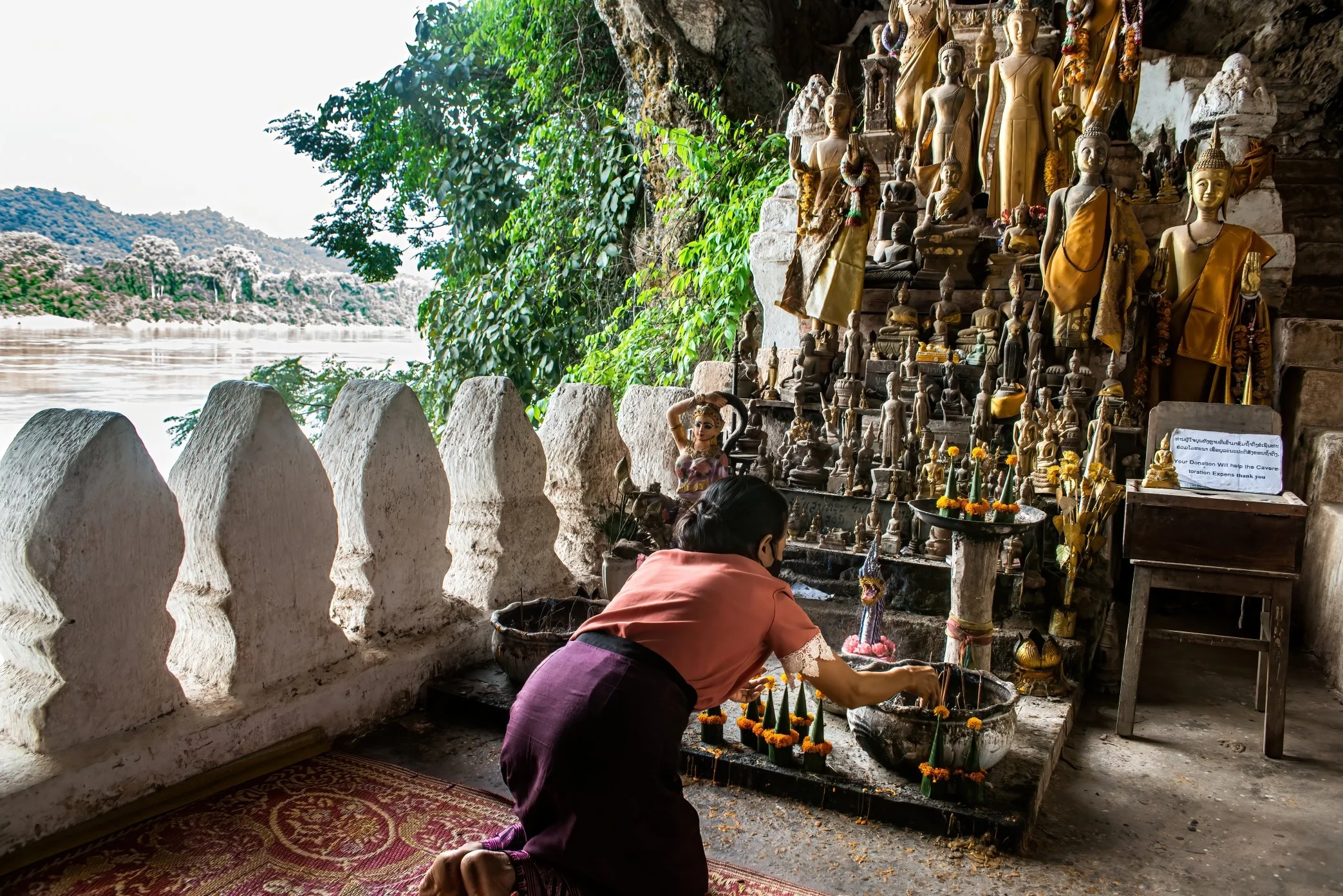
Pak Ou Caves, Luang Prabang. Laos, 2022 - At Tham Ting, one of the sacred Pak Ou caves overlooking the Mekong River, a souvenir seller makes an offering and prays for better business. The caves, among Luang Prabang’s best-known pilgrimage and tourist sites, can be reached only by boat. As the weakening Lao kip has pushed up the cost of imported fuel, boat fares have risen sharply - in some cases doubling - leaving fewer visitors to make the journey and fewer customers for those whose livelihoods depend on them.
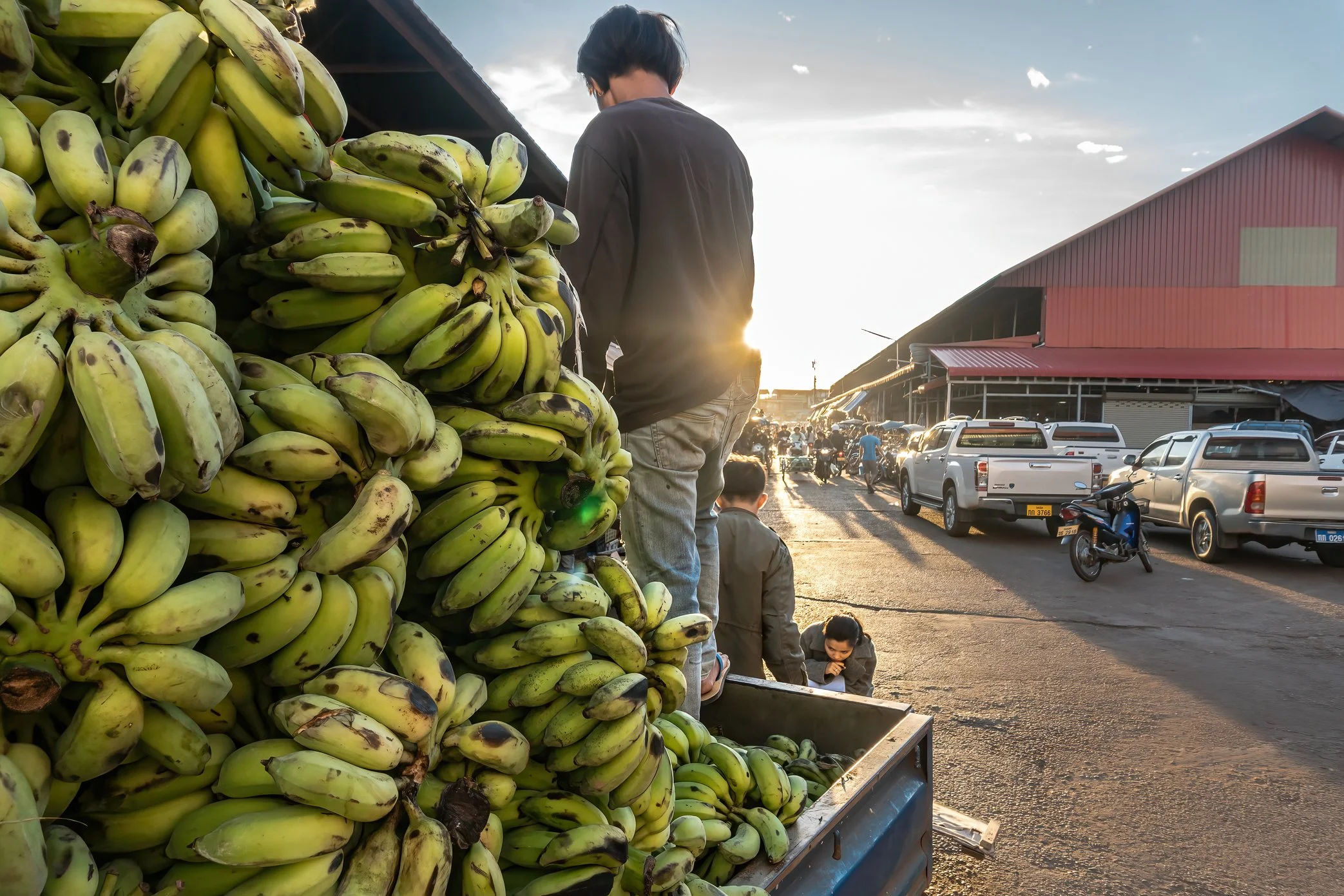
Vientiane, Laos, 2022 - A truck loaded with fresh bananas arrives at the market in the late afternoon. Although bananas are grown locally in Laos, inflation has raised the cost of planting, fuel, transport, and daily labor, pushing even familiar local produce into a more uncertain economy. As the kip weakens, price increases move through the food chain - from growers and traders to market sellers and the families who buy from them.
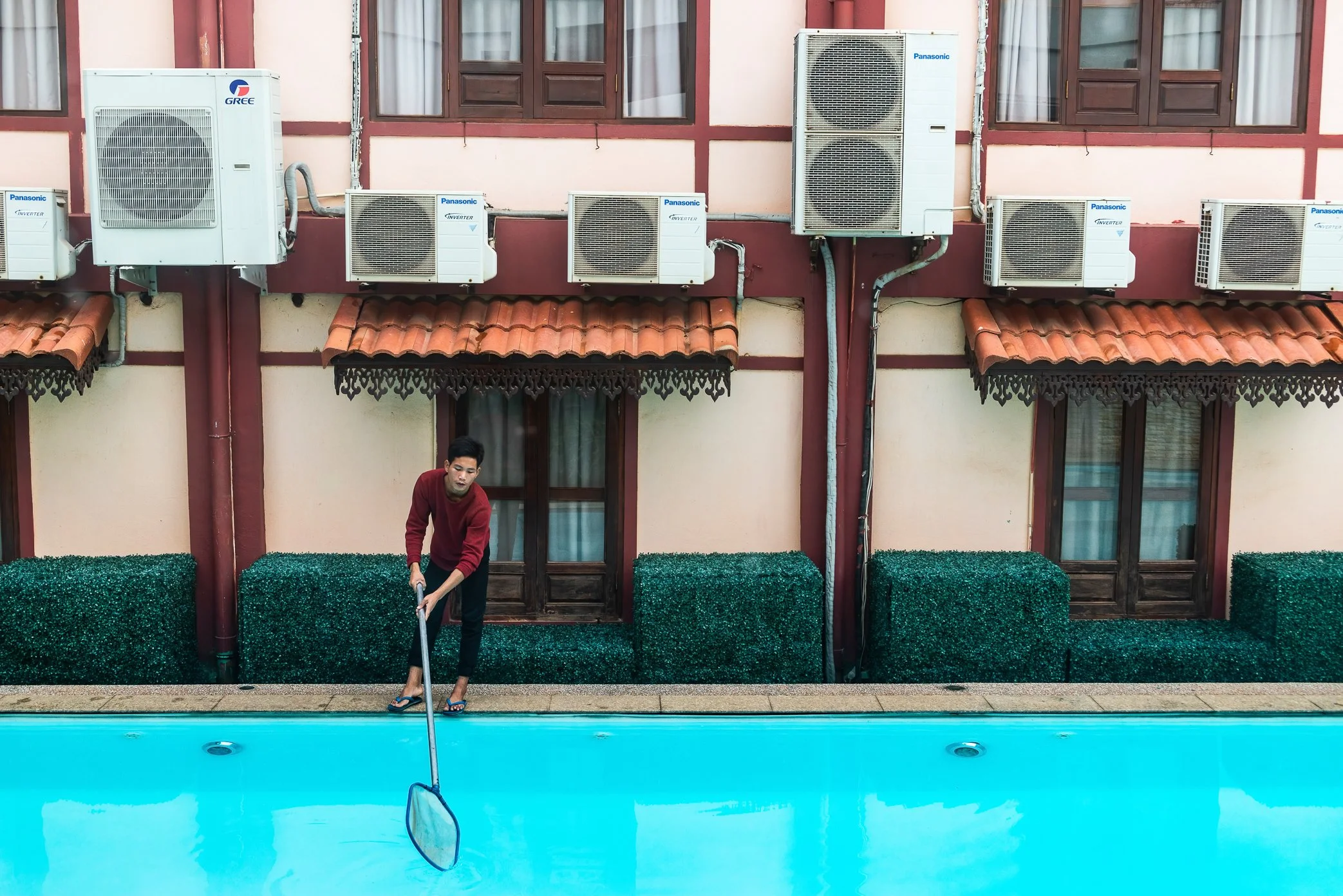
Vientiane, Laos, 2022 - A hotel worker cleans a swimming pool as Laos tries to rebuild its tourism economy after reopening to foreign visitors. But arrivals remain below expectations, and many small hotels, guesthouses, and inns struggle to hire enough staff or maintain regular service. In a fragile recovery, the businesses most able to survive are often the medium and larger hotels with enough capital to keep operating standards in place.

Pakse, Laos, 2022 - Inside a nightclub in Pakse, empty tables sit beneath laser lights and a silent stage. As the Lao kip weakens, some entertainment venues have shifted into the hands of foreign investors with stronger purchasing power than many local operators. In the city’s nightlife economy, the crisis is visible not only in what people can no longer afford, but also in who is still able to invest, reopen, and wait for customers.
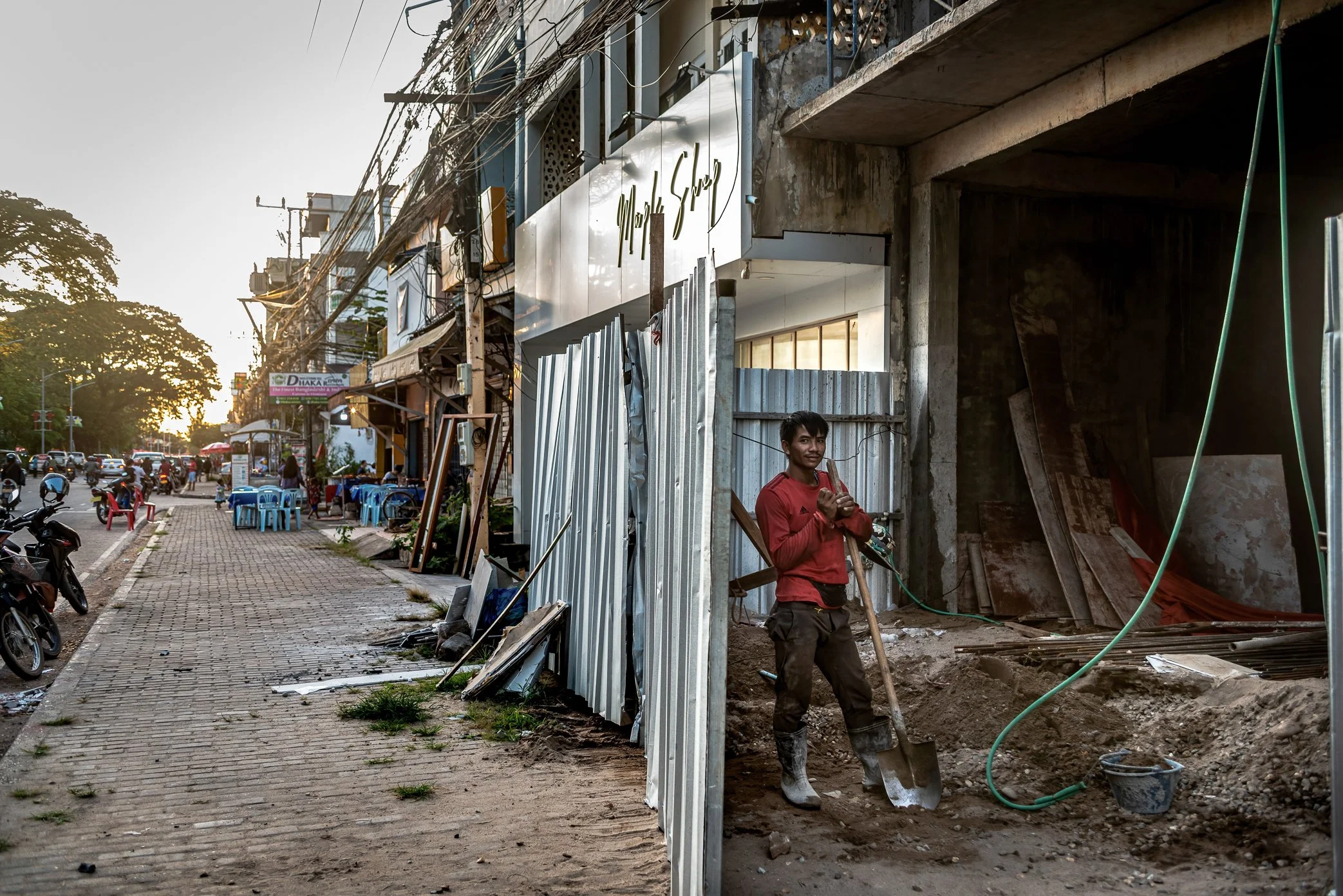
Vientiane, Laos, 2022 - A construction worker repairs a building as Laos reopens to tourism after years of disruption. The economic crisis that began during COVID-19 deepened with global shocks from the Russia–Ukraine war, weakening the Lao kip and pushing many workers to seek better wages in Thailand. As hotels, guesthouses, and homes rush to repair properties left idle for years, the shortage of construction labor has made recovery slower, more expensive, and harder to complete in time for the returning tourist season.
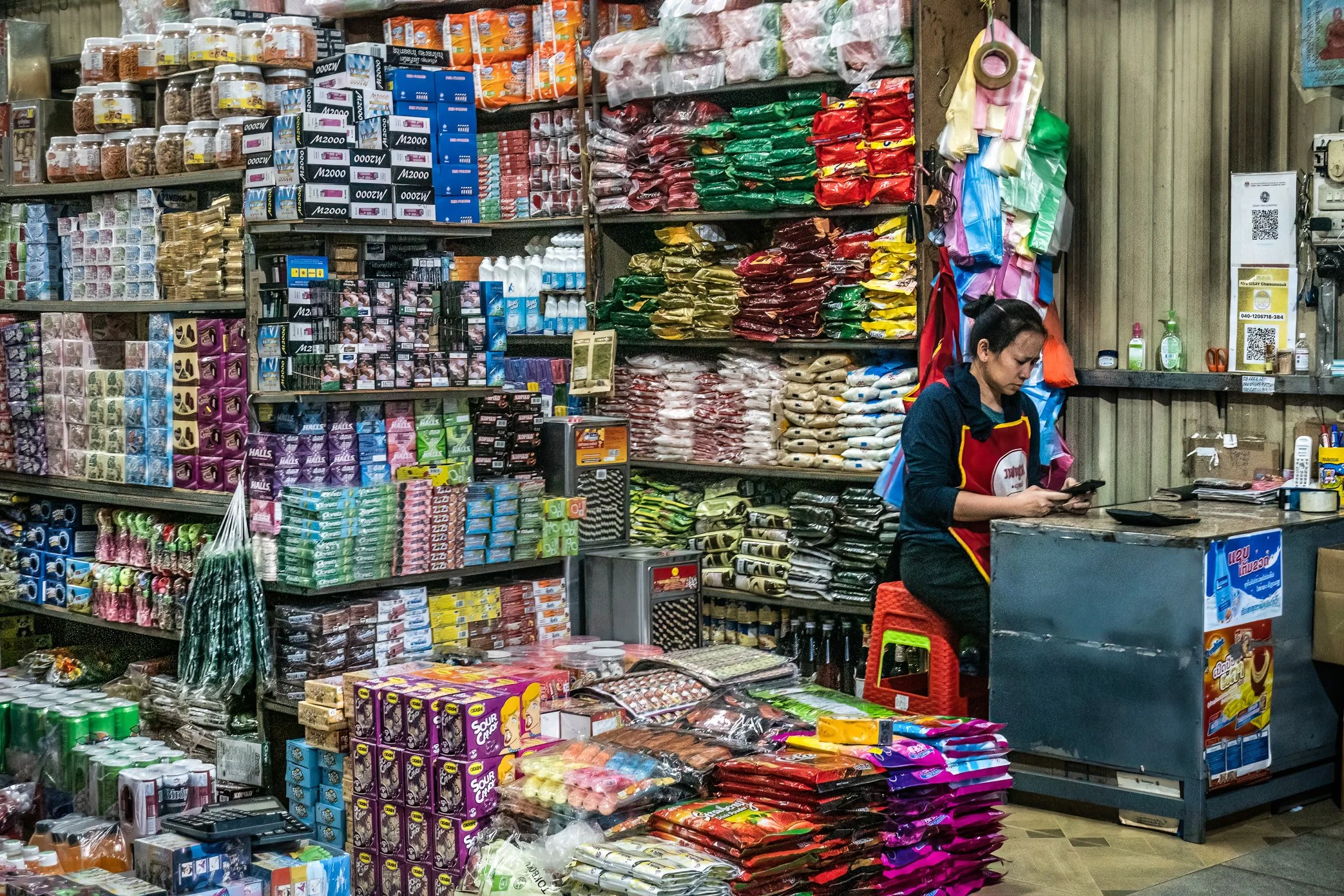
Pakse, Laos, 2022 - A shopkeeper waits among shelves of imported goods at a grocery stall in Pakse market. As the Lao kip weakens, prices for products brought in from neighboring countries become harder to predict, leaving small retailers uncertain about what they will earn from one day to the next. In shops like this, inflation is measured not only in numbers, but in hesitation - in every price adjusted, every sale delayed, and every customer forced to buy less.
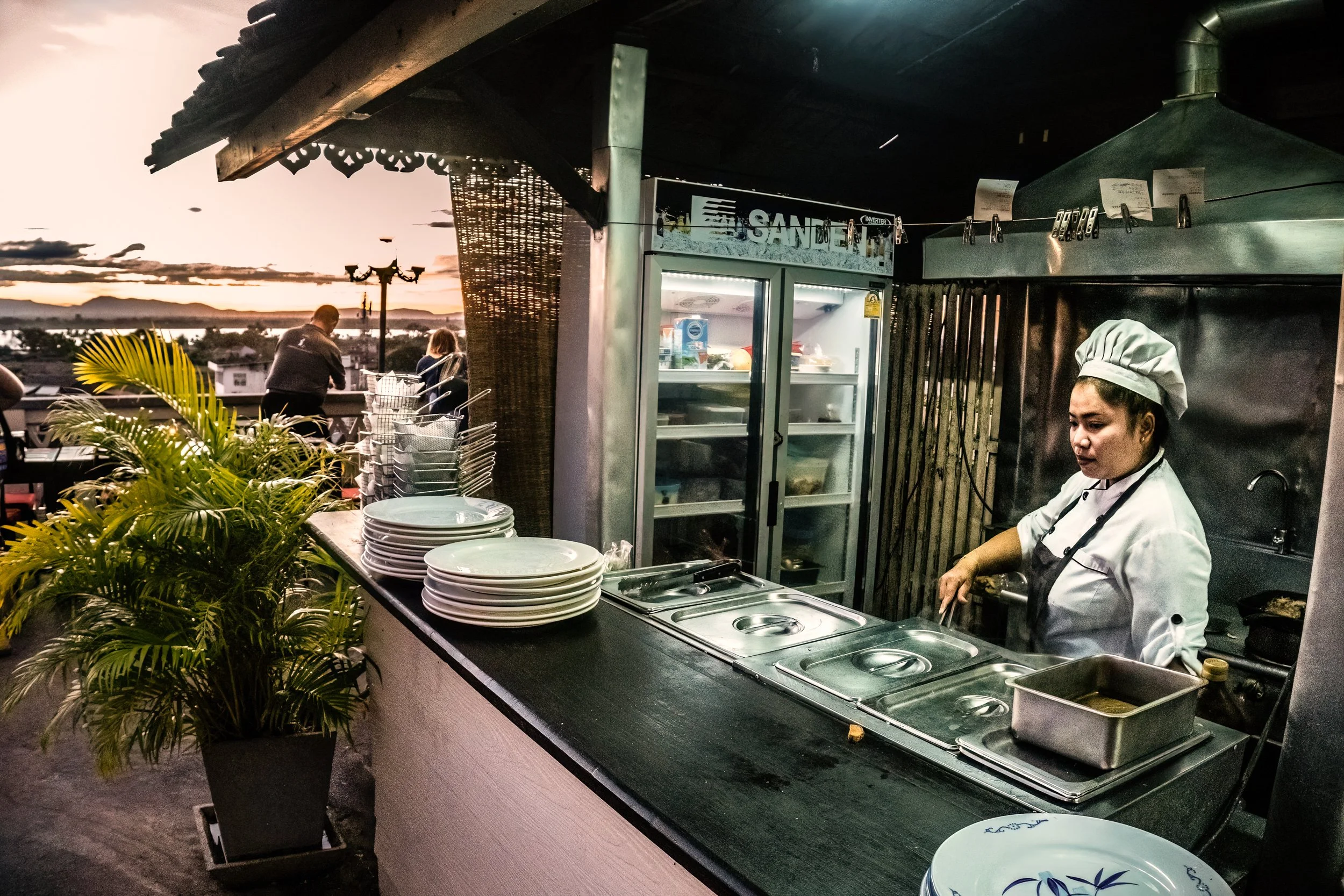
Pakse, Laos, 2022 - A hotel kitchen prepares for evening service as foreign tourists slowly return to southern Laos. But the recovery is uneven. As the kip weakens and operating costs rise, small tourism businesses struggle to know whether visitors can still bring the income and jobs they once depended on. Larger hotels may be able to keep kitchens open, staff employed, and services running, while smaller operators face a more uncertain season.
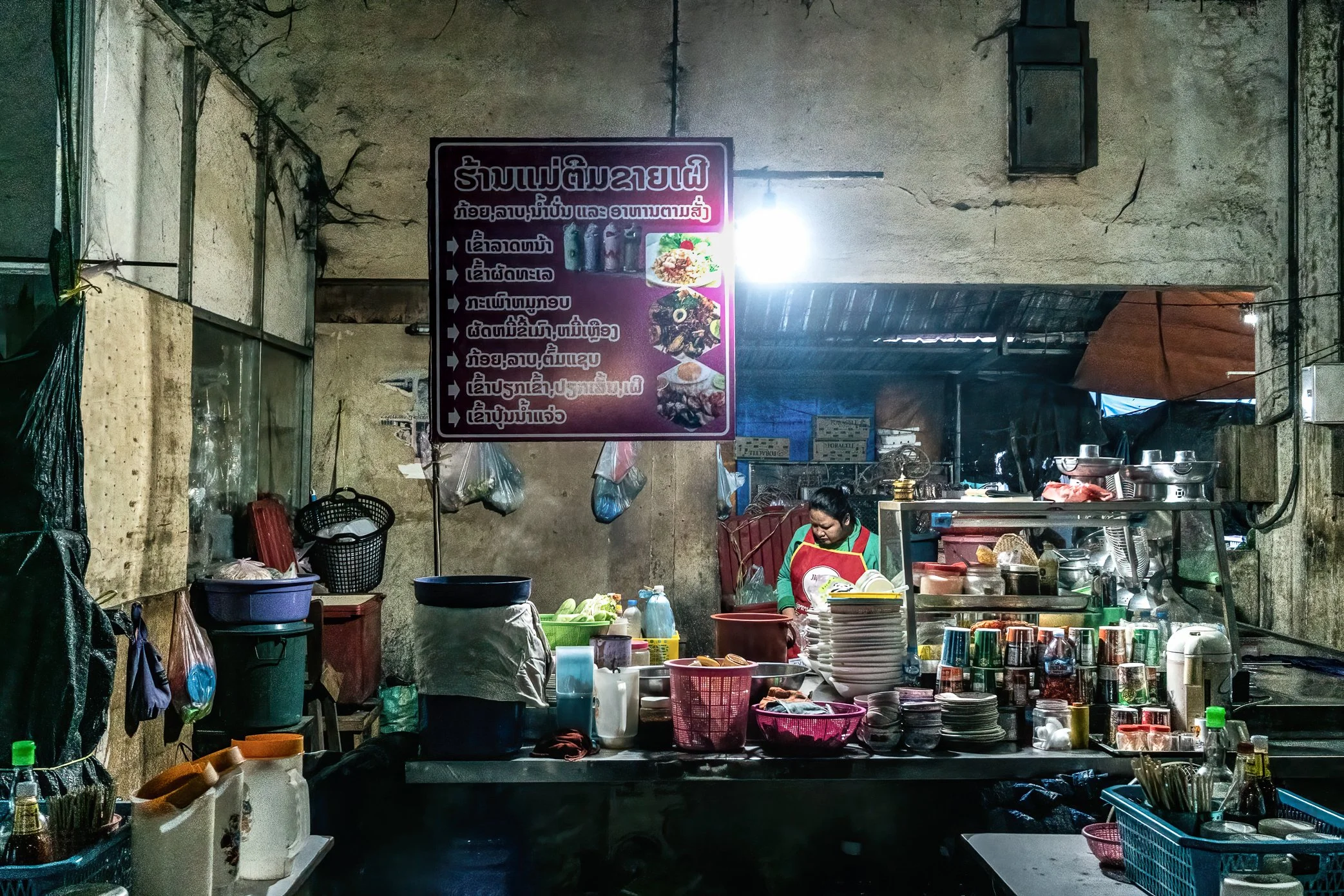
Pakse, Laos, 2022 - A food-stall owner prepares her kitchen before opening for the day. Nearly every seasoning and ingredient used in her shop comes from neighboring countries, tying even a small local meal to exchange rates, fuel costs, and the falling value of the Lao kip. In places like this, inflation enters daily life quietly - through cooking oil, sauces, rice, noodles, and every plate sold at the counter.
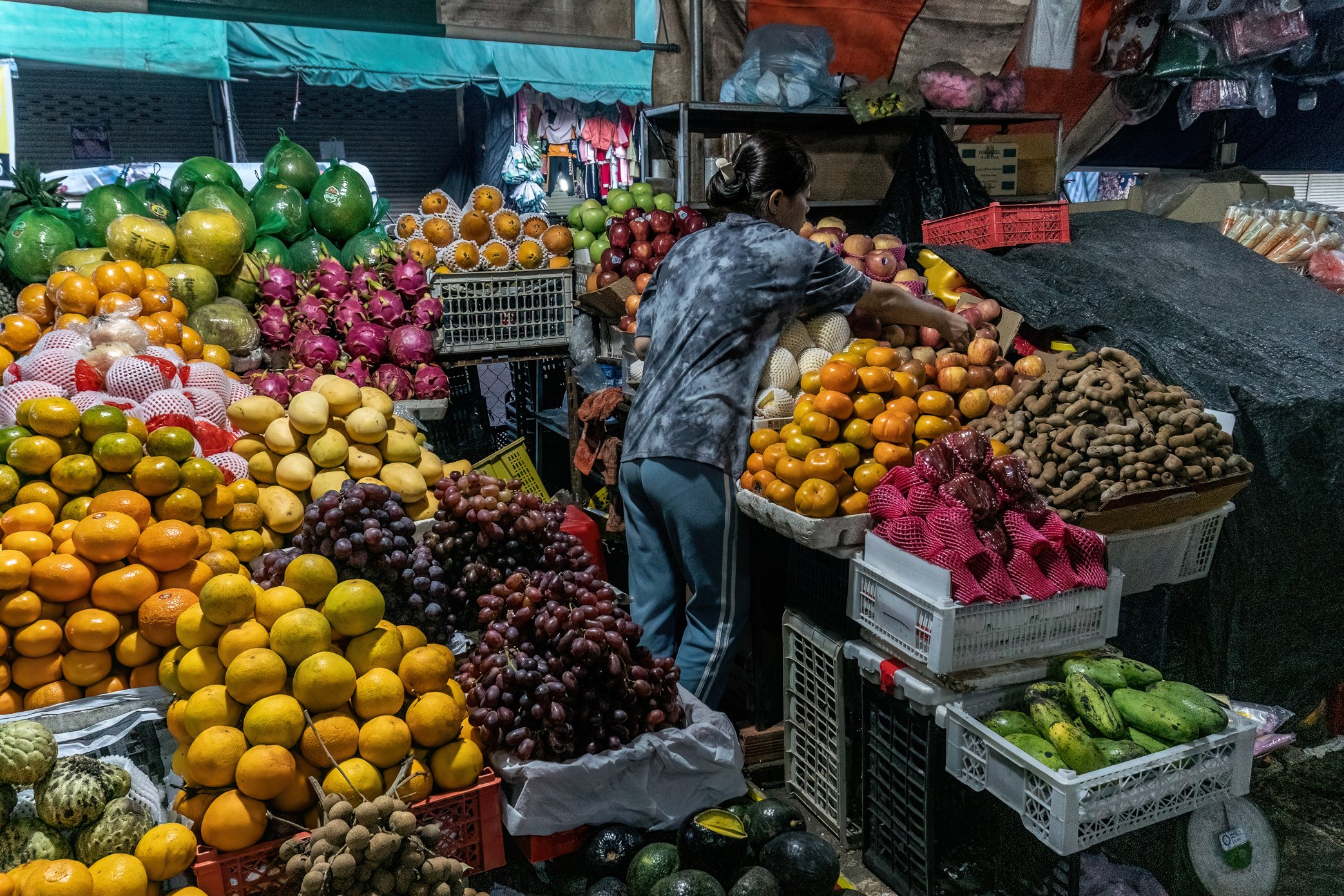
Pakse, Laos, 2022 - A fruit seller prepares her stall before the market opens. Much of the fruit she sells is imported from countries with stronger currencies than the Lao kip, making each purchase more expensive before it even reaches her shop. As the kip continues to weaken, prices shift quickly and profit margins shrink. By the end of the day, what remains from selling may be little more than the cost of staying open.
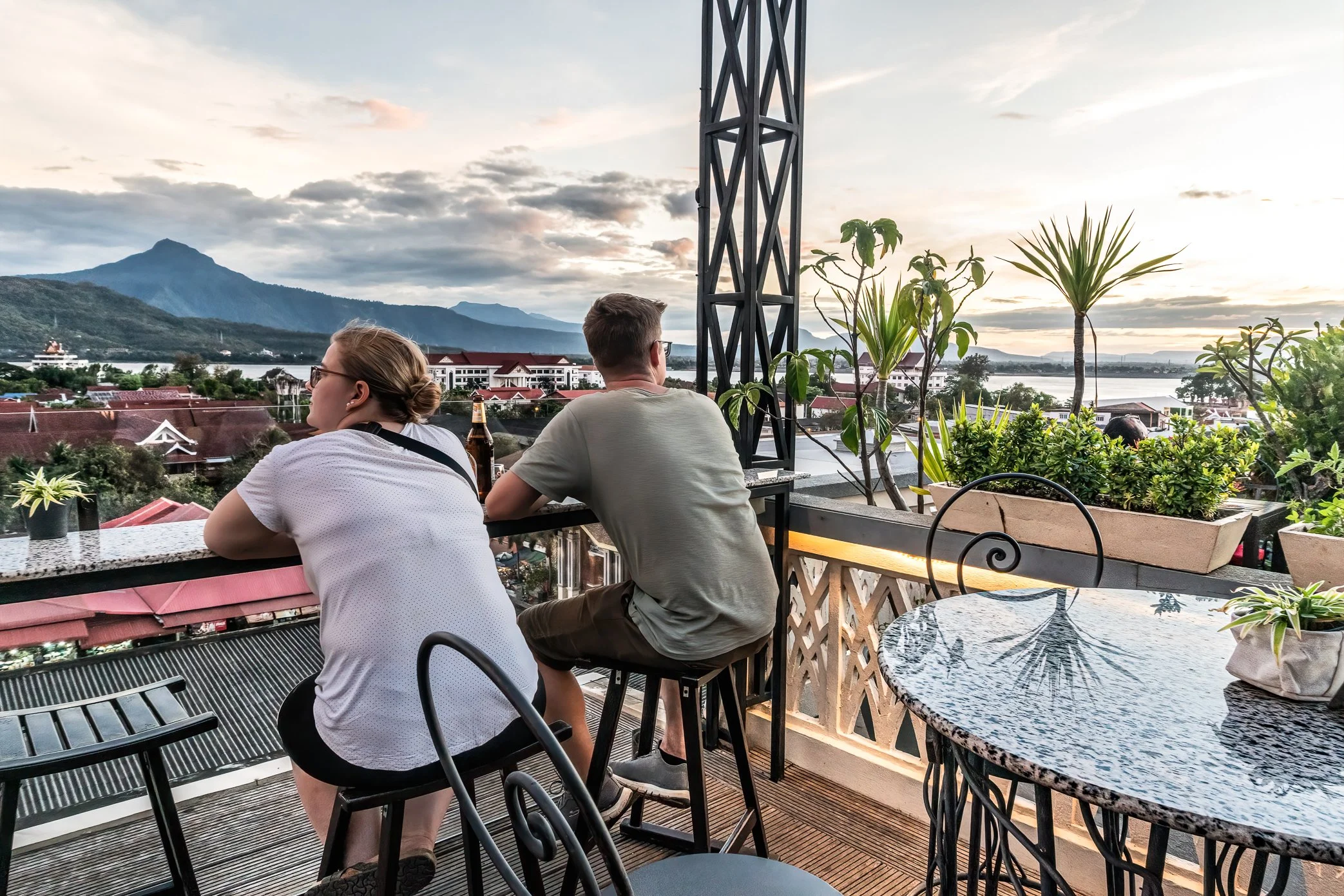
Pakse, Laos, 2022 - Foreign tourists have begun returning to Pakse, the largest city in southern Laos. But amid the continuing crisis of a weakened Lao kip, small tourism operators still struggle to know whether the industry can generate income and jobs as it once did. Larger businesses, such as three-star hotels and established operators, appear better able to absorb rising costs and survive the uncertainty, while smaller guesthouses, restaurants, and tour providers face a more fragile recovery.
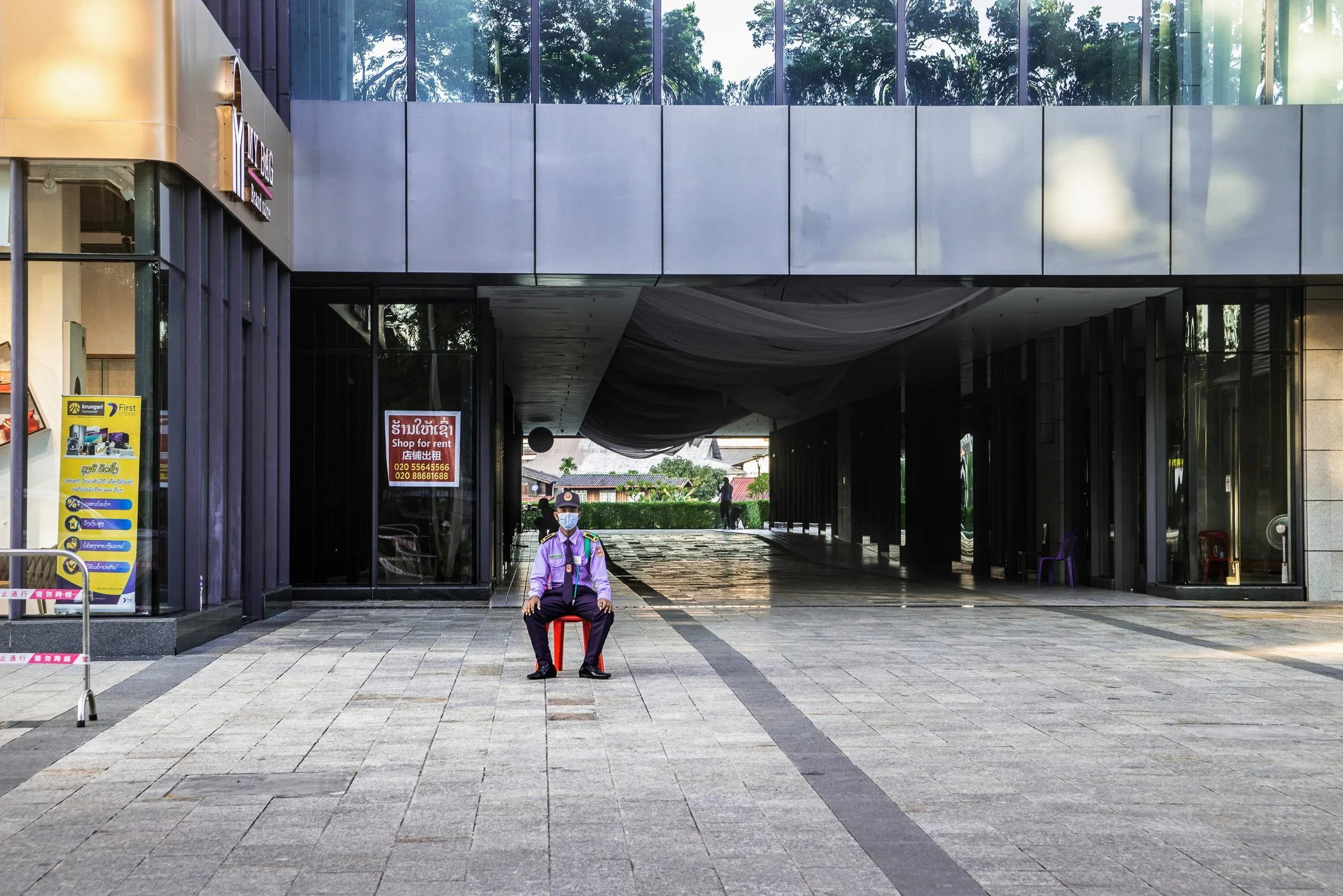
Vientiane, Laos, 2022 - A security guard sits outside a commercial building where shop spaces stand empty. After years of economic slowdown, many guards in Laos are employed less to manage crowds or protect busy businesses than to watch over closed storefronts and idle assets. In the stillness of these spaces, the crisis is measured not by movement, but by what has stopped.
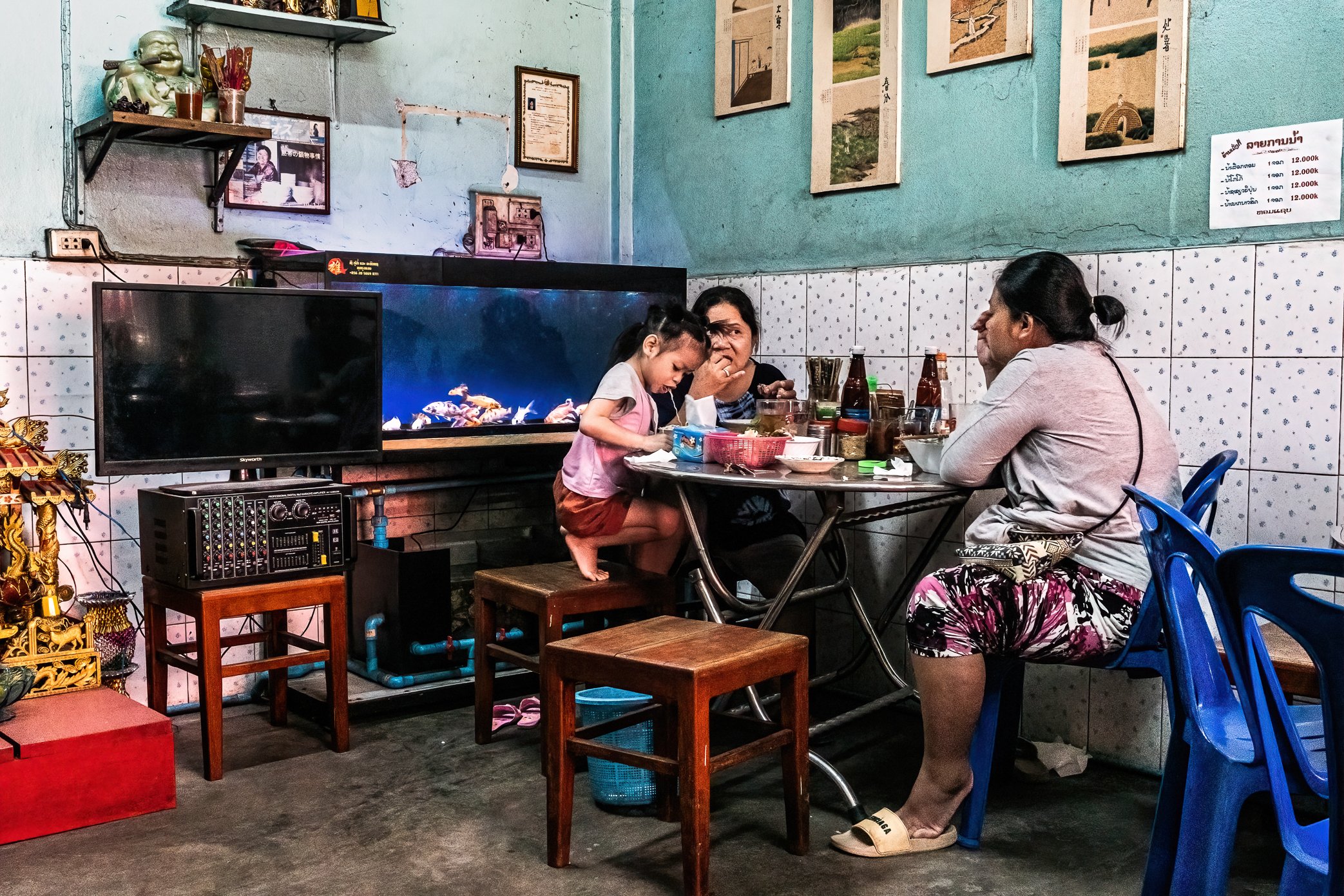
Pakse, Laos, 2022 - A family eats at a small street-food shop in Pakse. As inflation weakens household budgets, places like this remain an essential part of daily life - affordable, familiar, and close to home. For many Lao families, eating out no longer means leisure; it is a careful choice shaped by price, convenience, and the need to make each day’s money go further.