Between Survival and Passage - Li Fishing and the Future of Migratory Fish in Siphandone, Southern Laos
In Siphandone, southern Laos, the Mekong is not a single river channel but a living maze of islands, rapids, waterfalls, submerged rocks, and seasonal currents. This complex riverscape forms one of the most important fish migration corridors in the Lower Mekong Basin, where many species move between Cambodia and Laos in response to changing water levels, rainfall, discharge, and ecological cues.
Scientific studies have long recognized the Khone Falls area as a critical passage for migratory fish. Local communities have understood the same movements through generations of observation, practice, and inherited river knowledge.
At the heart of this relationship is the Li - a traditional bamboo wing trap built into the current. More than a fishing device, the Li represents a deep understanding of hydrology, fish behavior, family history, and place. In villages such as Ban Hang Khon, fishermen do not simply wait for fish; they read the river. They know which current will rise first, which rock will redirect the flow, and when the fish may begin to move.
“The Li is not only a trap. It is a way of reading the Mekong.”
Yet this knowledge now exists within a changing river system. Hydropower development, altered sediment flow, disrupted habitats, climate variability, market pressure, and increasing demand for fish all affect the future of migratory species.
Conservation cannot be reduced to a simple conflict between people and nature. For local families, fishing is food, income, memory, and identity. To ask the river to survive without allowing its people to survive is neither realistic nor just.
“The fish must be able to move, and the people who have lived with this movement for generations must also be able to remain.”
The future of Li fishing must therefore be built on coexistence: protecting migration routes, respecting local knowledge, reducing destructive pressure, and involving fishing communities as partners in monitoring and conservation.
In Siphandone, survival and passage are inseparable. The future of migratory fish depends not only on science and regulation, but also on whether conservation can work with the people whose lives have always been tied to the river’s movement.

Inside a small wooden temple room in Don Khon, a young novice monk prays by candlelight as dusk settles over the Mekong. On the wall above him, a hand-drawn image of the local waterfalls reflects a landscape that shapes both faith and livelihood here. As the rains approach and Buddhist Lent draws near, the river begins to rise - and with it comes the fishing season, when migratory fish move through the channels, rapids, and falls of the Four Thousand Islands. For many fishing families in southern Laos, Buddhism remains deeply woven into daily life, practiced in quiet, traditional ways that still feel far removed from the speed of modern development elsewhere.
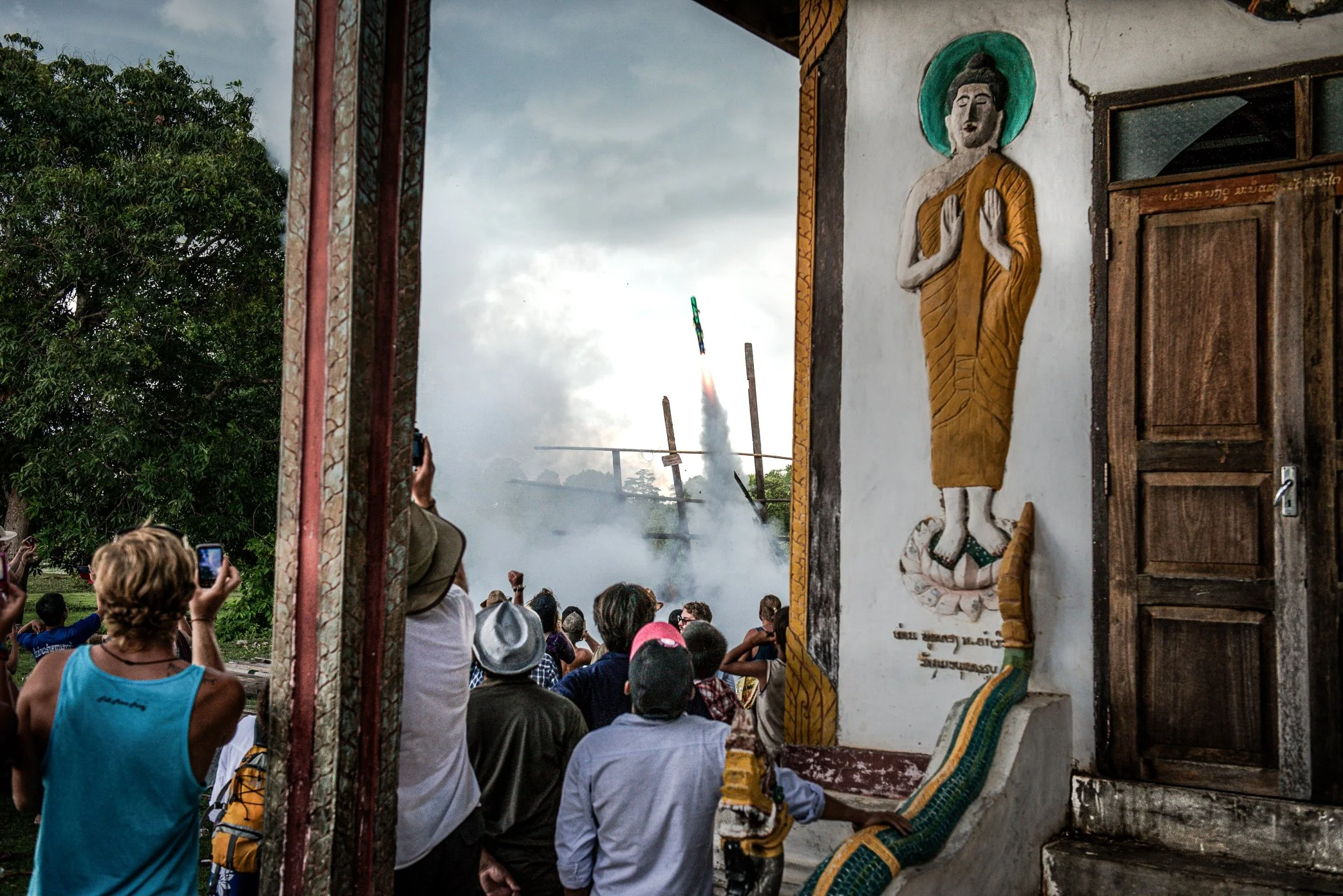
At a temple on Don Det, villagers watch as a homemade rocket rises through smoke during Boun Bang Fai, the Lao rocket festival. Traditionally held before the rains, the festival is both celebration and signal - a call for water, fertility, and renewal after the dry season. In Si Phan Don, that signal reaches beyond the temple grounds. As the rainy season approaches, farmers prepare their fields and fishing families begin to read the Mekong more closely. Rising water will soon change the current, open new channels, and bring the first movements of migratory fish through the islands and waterfalls. Here, the rocket’s flight marks more than a ritual. It announces the season when the river begins to move again.
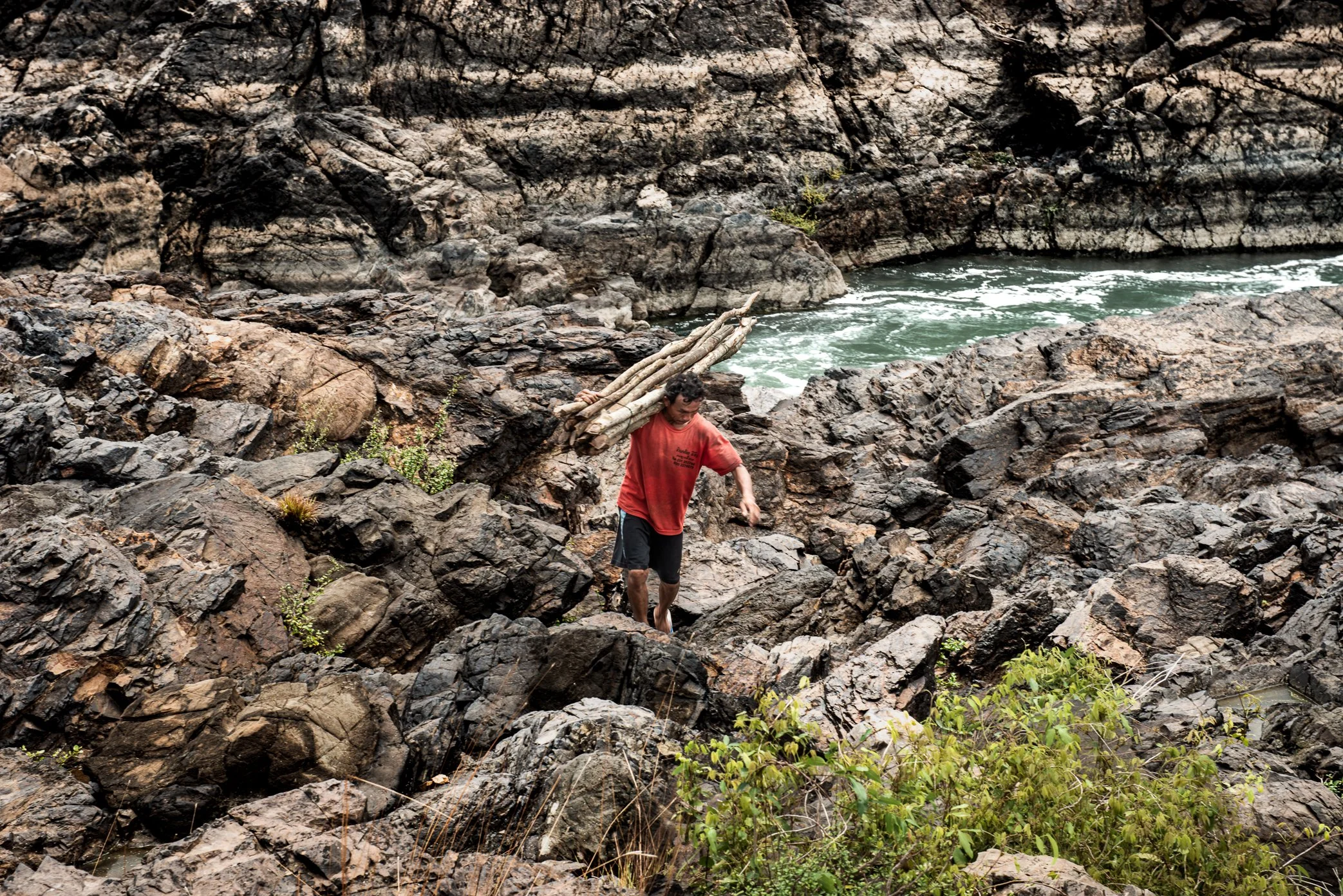
Carrying freshly cut poles across black volcanic rock, a fisherman brings material to a remote trap site where a new Li is taking shape. Before the fishing season begins, men must gather wood from nearby areas and haul it by hand through broken terrain and steep river corridors. Building a trap begins long before the first fish arrives; it starts with labor, planning, and an intimate understanding of where the river will eventually carry the migration.
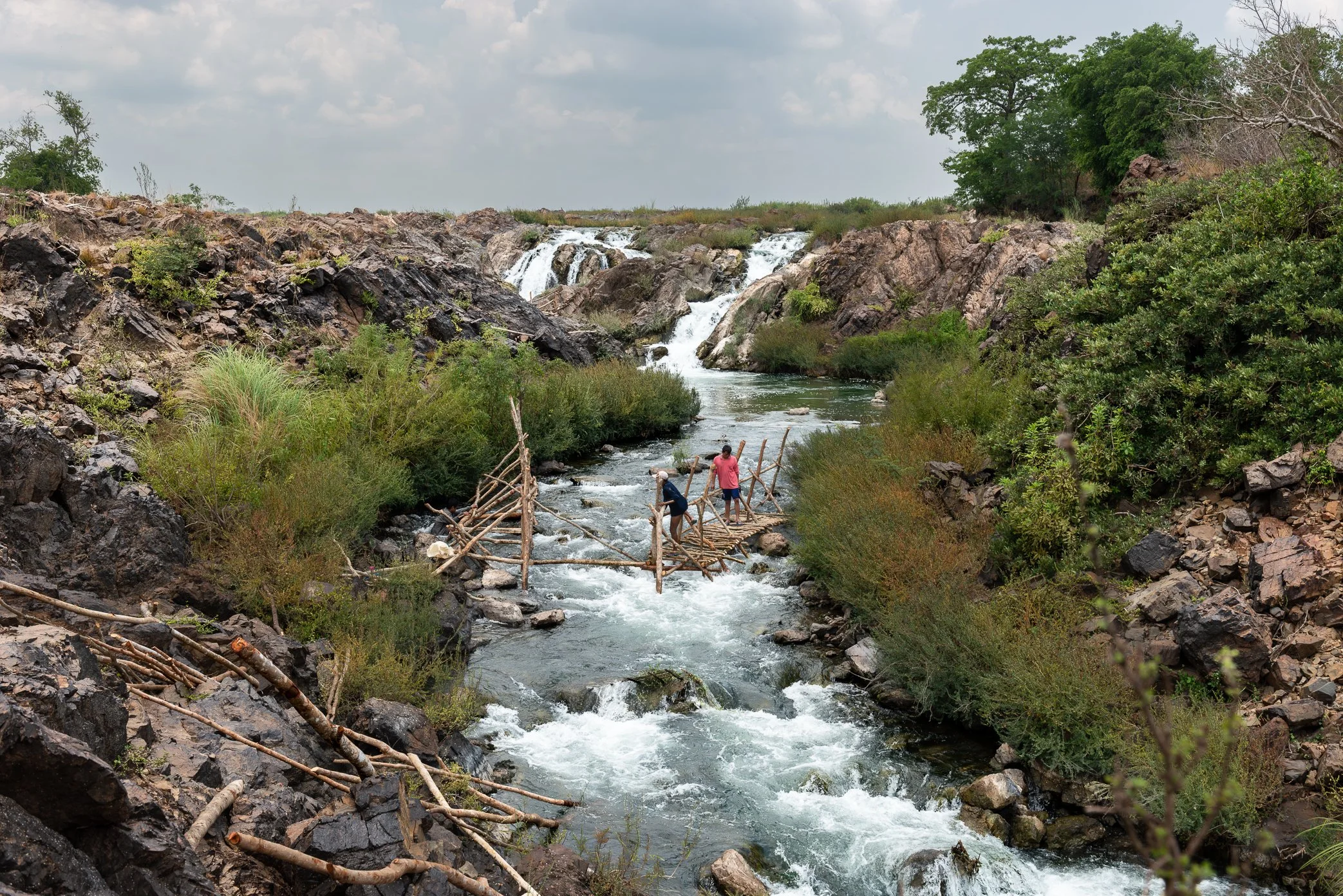
By April, when the Mekong falls to its dry-season level, fishermen in Si Phan Don begin building their li traps across the rocky channels. The work must be completed before the rains arrive, the river rises, and the annual migration of fish begins moving through the falls and narrow passages of the Four Thousand Islands.
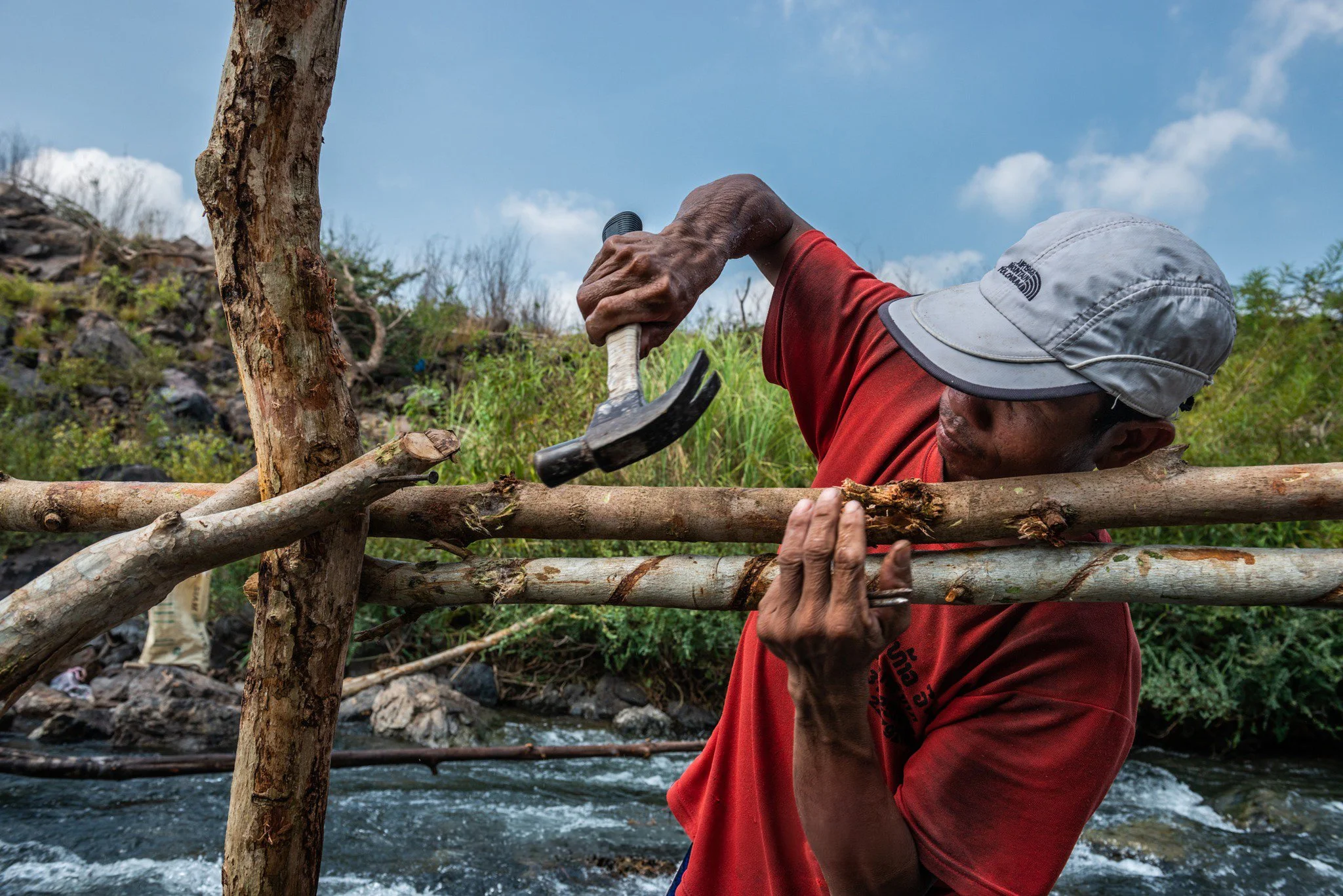
A fisherman secures the wooden frame of a Li trap, hammering each piece into place above a fast-moving channel in Si Phan Don. Constructed from timber, bamboo, and stone, the trap is more than a fishing device - it is a form of vernacular engineering shaped by generations of experience with the Mekong’s seasonal rhythms. Each joint, post, and brace reflects knowledge inherited through practice, not blueprints.
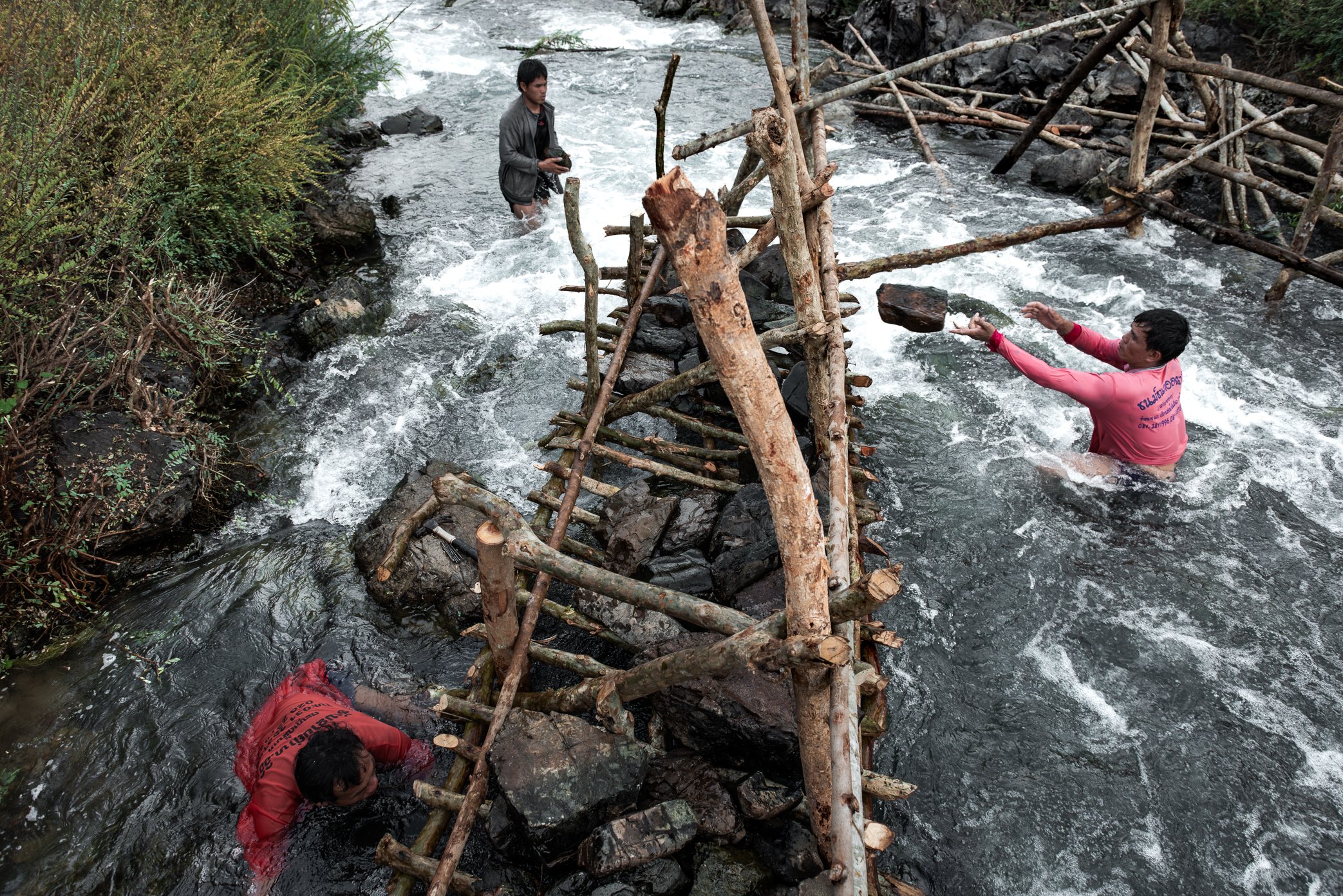
Fishermen work waist-deep in the current to build the stone foundation of a Li trap in Si Phan Don, southern Laos. Set in narrow channels where migratory fish are funneled by the force of the Mekong, these traditional traps must be anchored carefully with rock, timber, and local knowledge. The work is dangerous and physically demanding, but for many families in the Four Thousand Islands, it remains part of a fishing tradition passed down across generations.
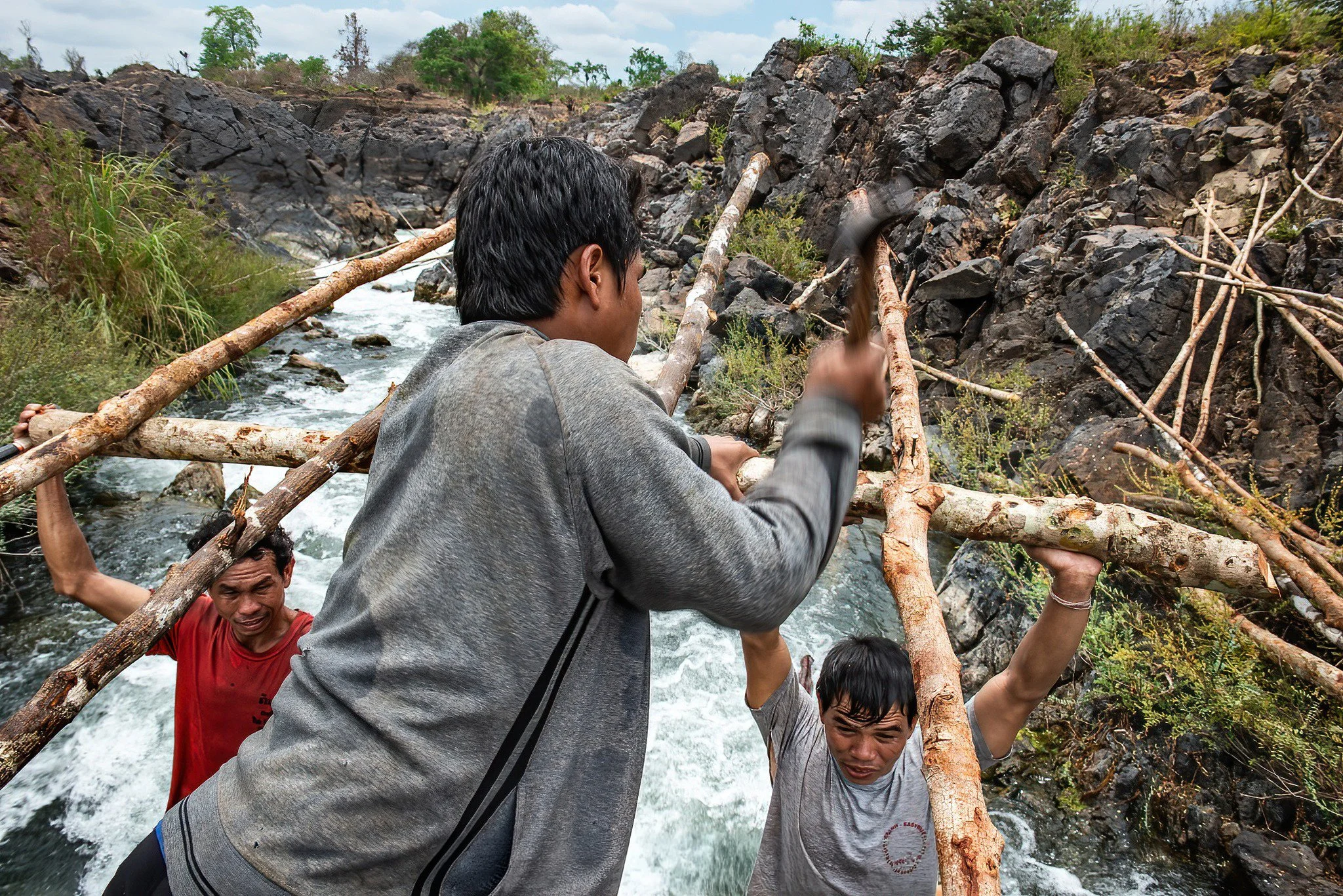
Working together above the rushing water, fishermen raise the long wooden structure that will guide fish into a li trap once the migration begins. In the Four Thousand Islands, trap-building is rarely solitary work. It depends on shared labor - lifting poles, balancing them across the channel, and fixing them into place against the river’s force. What emerges is both a tool of survival and a cultural inheritance, maintained through cooperation, memory, and skill.
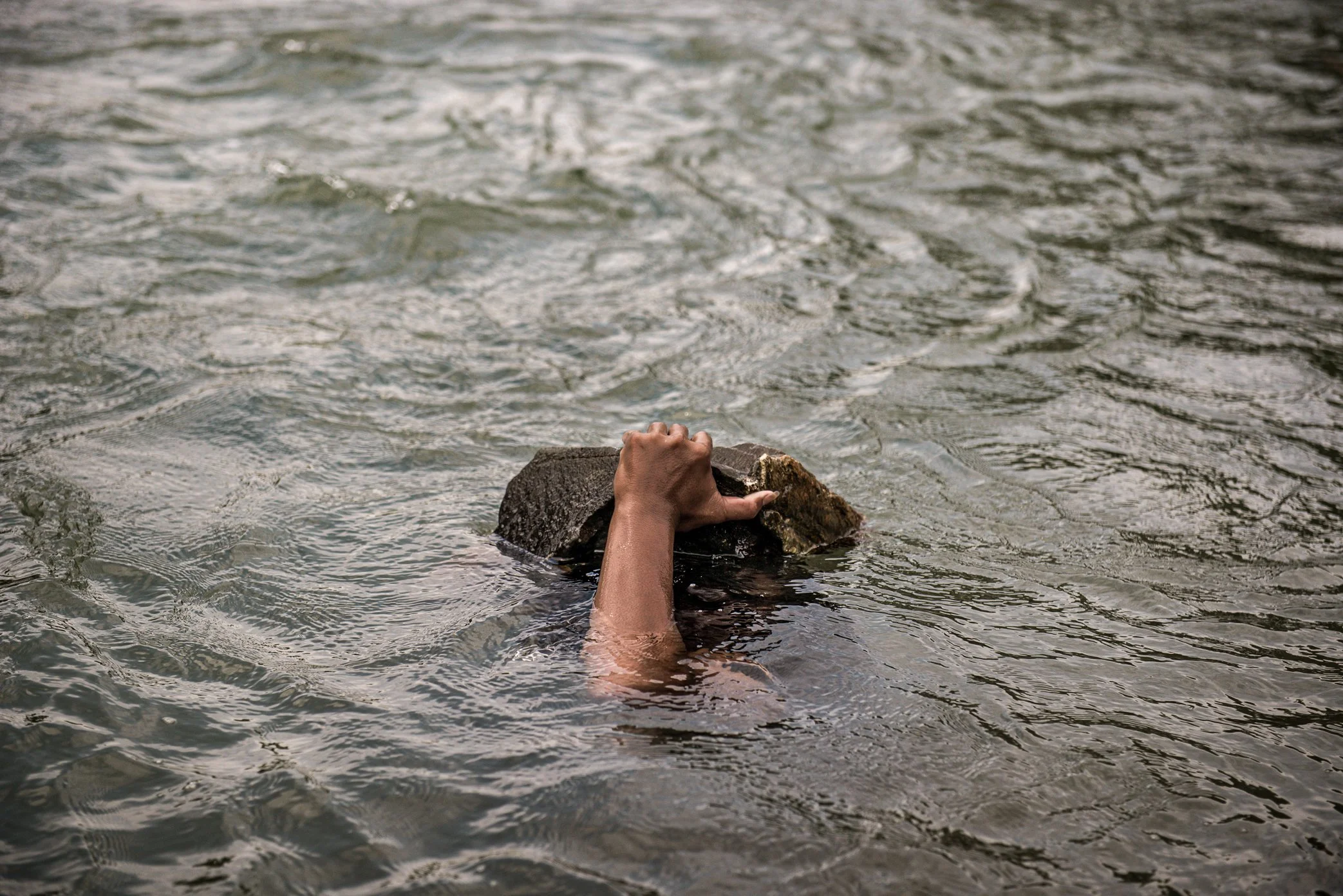
A fisherman dives for stones to build the foundation of a Li trap in Si Phan Don. Throughout the day, men search underwater, lifting rocks by hand and placing them at the base of the wooden frame. The weight is essential: if the foundation is too light, the trap can rise, shift, or be carried away by the Mekong’s current. Before the fish arrive, the hardest work is often hidden below the surface - stone by stone, the trap is anchored against the force of the river.
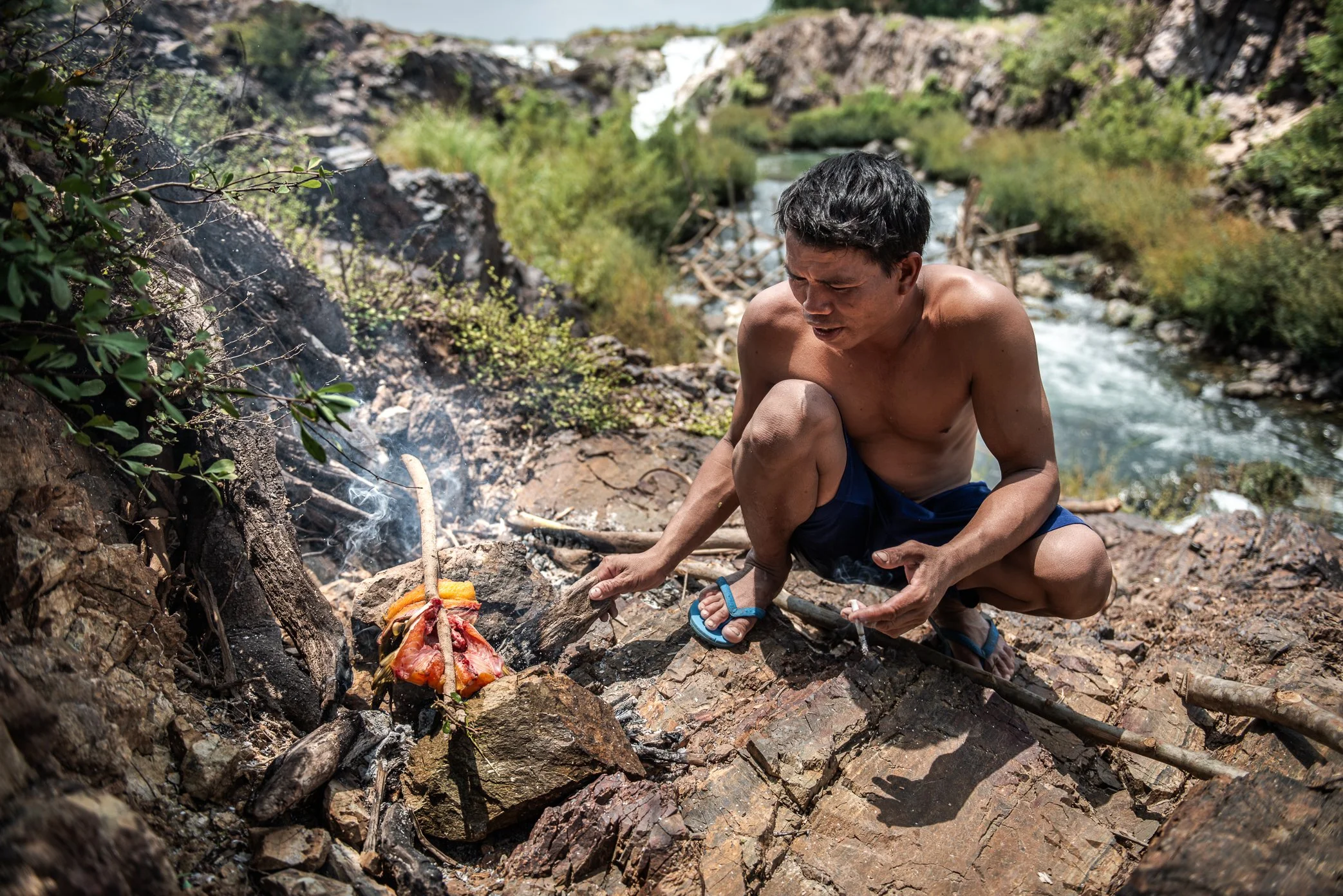
A fisherman prepares lunch beside a newly built Li trap in Si Phan Don. During long days on the rocks, men often rely on whatever the river provides near their work site - small fish caught from nearby channels, cooked over an open fire between rounds of building, checking, and repairing the trap. Here, even in the most remote fishing camps, the Mekong remains both workplace and kitchen.
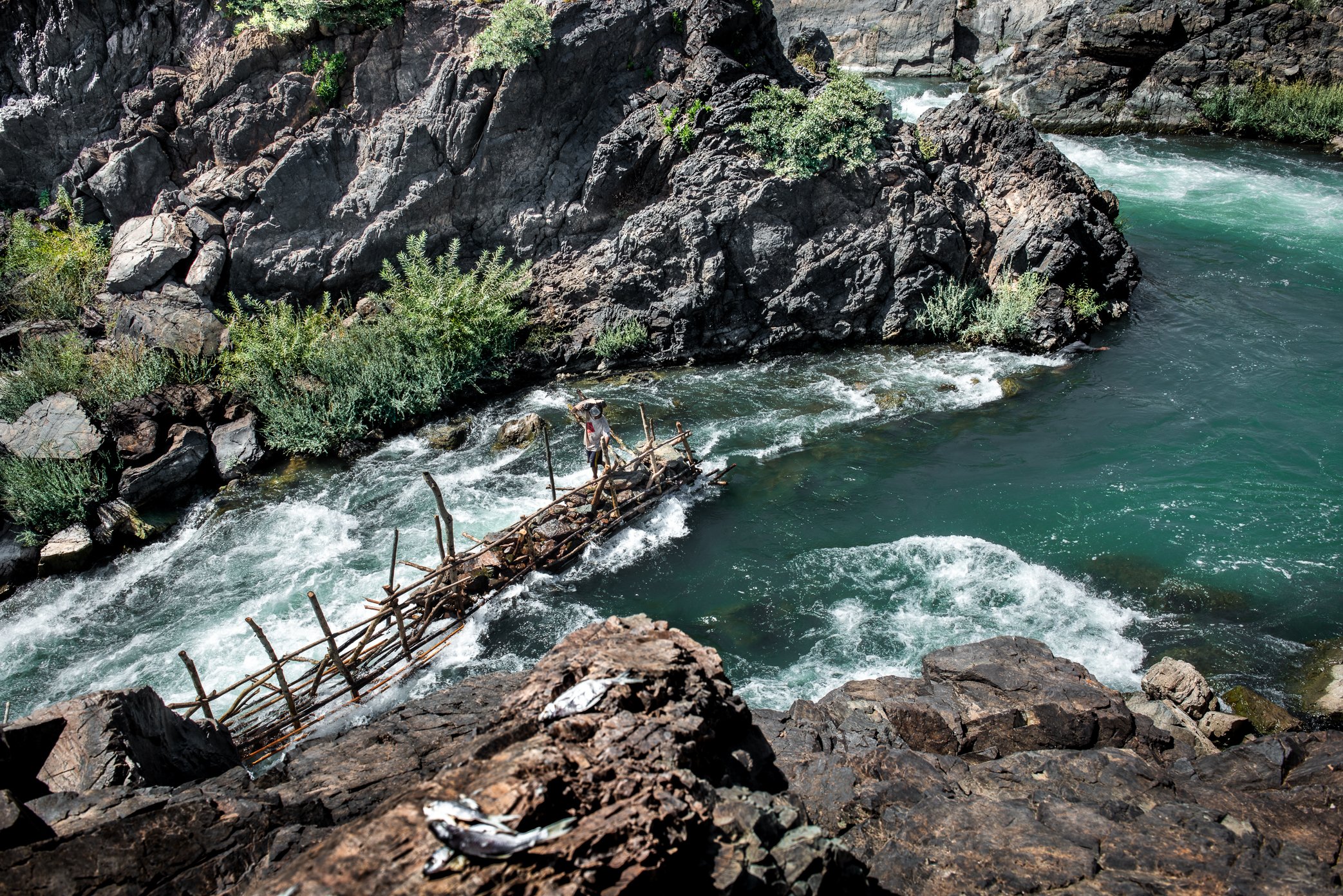
Built below steep cliffs in Si Phan Don, this Li trap stands in strong current even before the main migration begins. This year, the water rose earlier than expected, making construction more difficult and forcing fishermen to work against a river already gaining power. Yet the risk is also the reason they build here. These narrow channels are among the first places where migrating fish enter the trap system as they move through the rapids and falls. In the Four Thousand Islands, the best fishing grounds are often the most dangerous - places where timing, strength, and inherited knowledge must meet the river before the fish arrive.
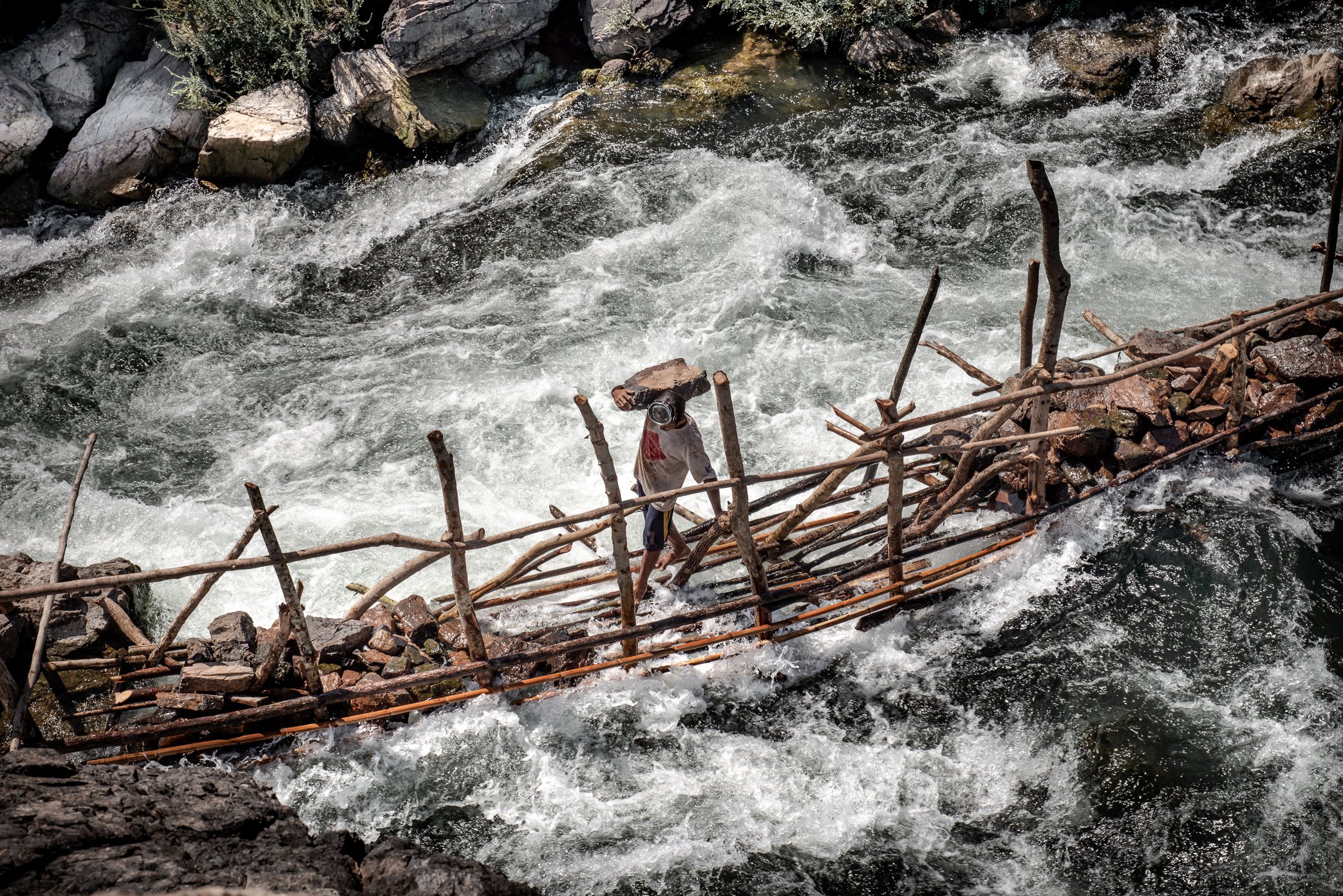
Building the foundation of a Li trap begins with the hardest labor: moving stones into the current to create a base strong enough to withstand the force of the Mekong. At this site in Si Phan Don, set beside a cluster of waterfalls, that work becomes even more punishing. Fishermen must gather and carry rocks across slick timber walkways and into fast-moving water, reinforcing the trap against a river that is never still. Before a single fish is caught, the struggle is already underway - a reminder that in the Four Thousand Islands, fishing depends as much on endurance and engineering as it does on the migration itself.
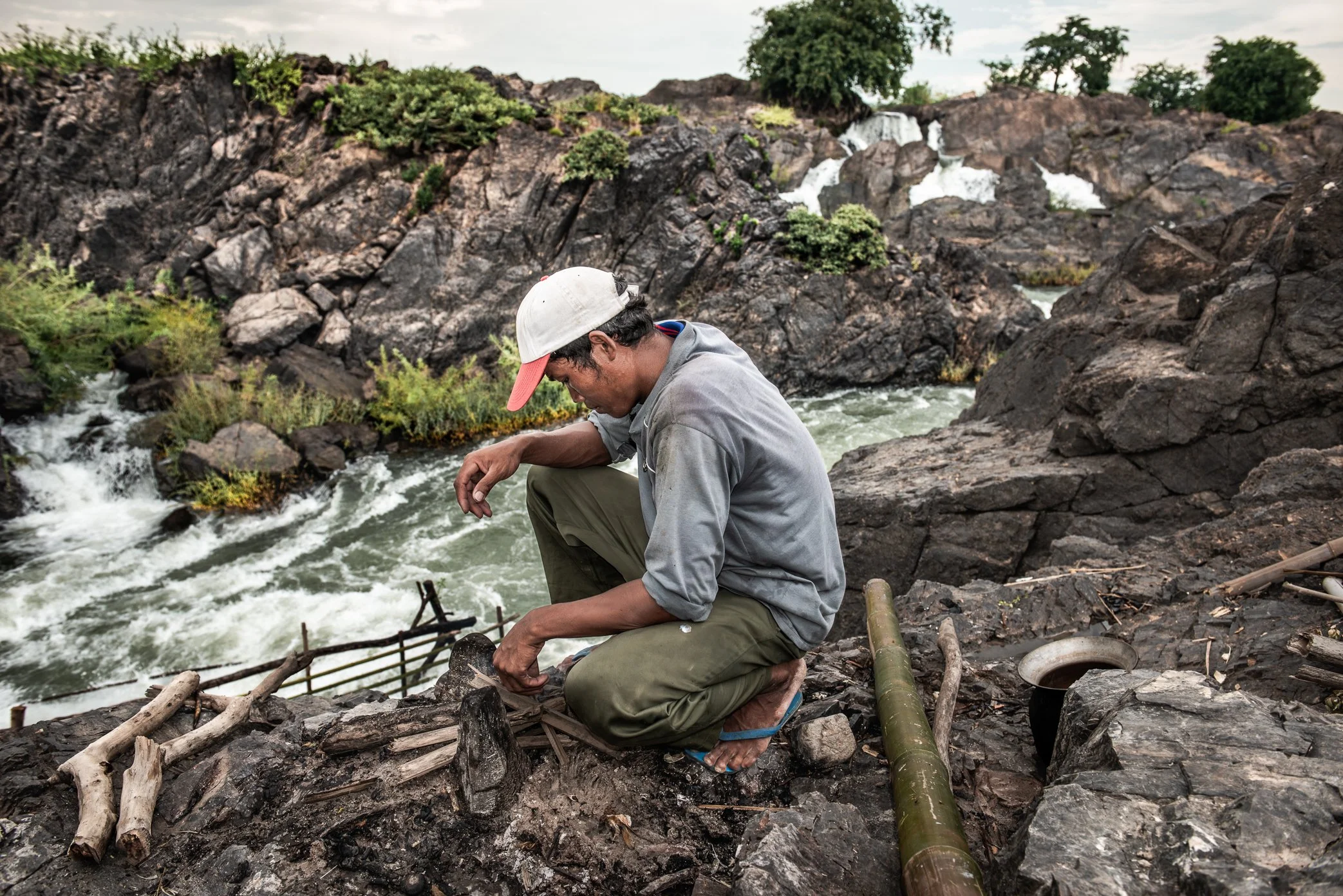
A fisherman pauses beside the remains of a damaged Li trap in Si Phan Don, where a night of hard rain and rising water has undone days of labor. Built from wood, bamboo, and stone, these traditional traps depend on a foundation strong enough to withstand the Mekong’s shifting force. Here, that base was not finished in time. The section designed to hold and funnel fish has been torn apart by the current, a reminder that in the Four Thousand Islands, fishing is shaped as much by uncertainty and loss as by the catch itself. Before the migration season fully begins, fishermen must constantly read the river - its rising level, its speed, its sudden violence - knowing that one misjudgment can cost them both time and livelihood.
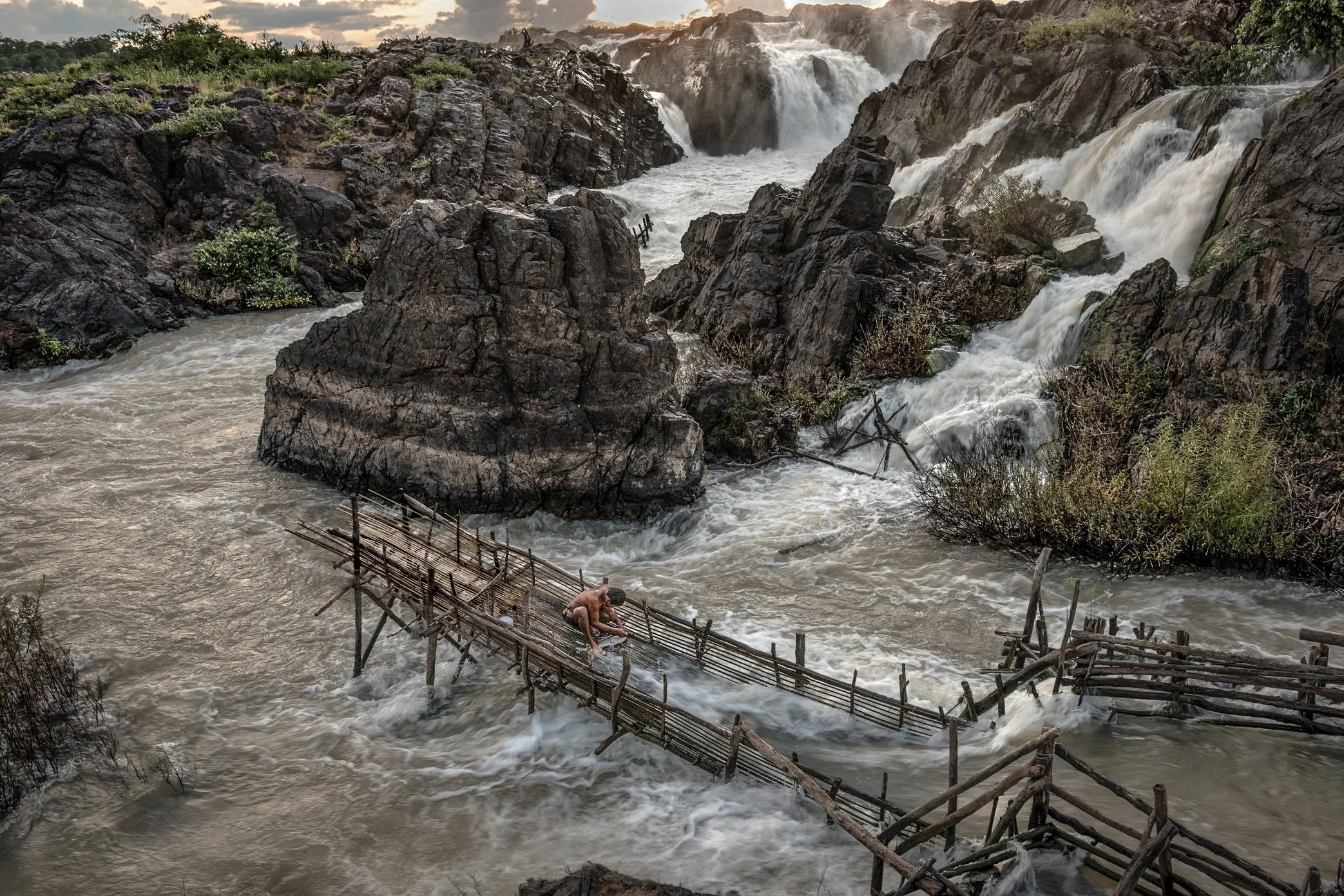
A fisherman checks his Li trap in a remote channel of Si Phan Don, where the Mekong breaks into waterfalls, rapids, and narrow passages between black rocks. Built by hand from bamboo, timber, and stone, the trap is placed where the current forces migrating fish into its frame. In these isolated gorges, collecting the catch is dangerous work. The fisherman must move carefully across wet wooden platforms above fast water, returning again and again as the river rises. Here, the trap is not simply a tool. It is a structure built into the force of the river itself - and a measure of the knowledge required to work in one of the Mekong’s most powerful landscapes.
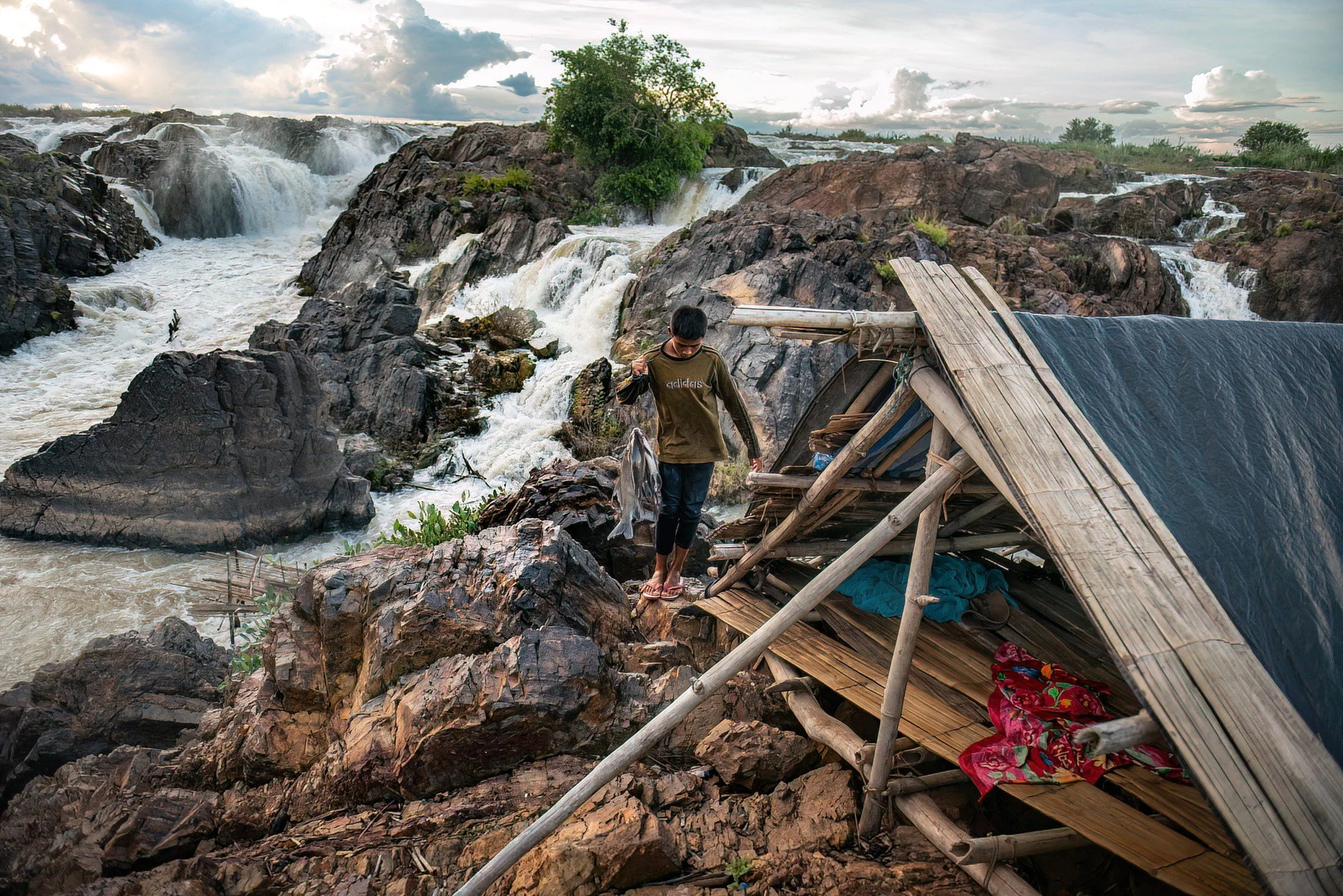
A fisherman returns to his shelter above the falls in Si Phan Don, carrying fish from a nearby Li trap. During the migration season, men often live for days beside the rapids, sleeping in temporary huts built from bamboo, timber, and tarpaulin so they can check the traps at all hours. Here, home is reduced to what the season requires: a place to rest, cook, wait, and keep watch over the river. Around them, the Mekong breaks through rock and waterfall - the same force that brings fish, danger, and livelihood.
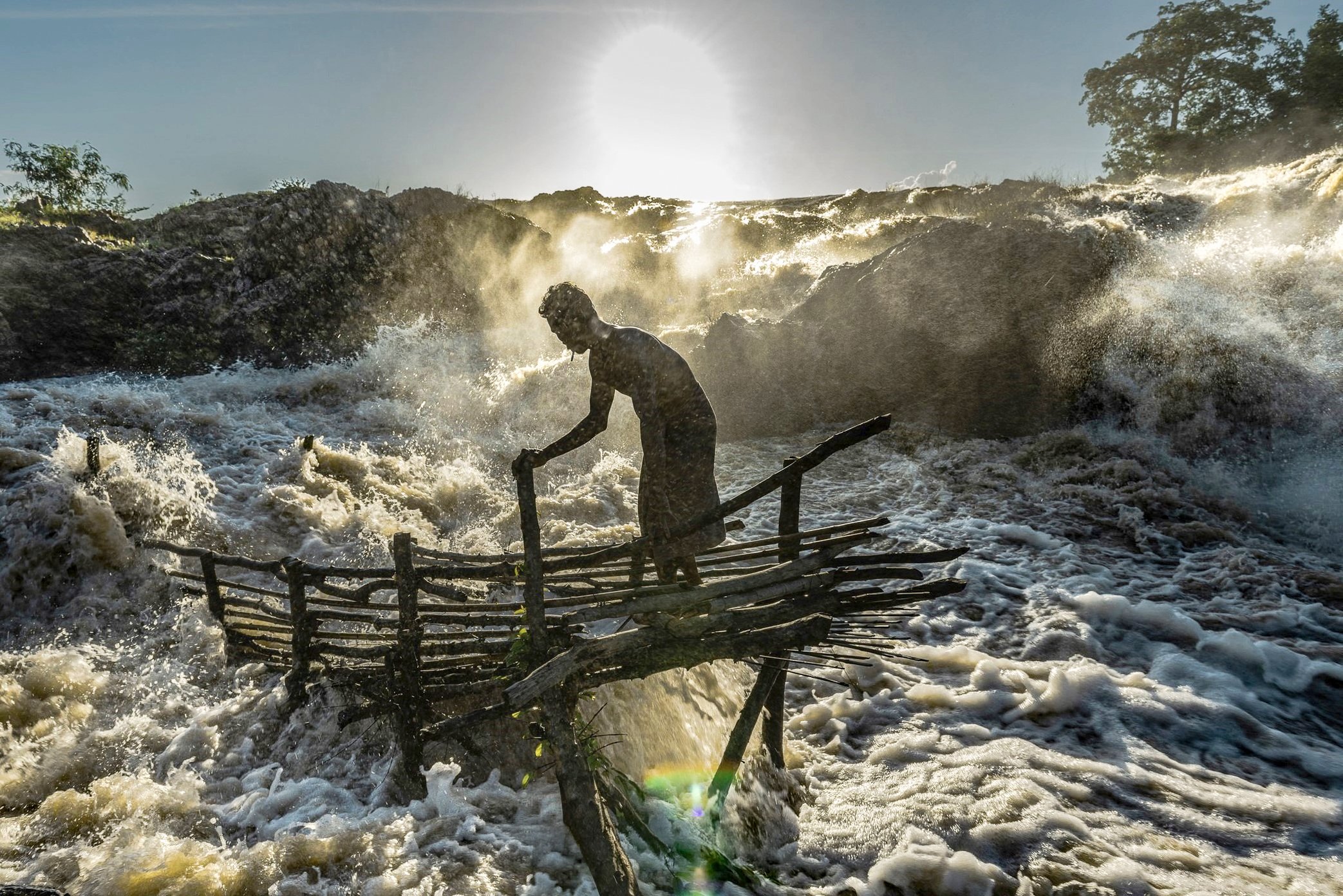
A fisherman checks his Li trap in the force of the midday current at Si Phan Don. During the migration season, the work is not only to collect fish, but to keep the trap alive against the river itself. Driftwood, branches, and debris carried by the Mekong can lodge against the bamboo frame, adding pressure until the structure bends or breaks. For this reason, the traps must be inspected again and again - through the day and into the night. Like collecting the catch, clearing the trap is part of the constant labor of fishing here, where one unattended hour can turn a working structure into wreckage.
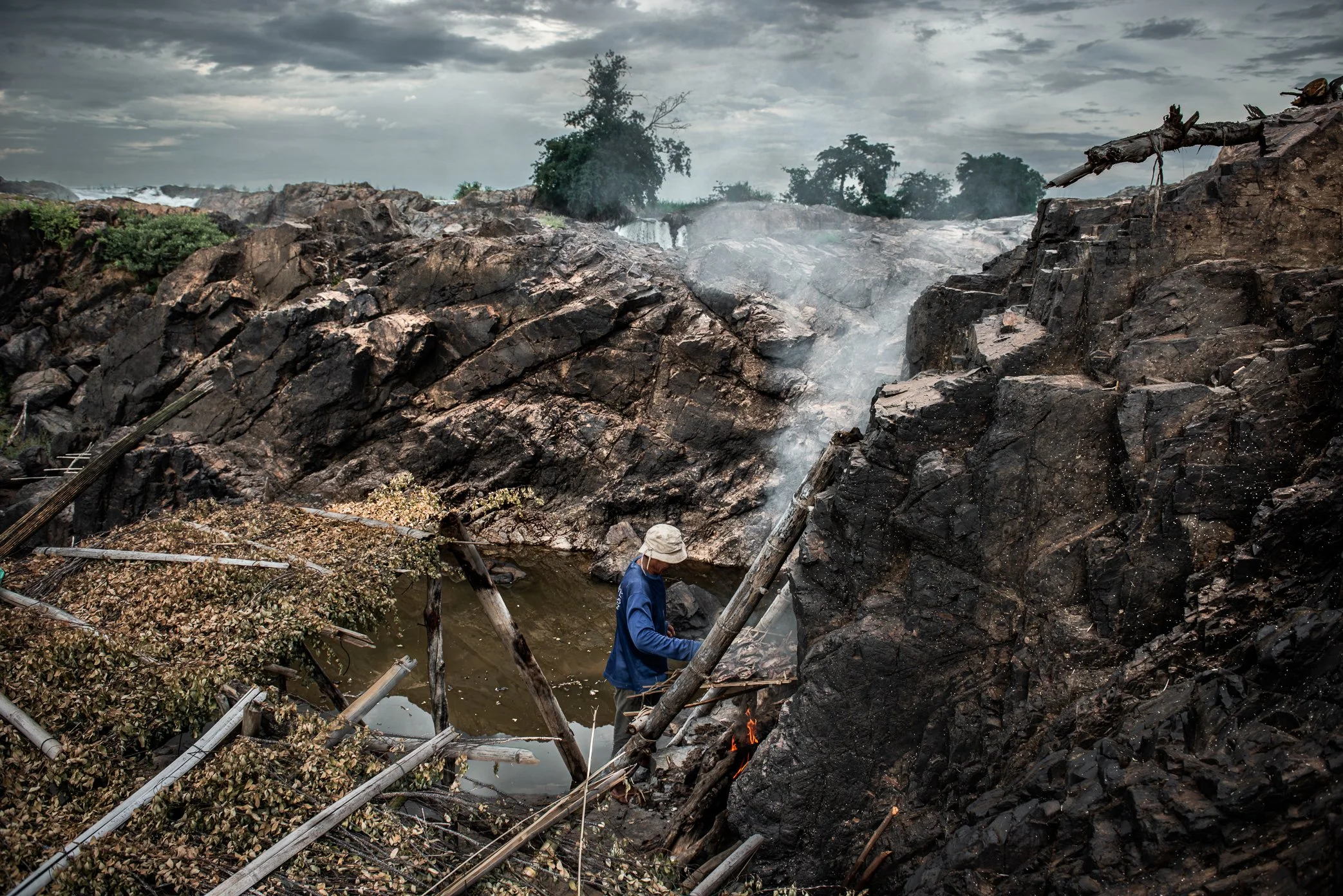
Some fishermen remain beside their Li traps for days or even weeks, waiting for the river to change. A makeshift shelter becomes their sleeping place, storage space, kitchen, and lookout point while the Mekong rises and the first signs of migration appear. The waiting is part of the labor. Before the catch comes, men must endure heat, rain, isolation, and uncertainty - living close to the river because the fish may arrive at any hour.
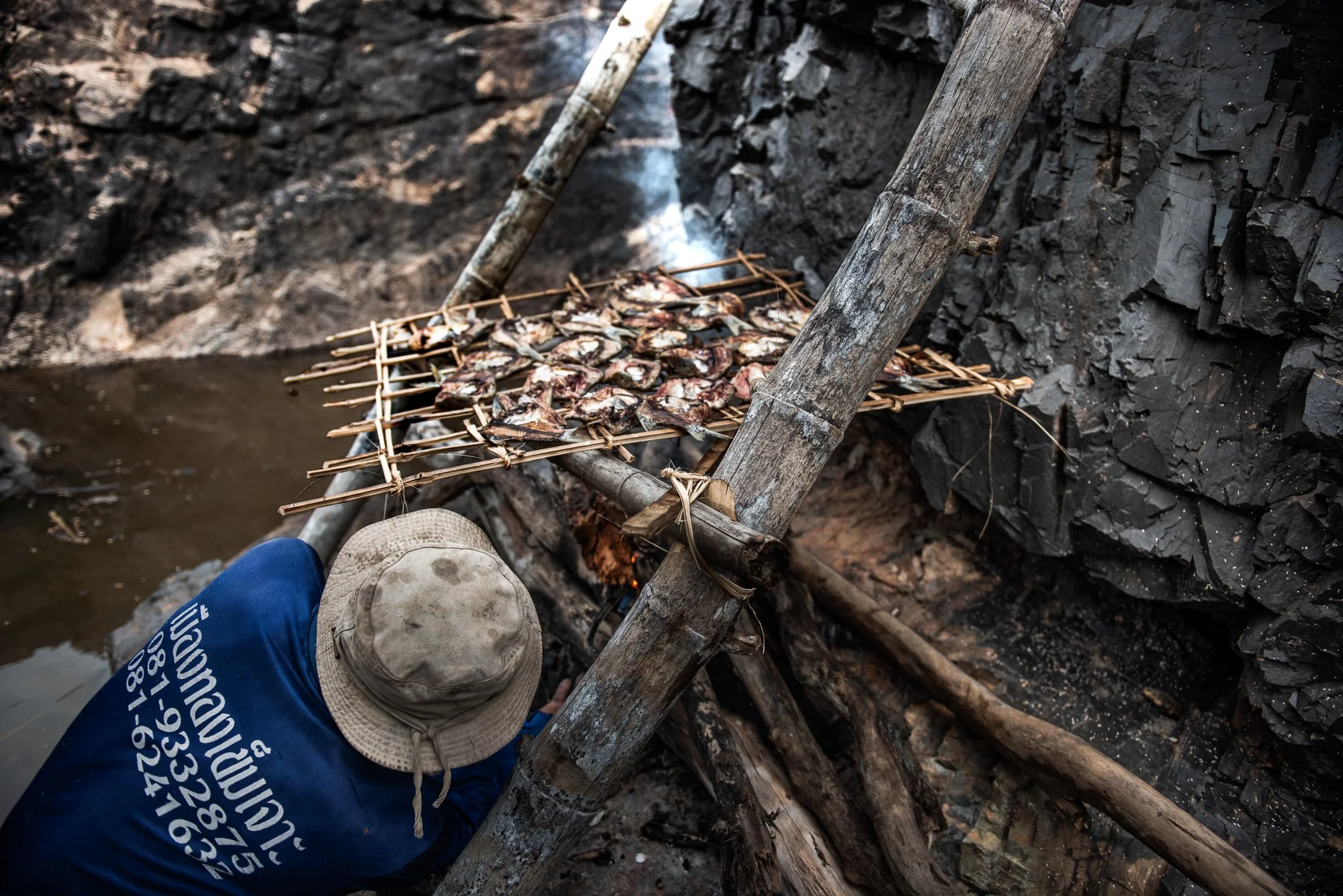
While fishermen wait for the larger migratory runs, smaller fish caught near the traps are laid across bamboo racks and grilled beside the rocks. These fish may not bring major income, but they feed the men during long days away from home and sometimes provide a small return before the main season begins. In Si Phan Don, survival often depends on what the river gives between its larger promises.
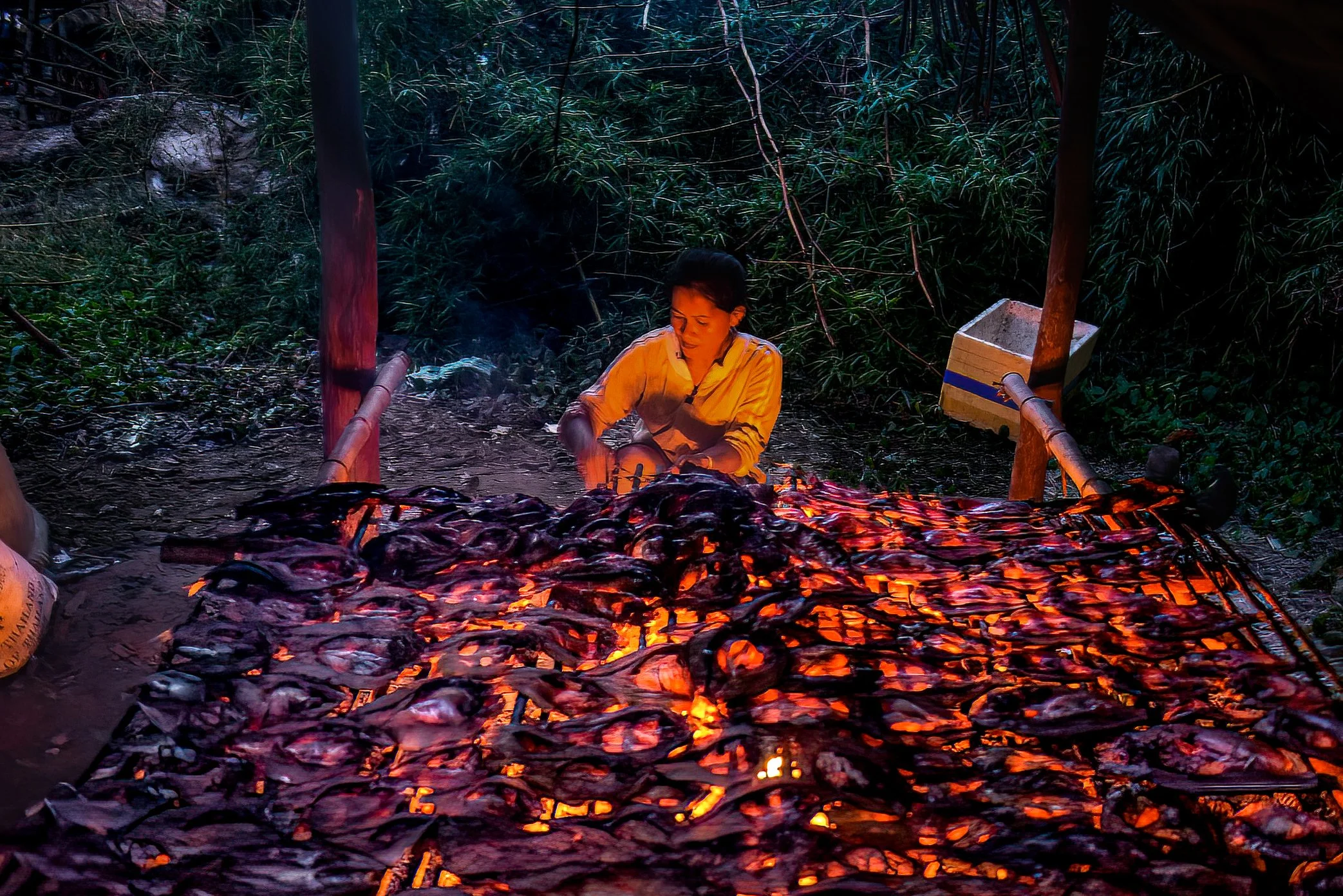
A woman grills fish beside a Li trap site in Si Phan Don, preserving part of the catch while the men continue to watch the river. During the migration season, work, food, and income overlap on the same riverbank. Fish that cannot be sold immediately must be cooked, dried, fermented, or kept alive. In this way, women’s labor helps turn a fragile catch into food, value, and household security.
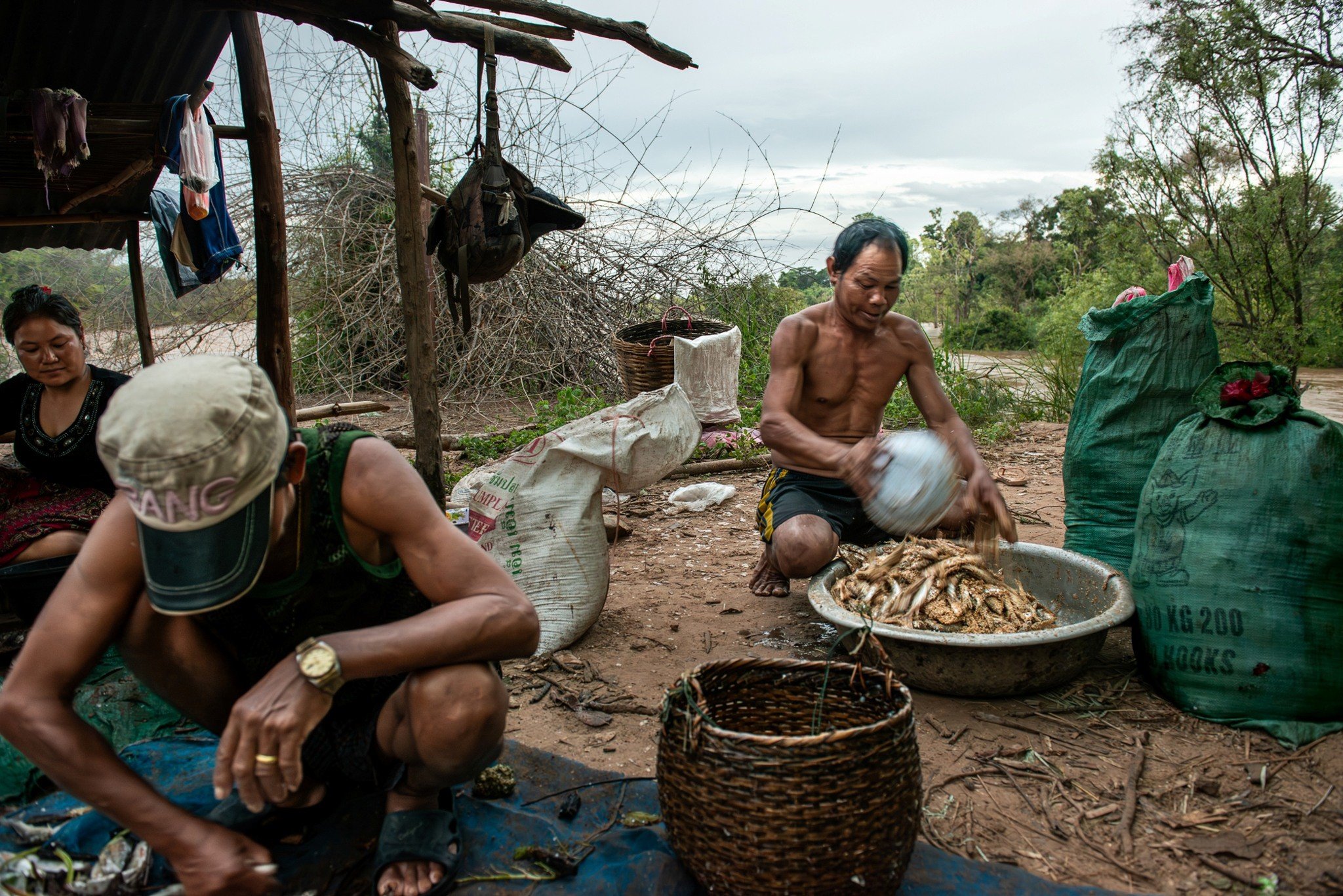
During long stays beside the Li traps, the catch is not only eaten fresh or sold. Some fish are transformed into preserved food that can last beyond the migration season. Here, fishermen prepare fermented fish, turning river abundance into storage, flavor, and household security. Preservation allows the value of the catch to outlast the moment it is lifted from the Mekong.
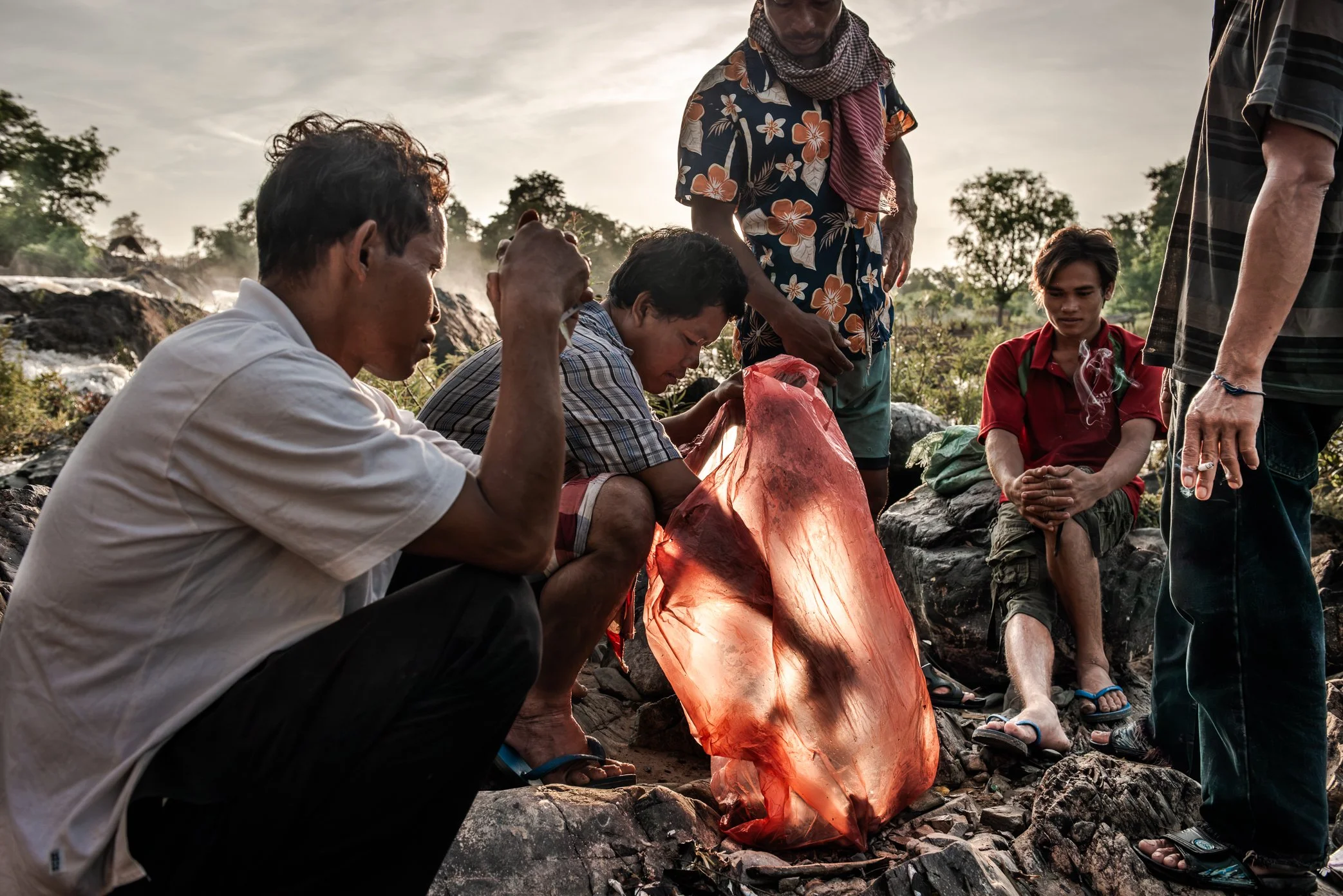
According to local tradition in Si Phan Don, a large catch from a Li trap is not kept by one fisherman alone. The fish are divided among those who helped build the wing trap, maintained its structure, carried stones, repaired bamboo, or came to support the dangerous work when the migration arrived. Around the catch, the river’s economy becomes communal. Labor, risk, and knowledge are remembered in the sharing. In a season when fish move through the falls in brief and unpredictable waves, the harvest belongs not only to the person who lifts the trap, but to the network of hands that made the catch possible.
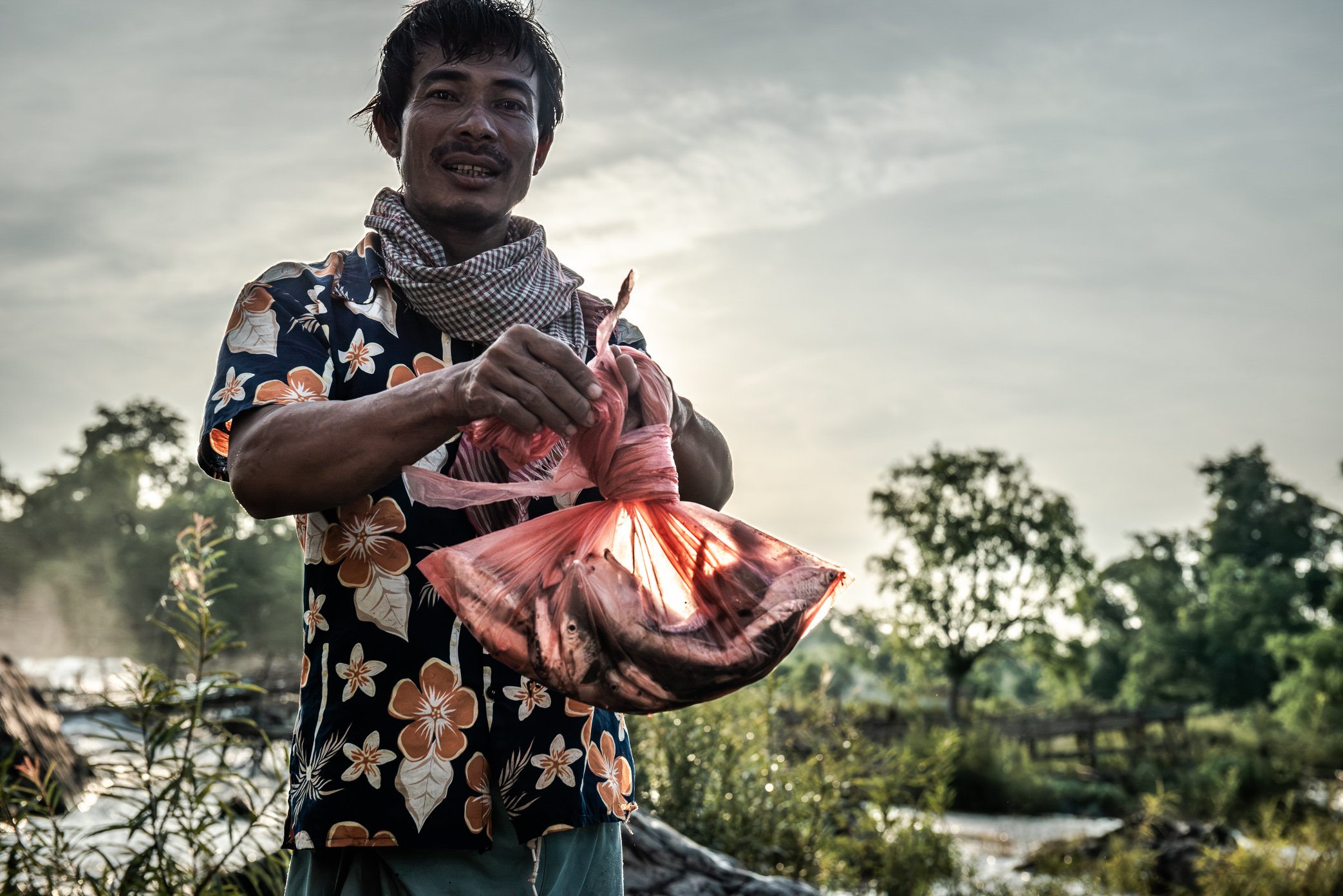
Each morning, fishermen in Si Phan Don return to their traps to see what the river has yielded overnight. Before the great migration begins - while the Mekong is still relatively low and the main runs have yet to arrive - the catch is often limited to small fish. For families who depend on the river, these modest hauls are part of a season of waiting, when labor continues long before the more valuable fish begin moving through the channels and falls. In the uncertain days before the migration, even a small catch is a measure of both patience and survival.
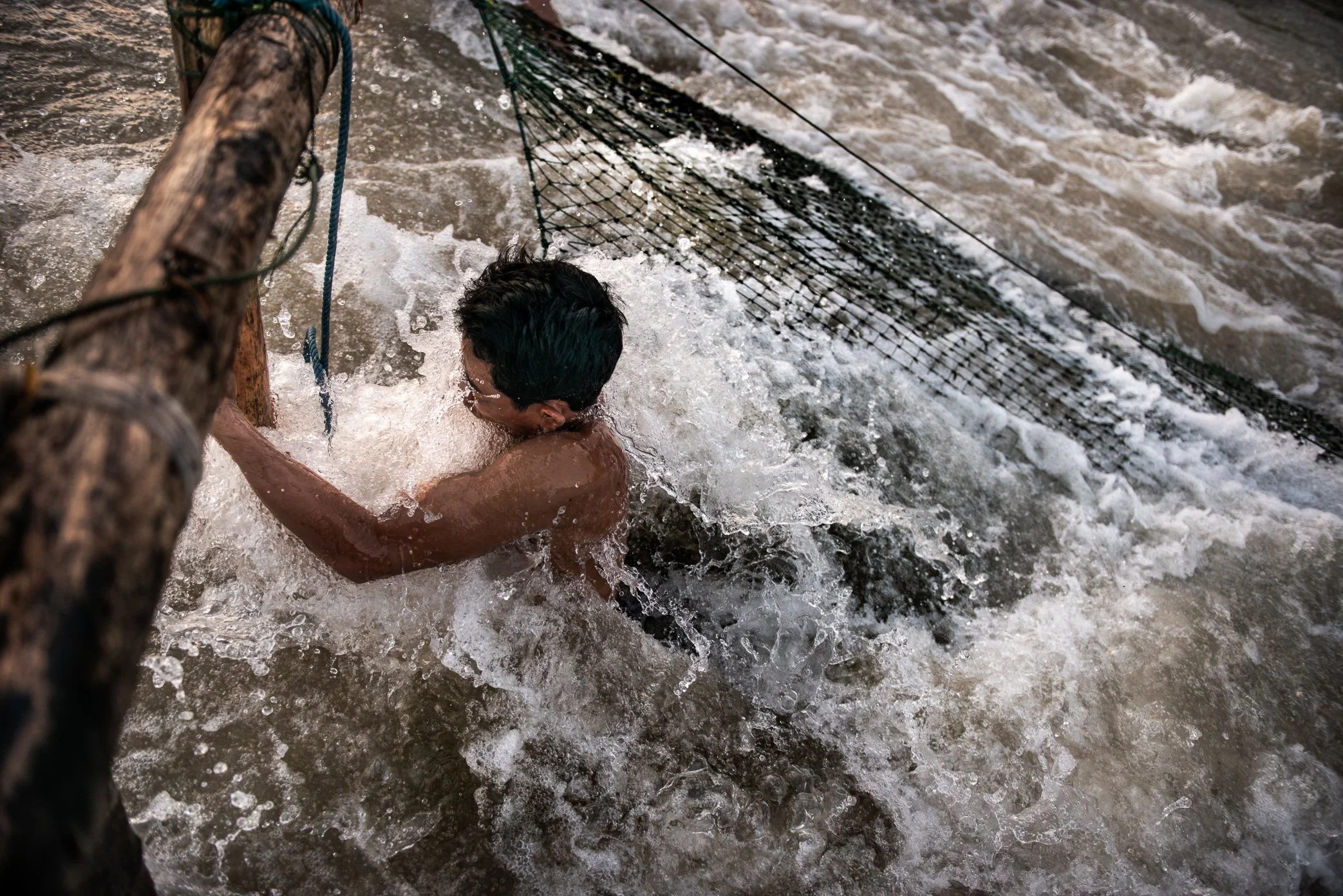
After lifting his catch at first light, a fisherman wades back into the torrent to reset the net against the force of the Mekong. Large stones must be placed by hand - and often by foot - to anchor the net beneath the surface, where the current can shift everything in seconds. In Si Phan Don, even this routine task requires balance, strength, and an intimate knowledge of how water moves through the falls. The work is not only physical. It is a form of river knowledge practiced directly in the current.
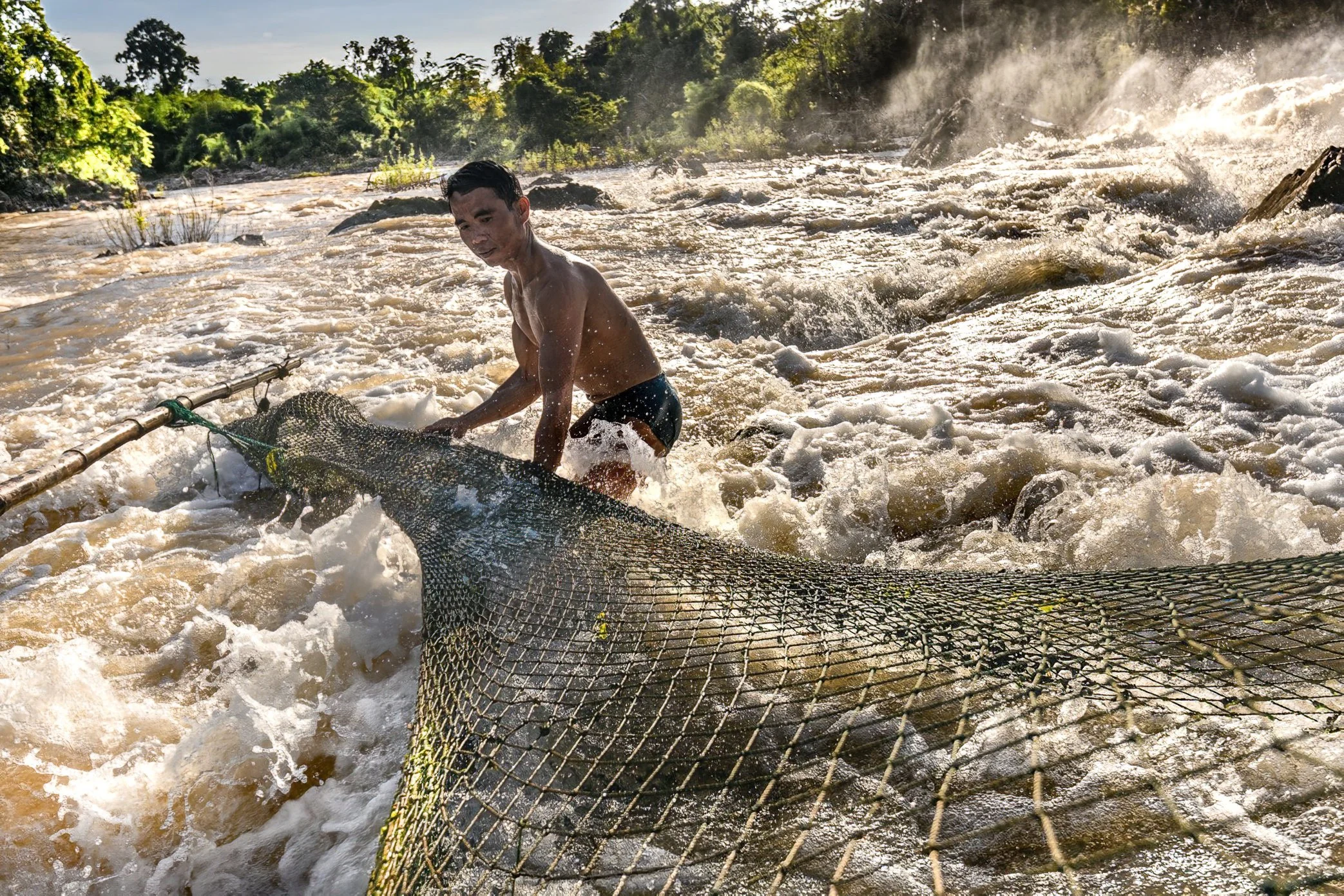
In Si Phan Don, fishing continues even in the shifting weeks between the dry season and the first rains. As the Mekong begins to change, fishermen use different tools for different waters - nets, traps, bamboo frames, and hand-built structures placed where fish move through the channels. Here, work depends not only on strength, but on knowing exactly how the river behaves before the migration fully begins.
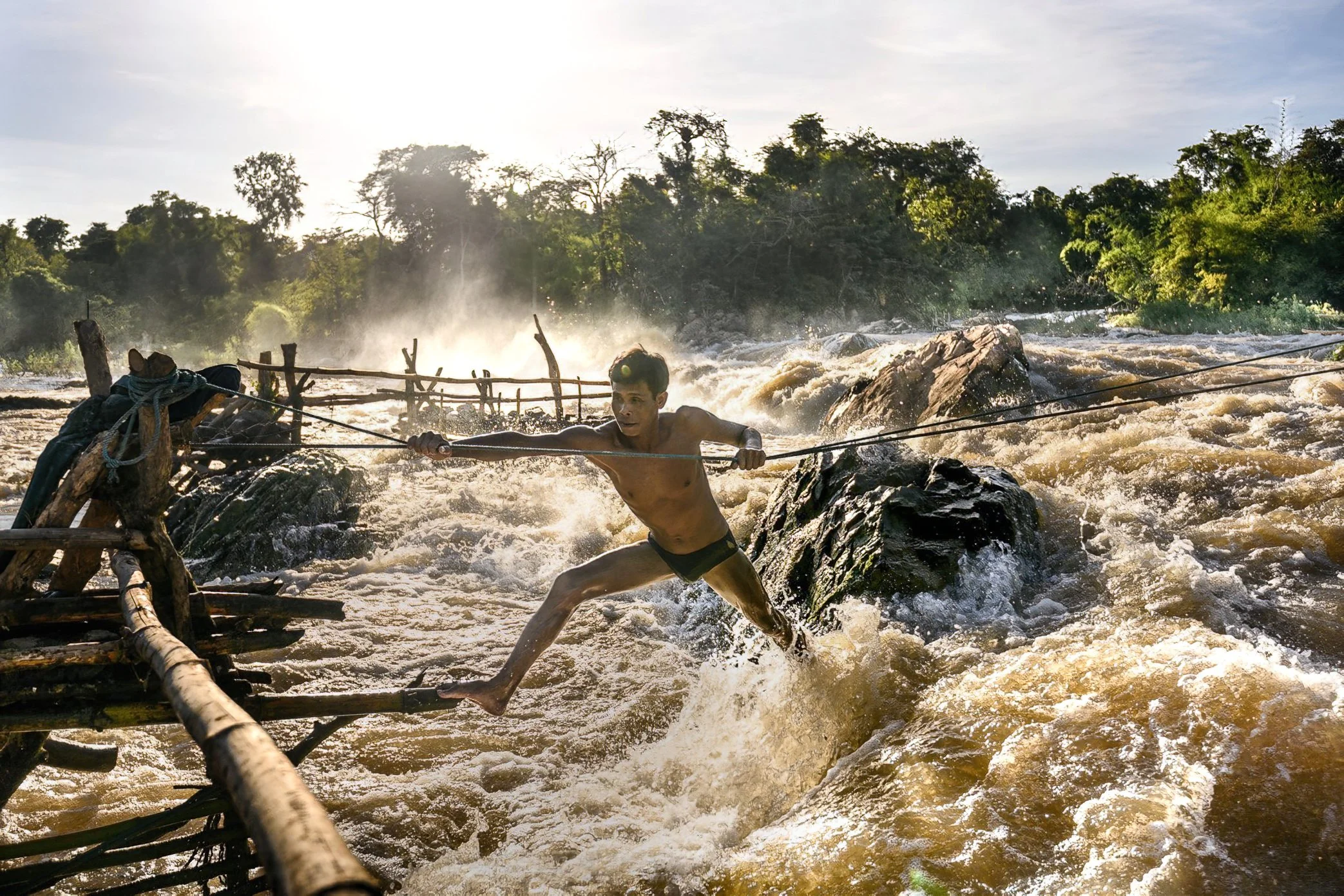
A fisherman moves between Li traps across the rushing water of Khone Falls, using ropes and rock paths known through years of practice. In this landscape, travel itself is part of the work. Each crossing requires balance, timing, and a deep knowledge of hidden stones, currents, and safe footholds - skills passed from one generation of fishermen to the next.
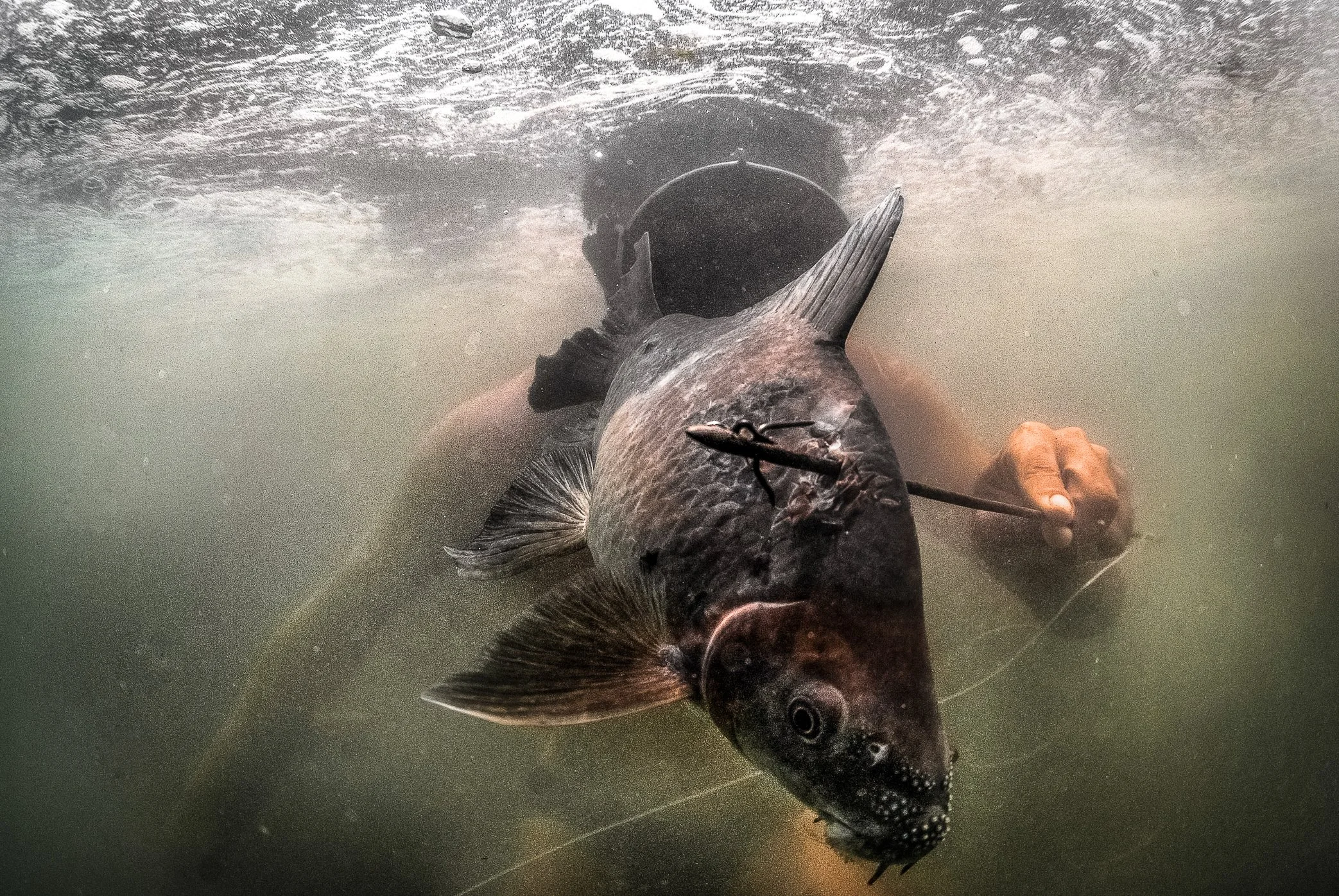
During the dry season in Si Phan Don, the Mekong runs clearer, opening another way for fishing families to work the river. Before the rains arrive and the great migration begins, men dive beneath the surface with simple spears, searching the calmer pools and rocky channels for fish to feed their households. Most catches go first to the family table. But when a larger fish is taken, it may be sold for income - a brief reward from the river before the season changes, the water rises, and fishing shifts back to the traps, currents, and dangerous work of the migration.

At night in a remote Li trap site in Si Phan Don, a fisherman lifts his catch from the dark water by the light of a headlamp. Far from the villages, these narrow channels and rocky gorges become places of round-the-clock labor during the migration season, when traps must be checked again and again through the night. In the Four Thousand Islands, the work does not end at sunset. Fish can enter the trap with the changing current at any hour, and the men who tend them move through darkness, spray, and fast water to collect what the river has delivered. Here, even in the most isolated channels, the night remains part of the working day.
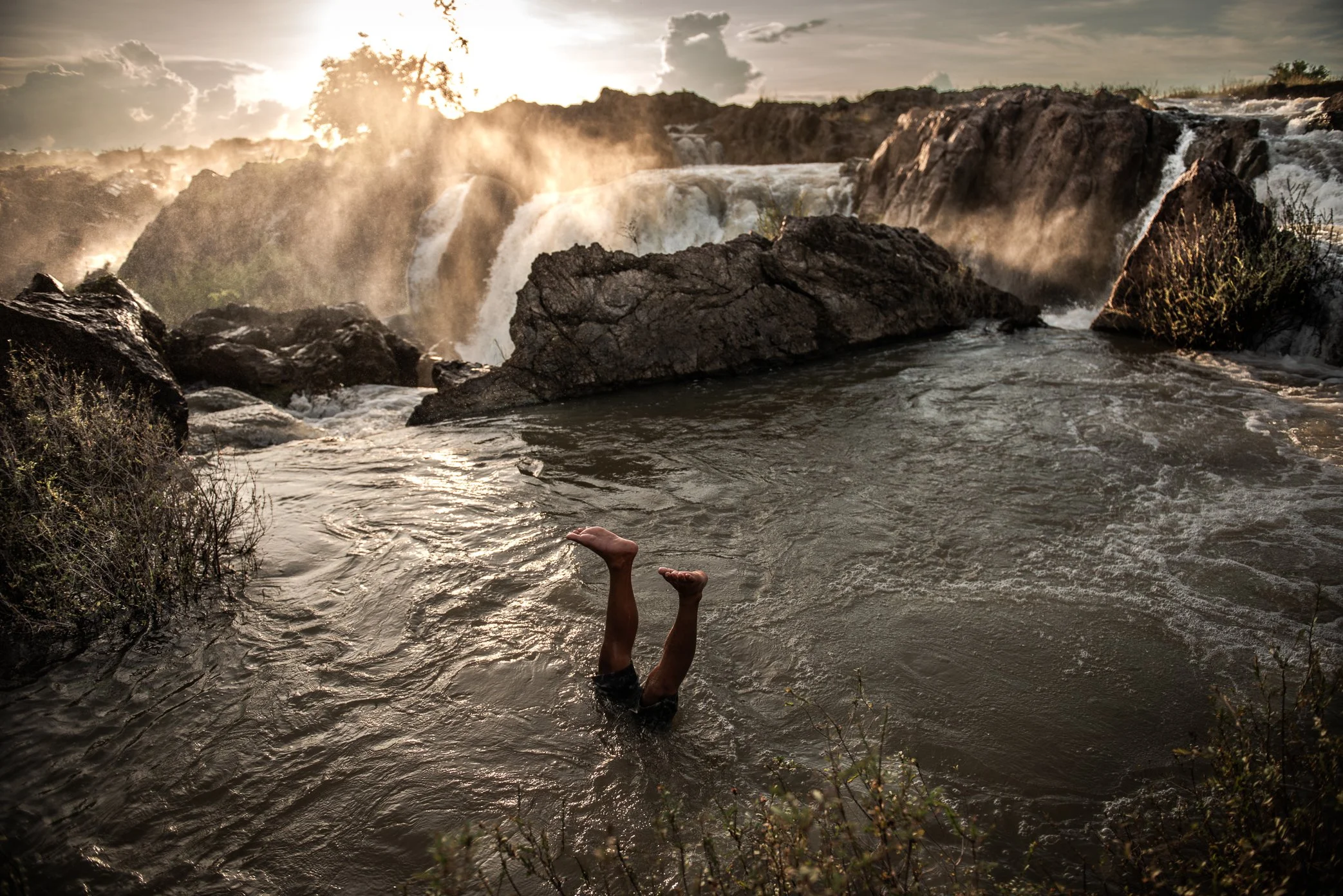
Fishermen in Si Phan Don often turn the river into both workplace and proving ground. In the calmer pockets beside the falls, displays of underwater agility can seem playful, but such skills have practical value in a landscape shaped by violent current and submerged rock. During the fishing season, men regularly dive beneath the surface to position heavy stones, secure nets, and adjust traps in water where balance, breath, and local knowledge can mean the difference between control and danger. Here, even a moment of play reflects a deeper intimacy with the Mekong - and the physical skill required to make a living from it.

At a remote Li trap site in Si Phan Don, fishermen dry their sleeping mat over an open fire after a night storm. During the migration season, they live for days or weeks beside the traps, often in shelters made only from bamboo frames and tarpaulin, built among rocks where there is little flat ground and little protection from the rain. The contradiction is part of the work: the fish arrive with the wet season, but the same storms that bring the river to life can soak food, bedding, clothes, and the few belongings needed to survive beside the falls. Each night by the trap is a test of endurance. Yet this way of fishing has continued for generations - a hard inheritance shaped by water, weather, and the knowledge of when the Mekong begins to move.
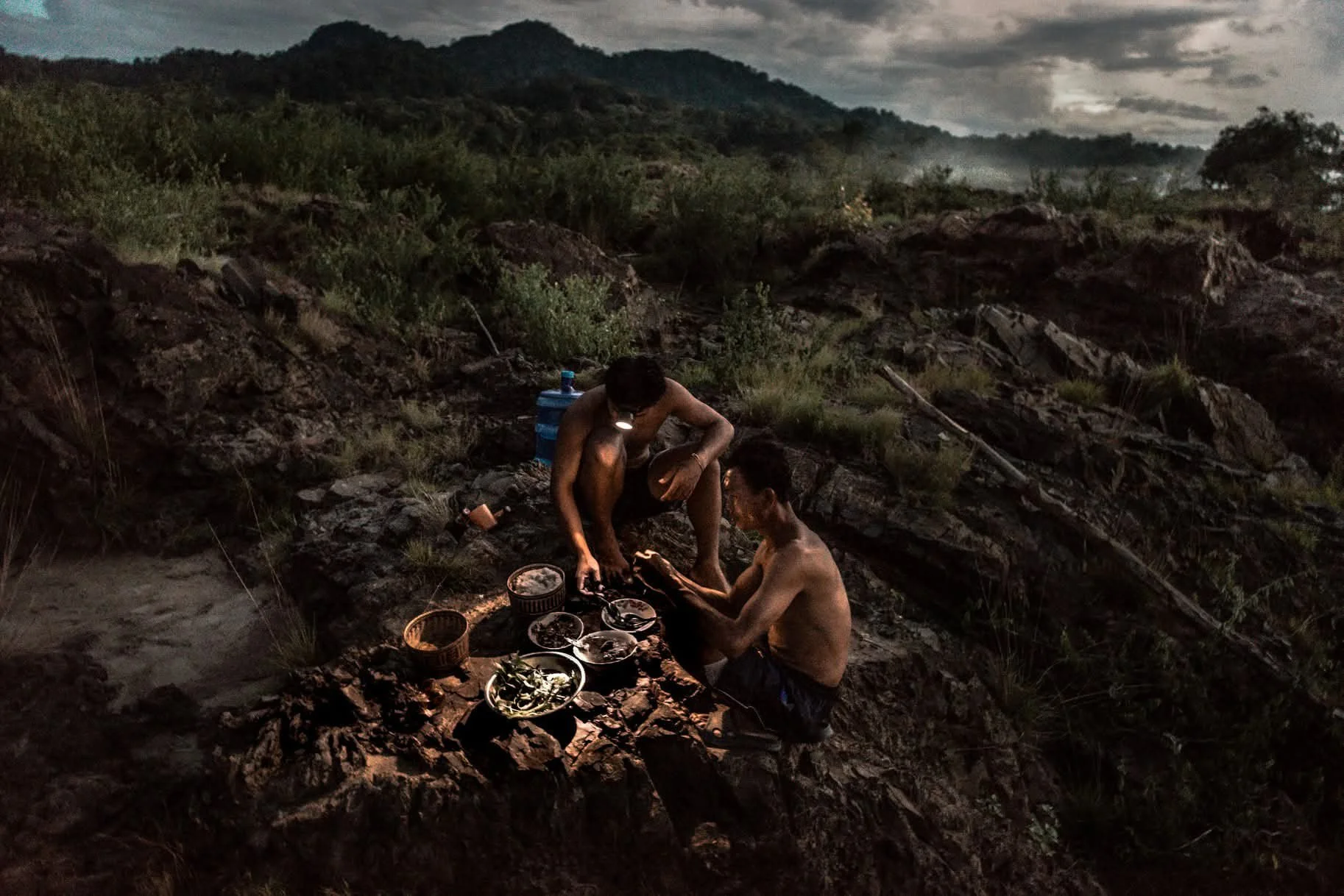
At dusk in Si Phan Don, fishermen share a simple meal on the rocks beside their Li trap. During the migration season, the trap cannot be left unattended for long. Fish may enter with the current at any hour, day or night, and the men return again and again to check, clear, and reset it. For those who work these remote fishing sites, the riverbank becomes a temporary home. Dinner is eaten where the work happens - among wet stones, bamboo gear, smoke, and the sound of falling water - as they wait for the Mekong to deliver its next catch.
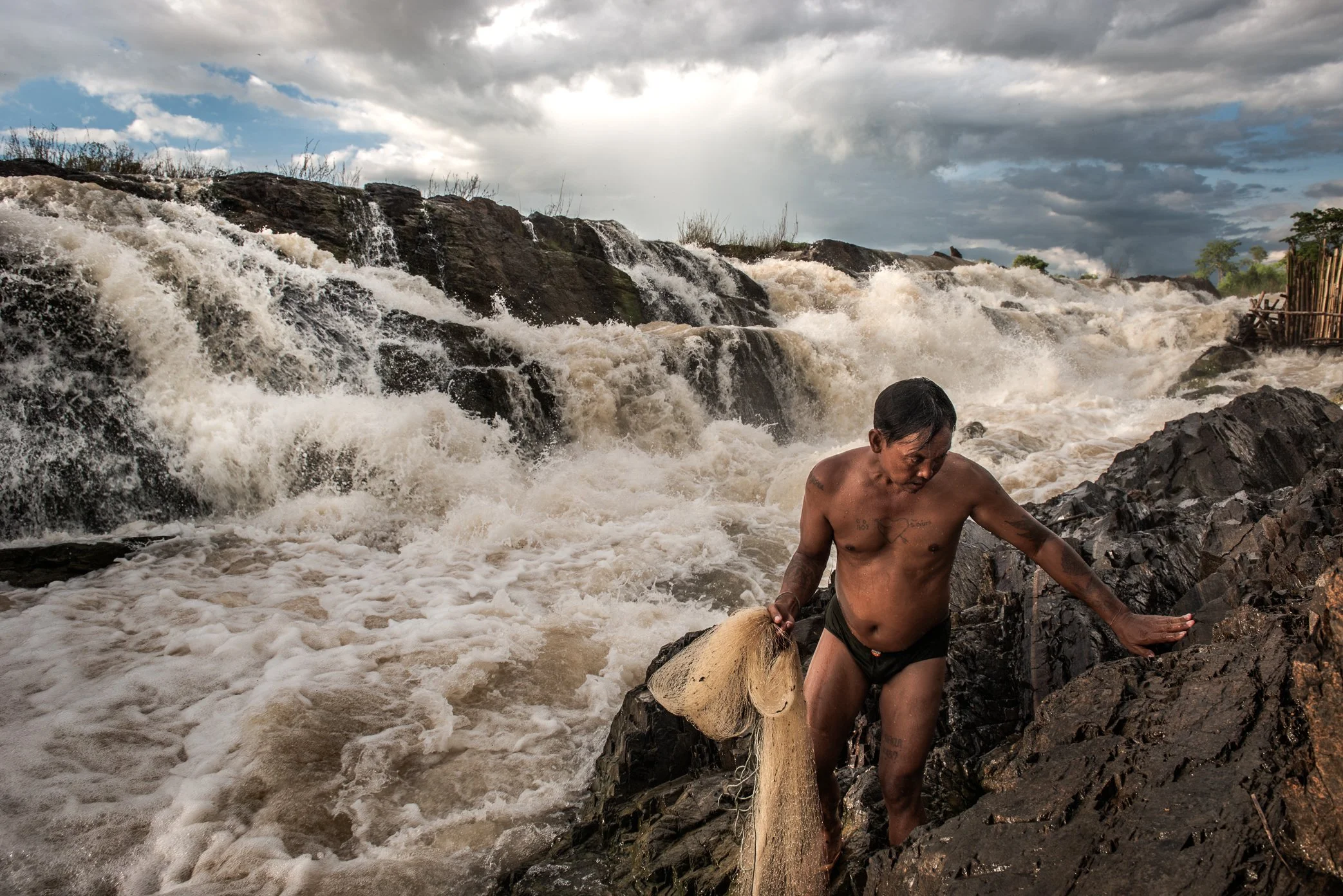
Before returning home after a day on the rocks, a fisherman casts a small net in the torrent below the falls, gathering fish for the evening meal. In Si Phan Don, where the Mekong breaks into channels, rapids, and waterfalls, fishing is not only a matter of harvest but of survival around the river’s changing moods. The larger seasonal catch may be sold, but smaller fish taken at the end of the day often remain with the family - food drawn directly from the same waters that shape their work, risk, and daily life.
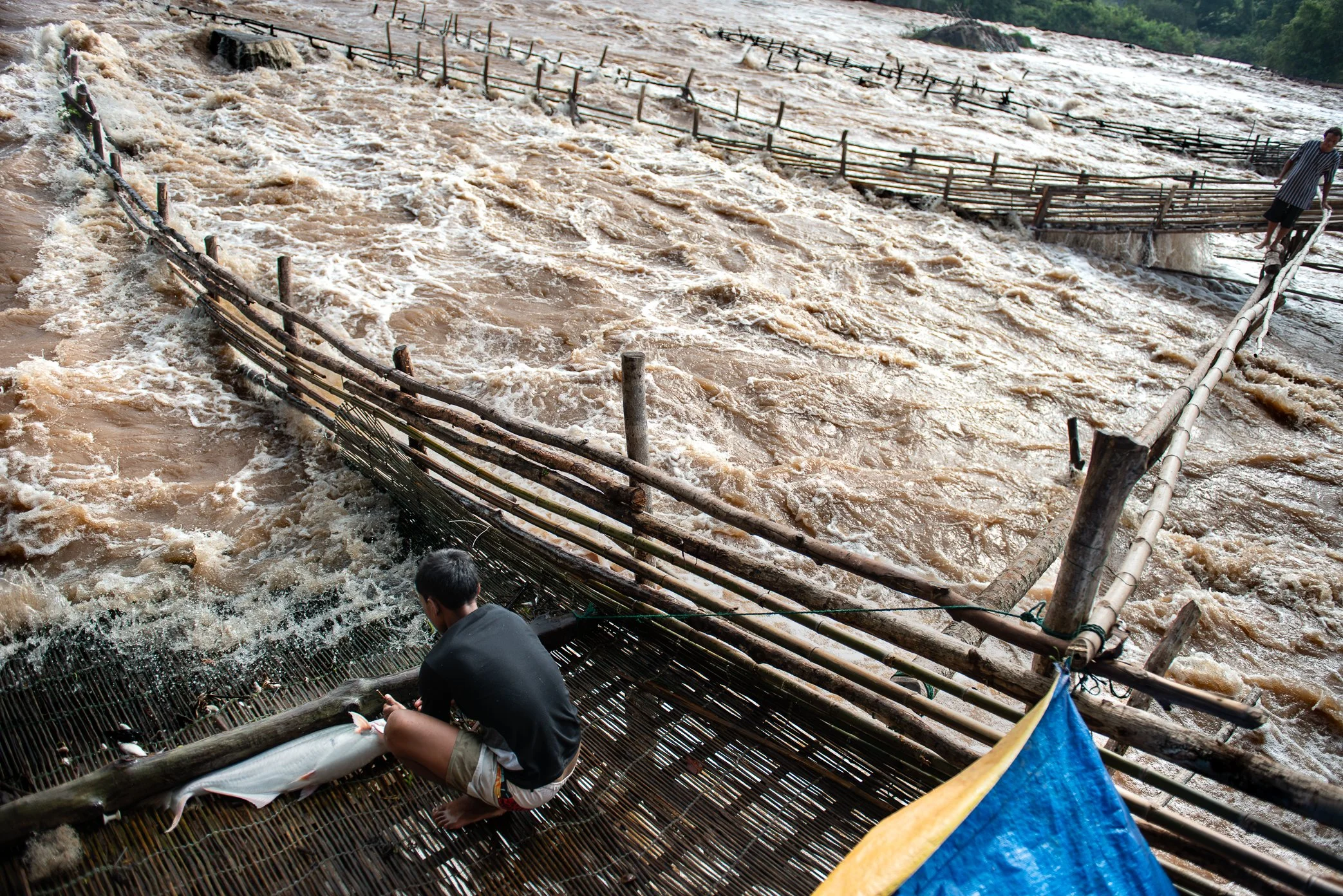
A fisherman collects fish from a Li trap as the Mekong rushes through Khone Falls. During the rainy season, rising water helps trigger fish migrations through these narrow channels, where traps are placed by families who often inherit both the fishing sites and the knowledge of how to work them. Each catch is taken from a structure built not beside the river, but inside its force.
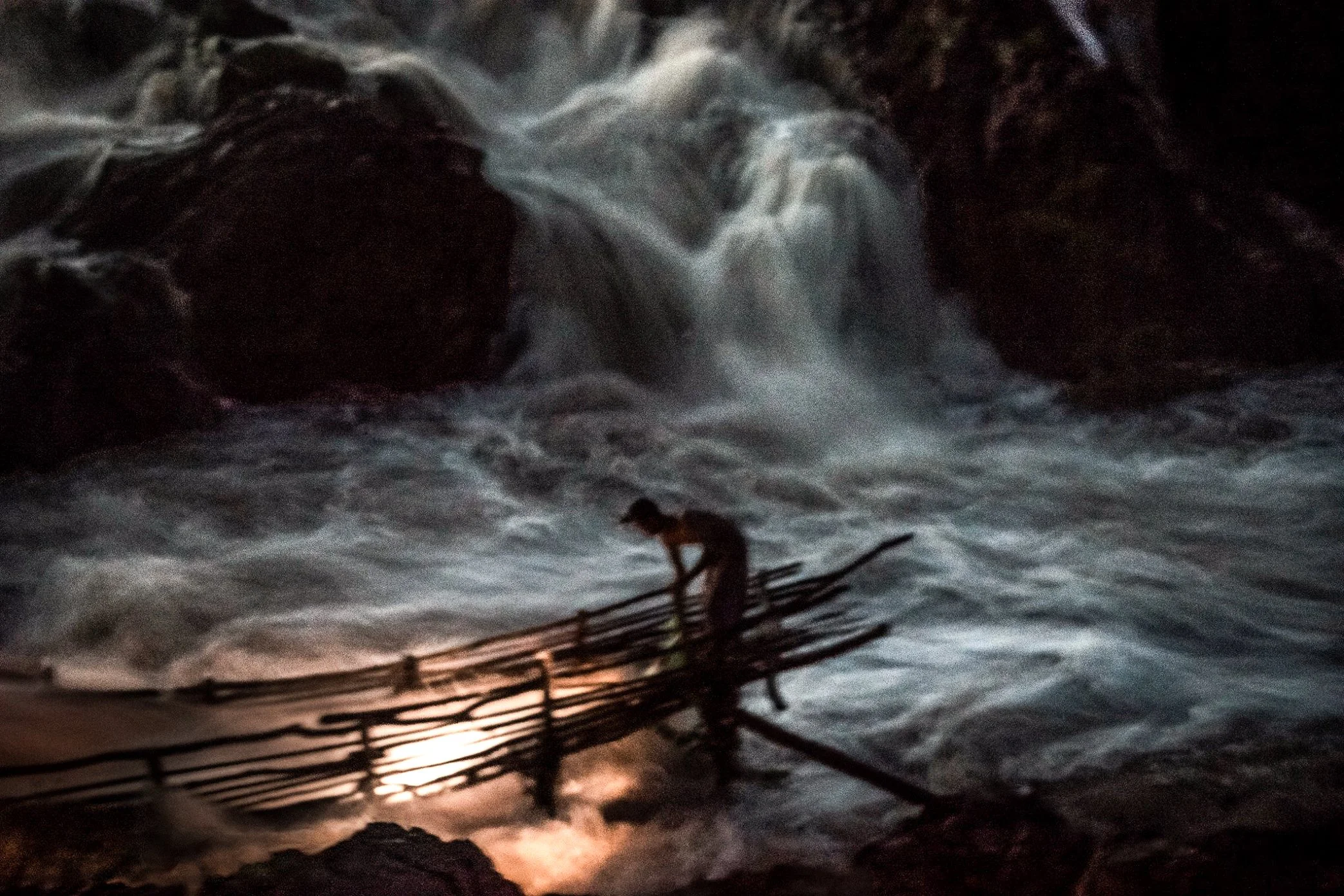
A fisherman checks his Li trap at night in Si Phan Don, silhouetted against the white force of the Mekong. During the migration season, the work continues after dark, when fish may enter the trap with the changing current and the structure must be cleared, repaired, and watched. Built into the rapids by hand, the trap stands between rock, water, and risk. Here, fishing is not a quiet act of waiting, but a struggle carried through darkness - where one man, a headlamp, and a bamboo frame meet the full power of the river.
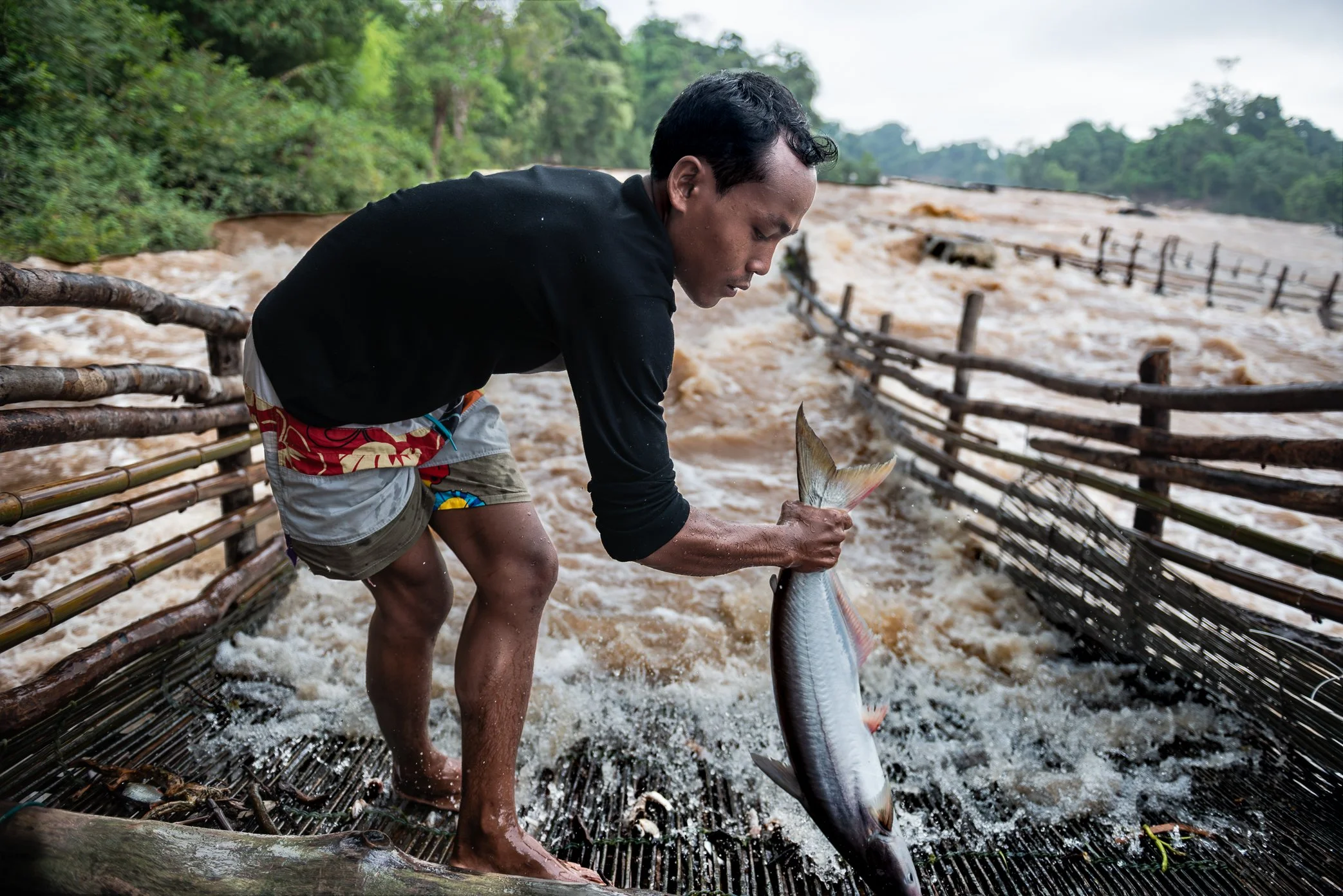
A fisherman lifts a larger migratory fish from a Li trap in Si Phan Don during the middle of the rainy season, when the Mekong has risen and stronger runs begin moving through the falls. By this stage, the fish are often bigger - but their value can fall as catches increase and buyers push prices down. For the men who guard these traps, the season begins with the first rains and continues until the migration fades. Each fish taken from the current is part of a long watch: days and nights spent beside the river, where size, timing, and price rarely move in the fishermen’s favor at the same time.
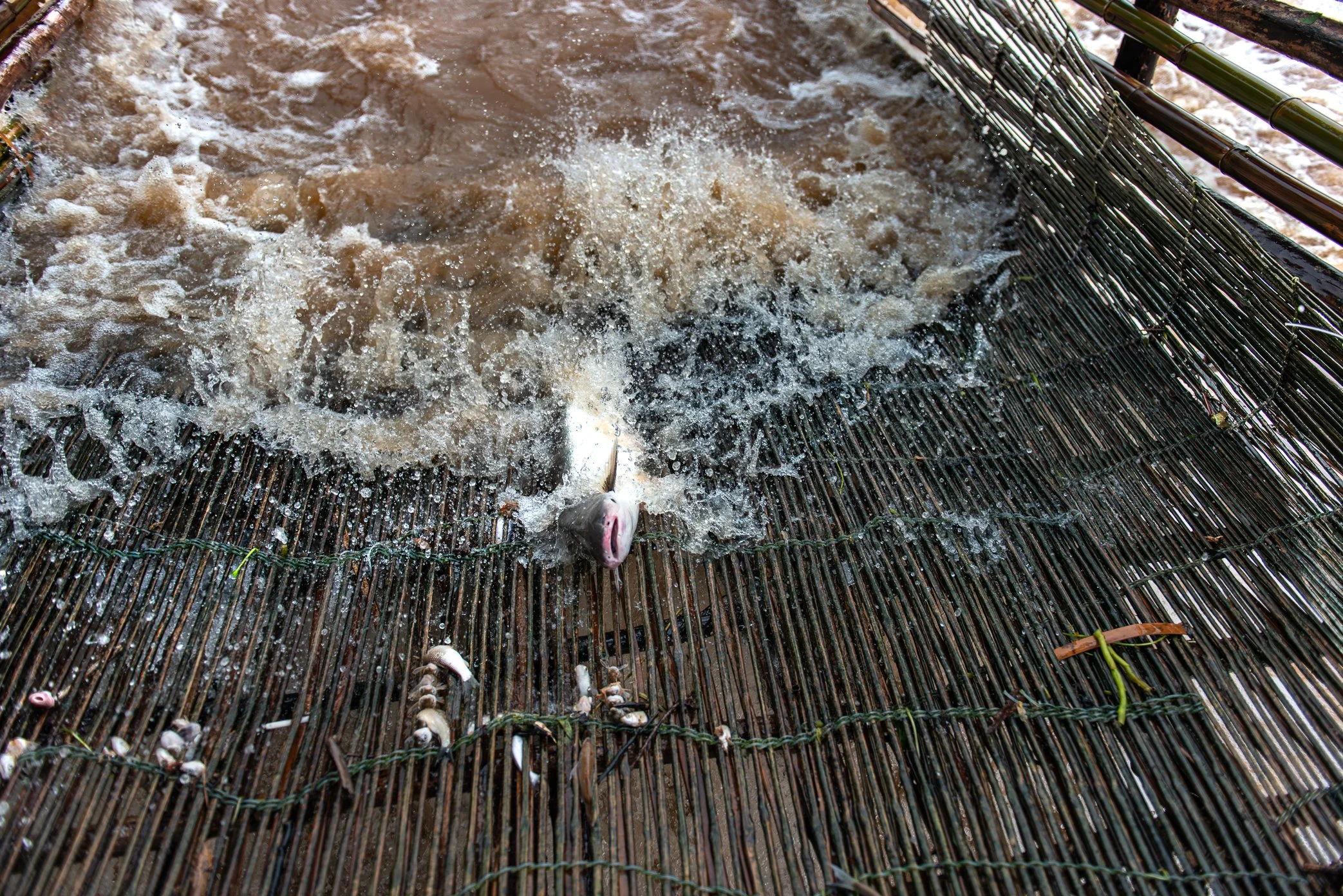
A fish slips down into a Li trap at Khone Falls after failing to push through the force of the current. These bamboo traps are built directly in the river’s flow, catching migratory fish that swim upstream but are overpowered by the rapids and swept back into the gear. In Si Phan Don, the trap works with the river’s own violence - turning exhaustion, current, and timing into a catch.
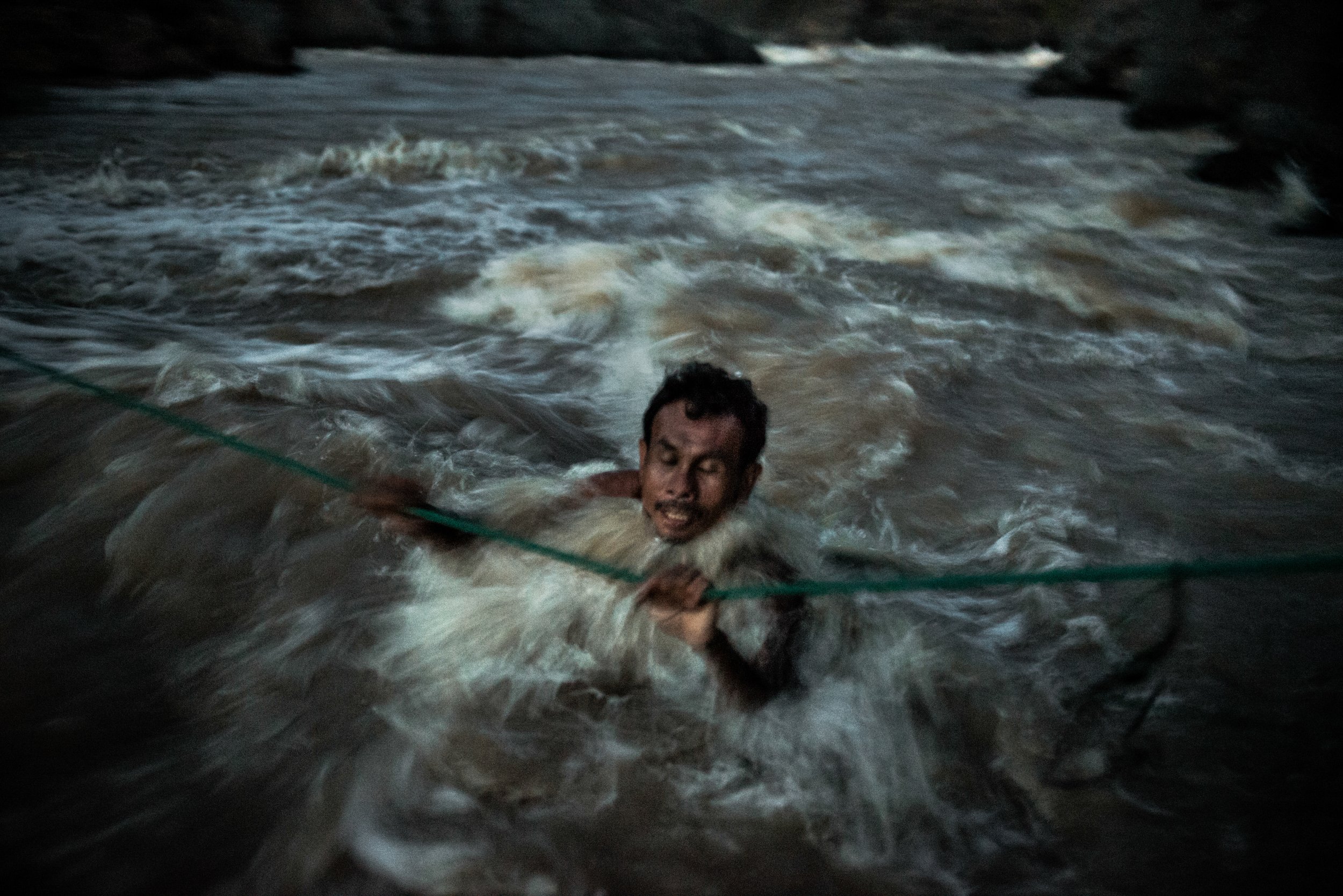
Some Li traps in Si Phan Don are built far from the bank, placed in the middle of powerful channels where migrating fish are most likely to pass. Reaching them can be as dangerous as working the trap itself. Fishermen tie ropes from the shore and pull themselves through the current, hand over hand, to reach the wooden structure and collect the catch. In these waters, the river is not a background to the work - it is the obstacle, the risk, and the reason the trap is there. Every visit to the li demands strength, timing, and trust in a rope stretched across the force of the Mekong.

At remote Li trap sites in Si Phan Don, fishermen may remain for days or weeks once the migration begins, living beside the rapids until the season has passed. In these isolated rock channels, a mobile phone often becomes their only link to home - a way to check on family while they wait, work, and sleep beside the trap, returning only when the run of fish is over.
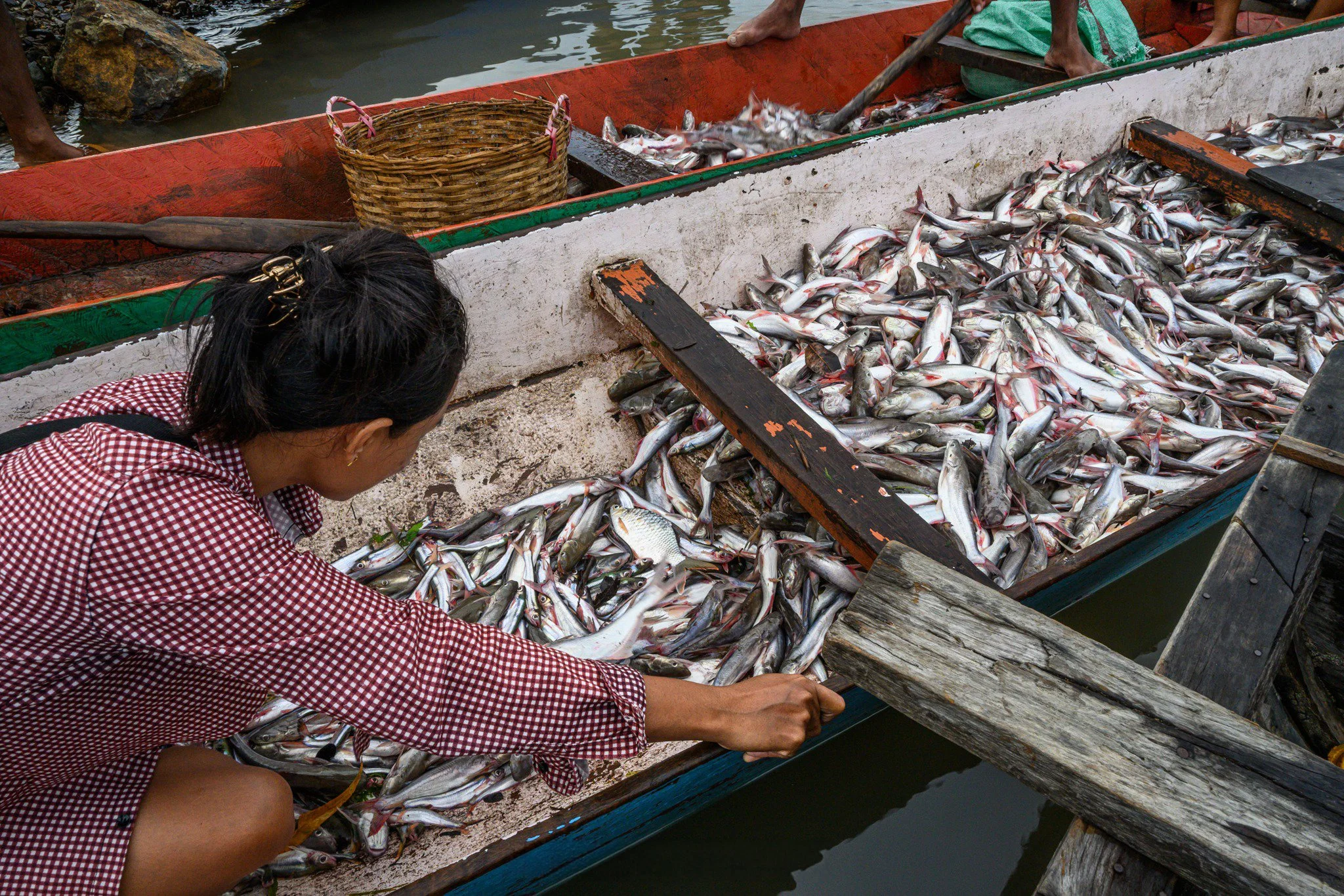
During the migration season in Si Phan Don, fish are caught in greater numbers across many channels of the Mekong. But abundance does not always bring security. When the catch is heavy, middlemen often push prices down, forcing fishermen to land even more fish to earn the same income. What begins as a seasonal harvest becomes part of a deeper pressure on the river. As more fish are taken during their migration, the risk of overfishing grows - quietly, steadily, and with few signs of slowing. For fishing families, the river remains a lifeline. For the river’s future, that dependence is becoming an increasingly fragile balance.
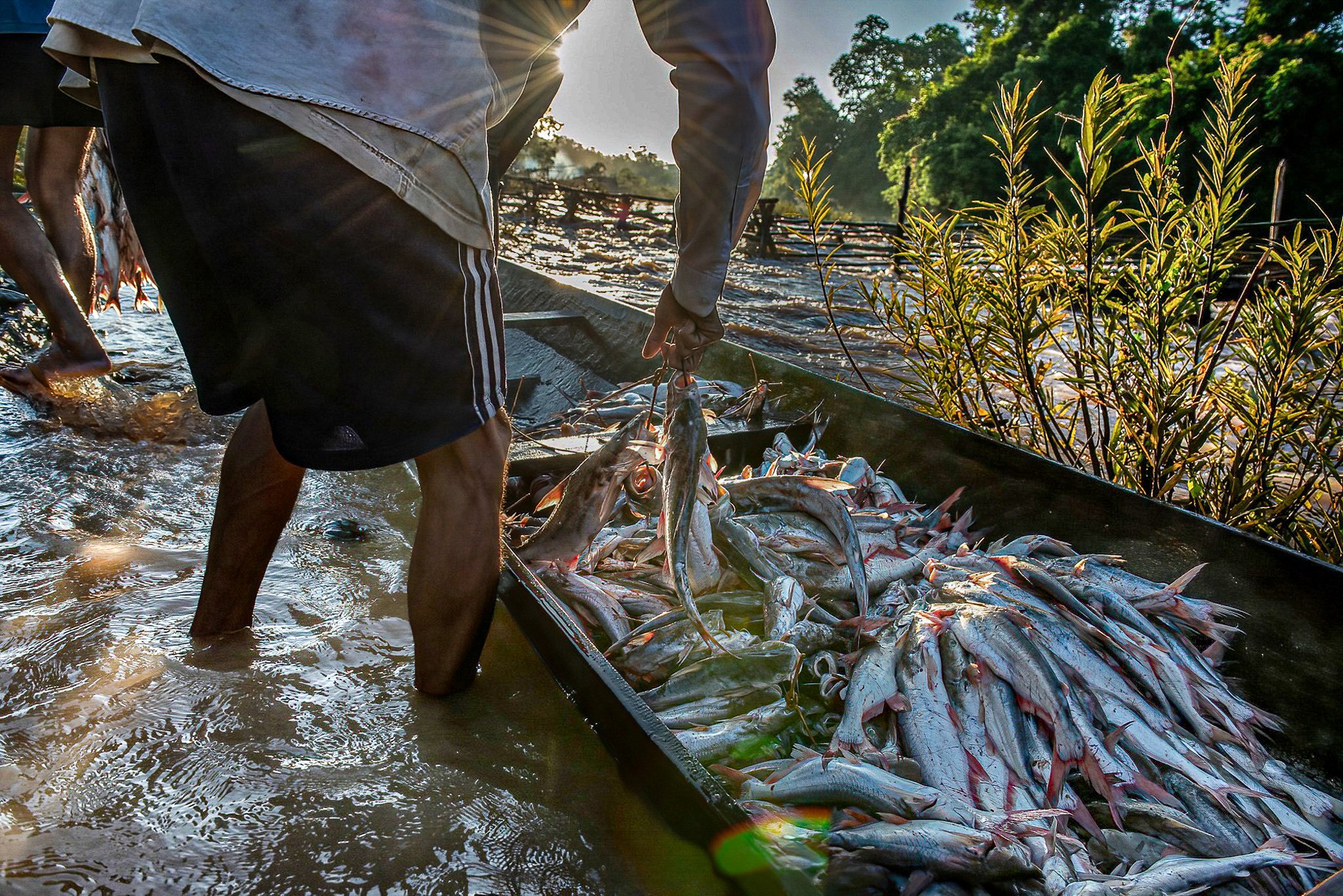
A fisherman carries part of the catch ashore as the morning haul comes in from the trap sites. As prices fall during peak migration, many fishermen are pushed to catch more fish simply to maintain the same income.
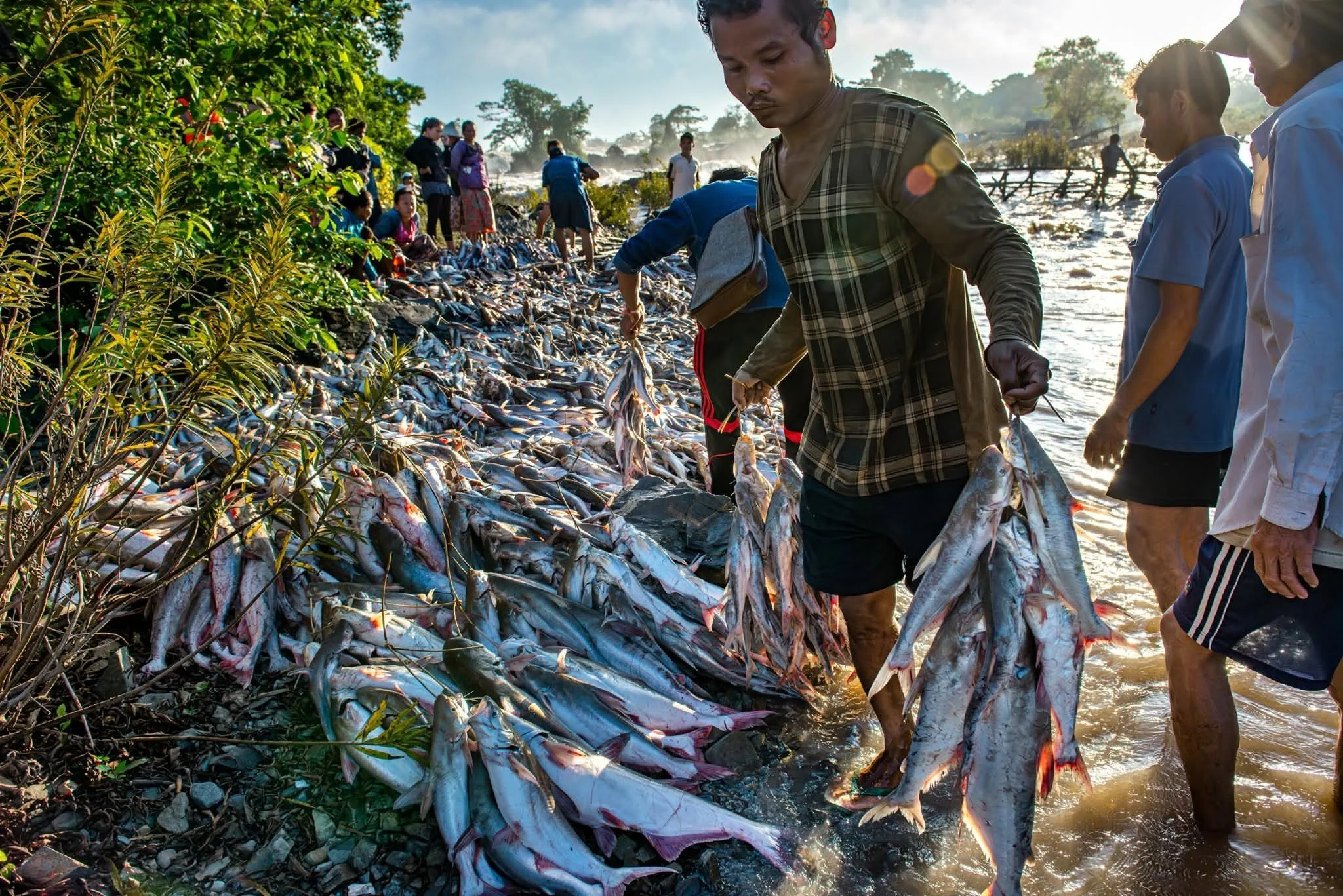
Piles of freshly landed fish line the riverbank as traders, families, and laborers move quickly through the harvest. What looks like seasonal plenty also reveals a growing pressure on the Mekong - an expanding catch, declining bargaining power, and the rising risk of overfishing with no clear sign of slowing.
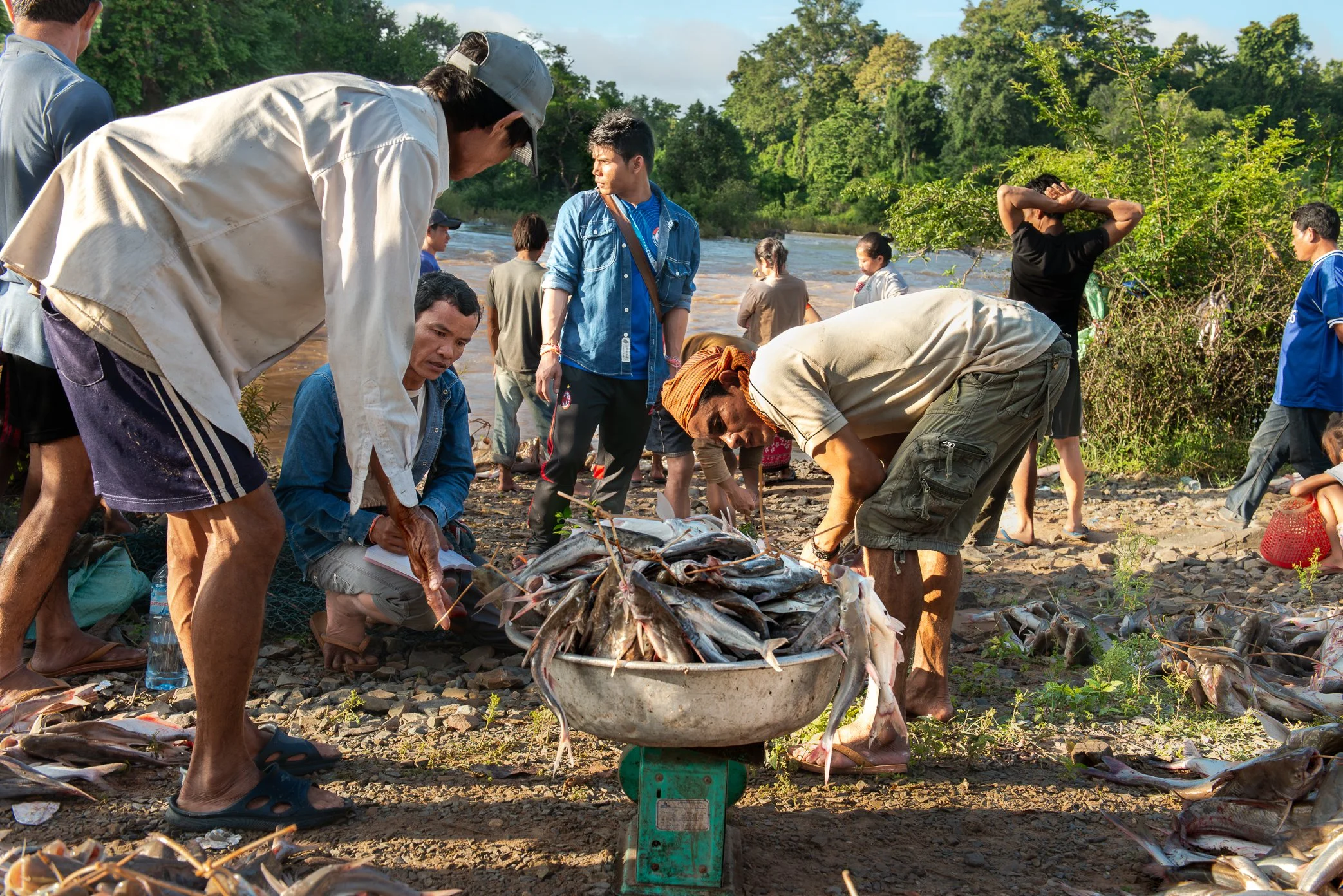
A middleman records the catch on the riverbank beside a Li trap in Si Phan Don, where fish are bought before they ever reach the market. Some buyers do more than purchase the harvest; they help finance the construction of certain traps, creating a relationship that begins before the fishing season and continues through each sale. At the landing, the catch is counted, inspected, and priced in front of families and fishermen. It is a small transaction scene, but it reveals a larger structure behind the river economy - one where credit, labor, risk, and ownership are tied together long before the fish are lifted from the Mekong.
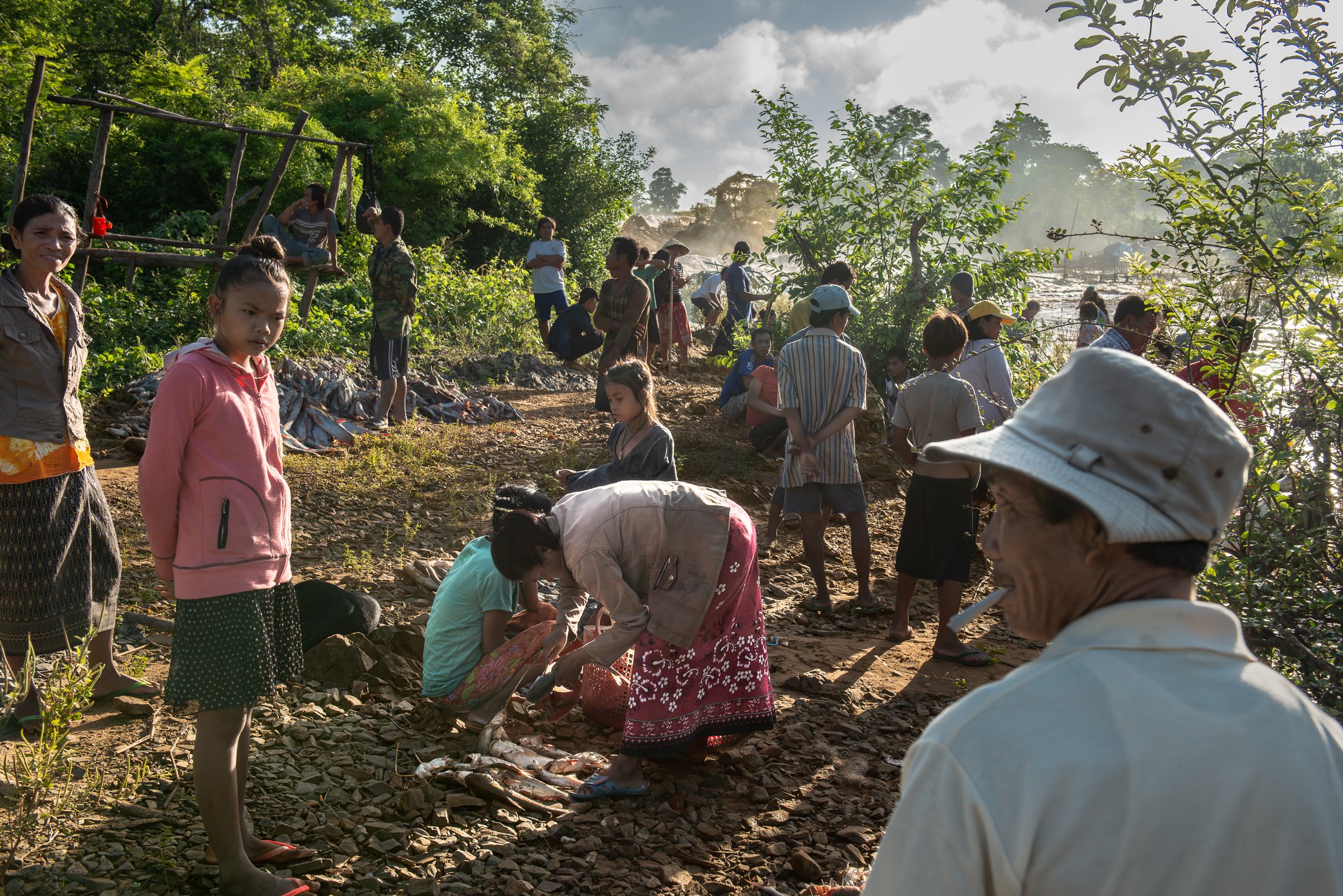
At first light in Si Phan Don, families and neighbors gather near the Li trap sites as fish from the night’s catch are divided. Some have come to receive a share from the trap owner; others are relatives of the fishermen, collecting the portion set aside for the household before the rest is sold. Here, a catch is not only income, but also food, kinship, and a form of exchange that ties the community to the river.
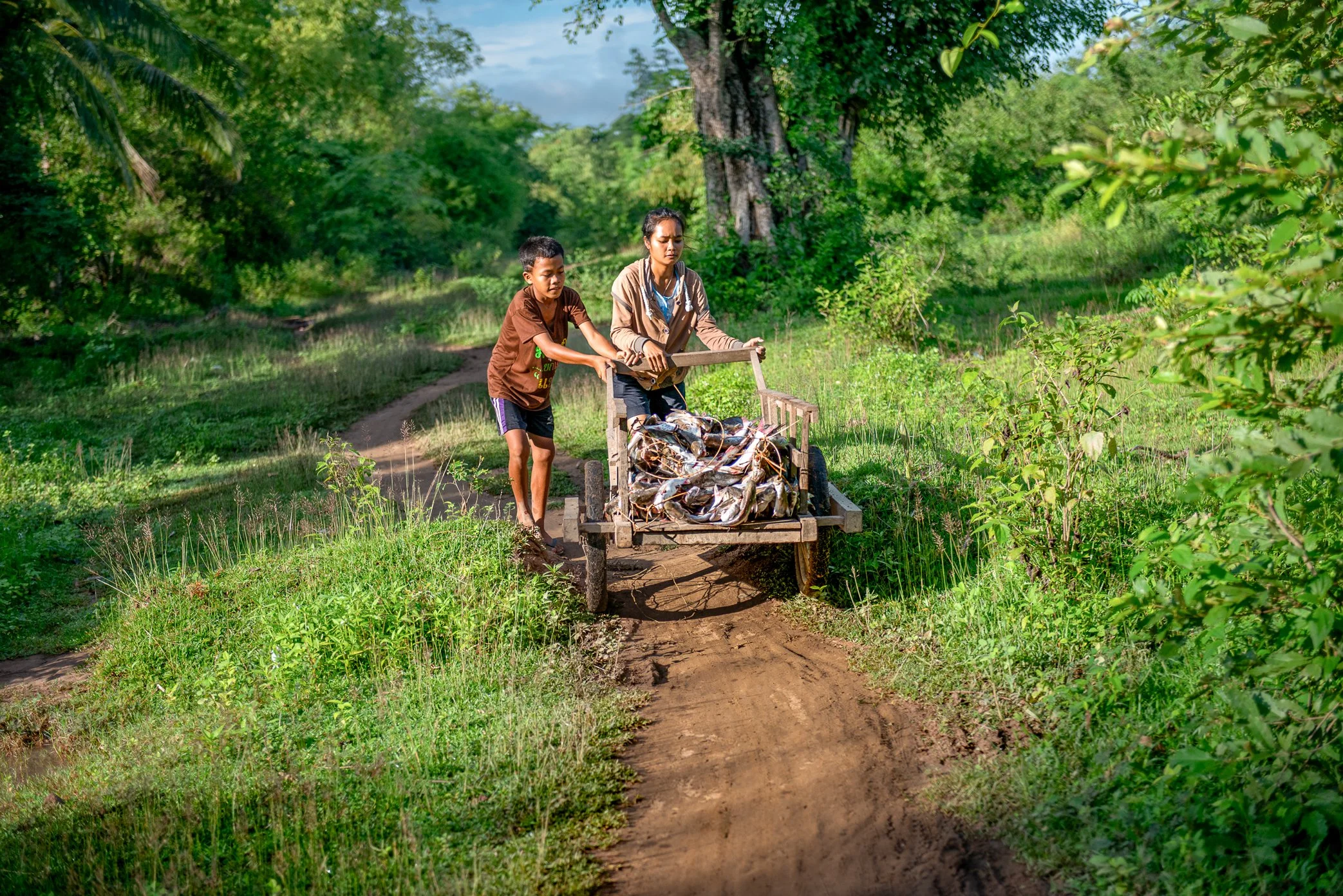
A family pushes a wooden cart loaded with fish from a li trap in Si Phan Don. Before the catch enters the market, the owner sets aside a share for the household - food for children, elders, and daily meals. Only what remains is sold. In the Four Thousand Islands, fishing is not simply a commercial activity. It is first tied to survival at home, then to cash income. Each catch moves through the family before it moves through the market, linking the river directly to both the kitchen and the wider economy of southern Laos.
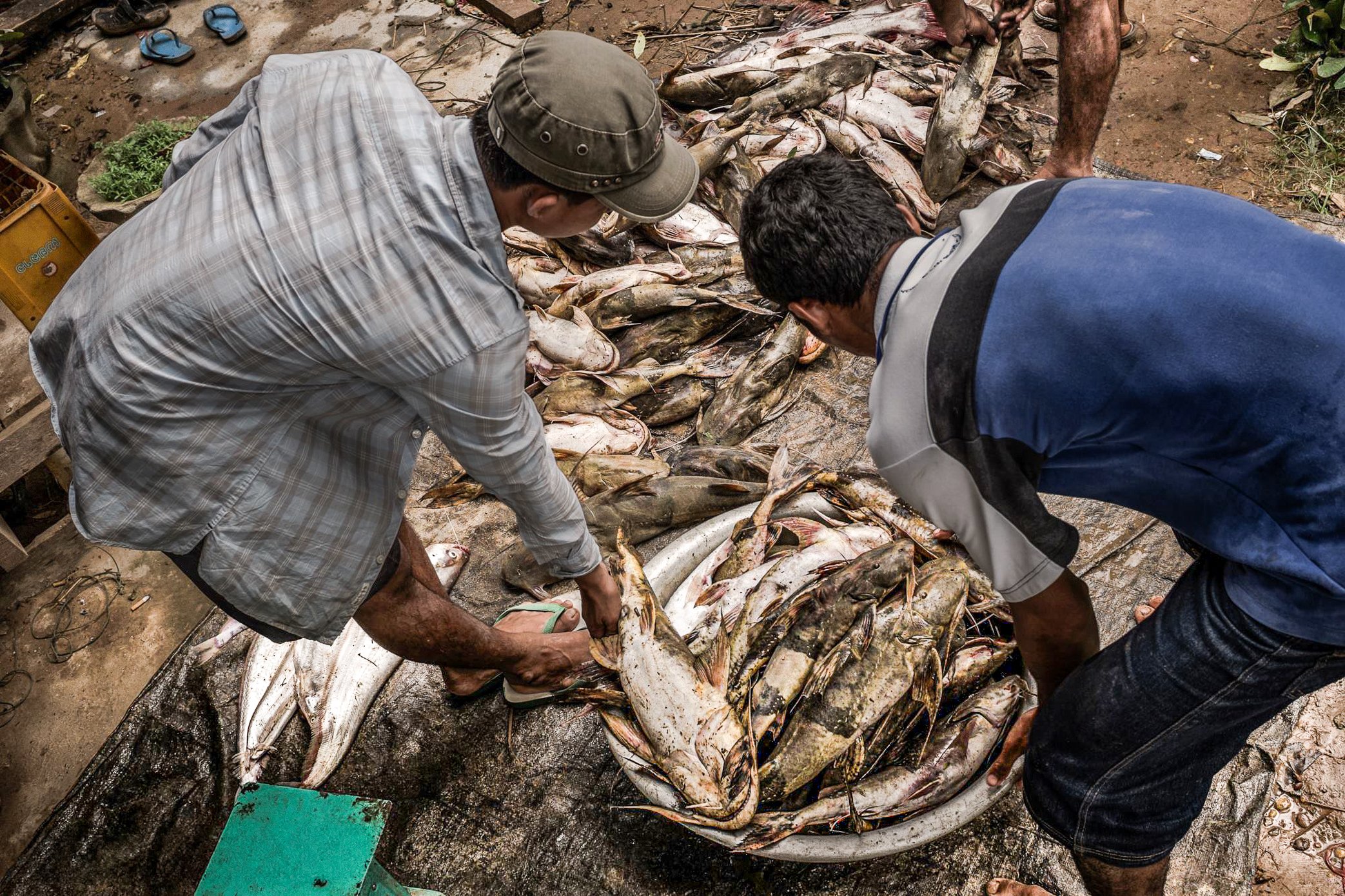
At the height of the migration season in Si Phan Don, large fish are sorted quickly before they lose value in the heat. Middlemen examine the catch by size, species, and freshness, deciding what will move on to larger markets and what will remain for local sale. For fishermen, this moment is critical. The river may deliver abundance, but the price is set on land - in the hands of buyers who turn the catch into trade. Between the water and the market, each fish becomes part of a negotiation shaped by urgency, demand, and the fragile economics of the Mekong.
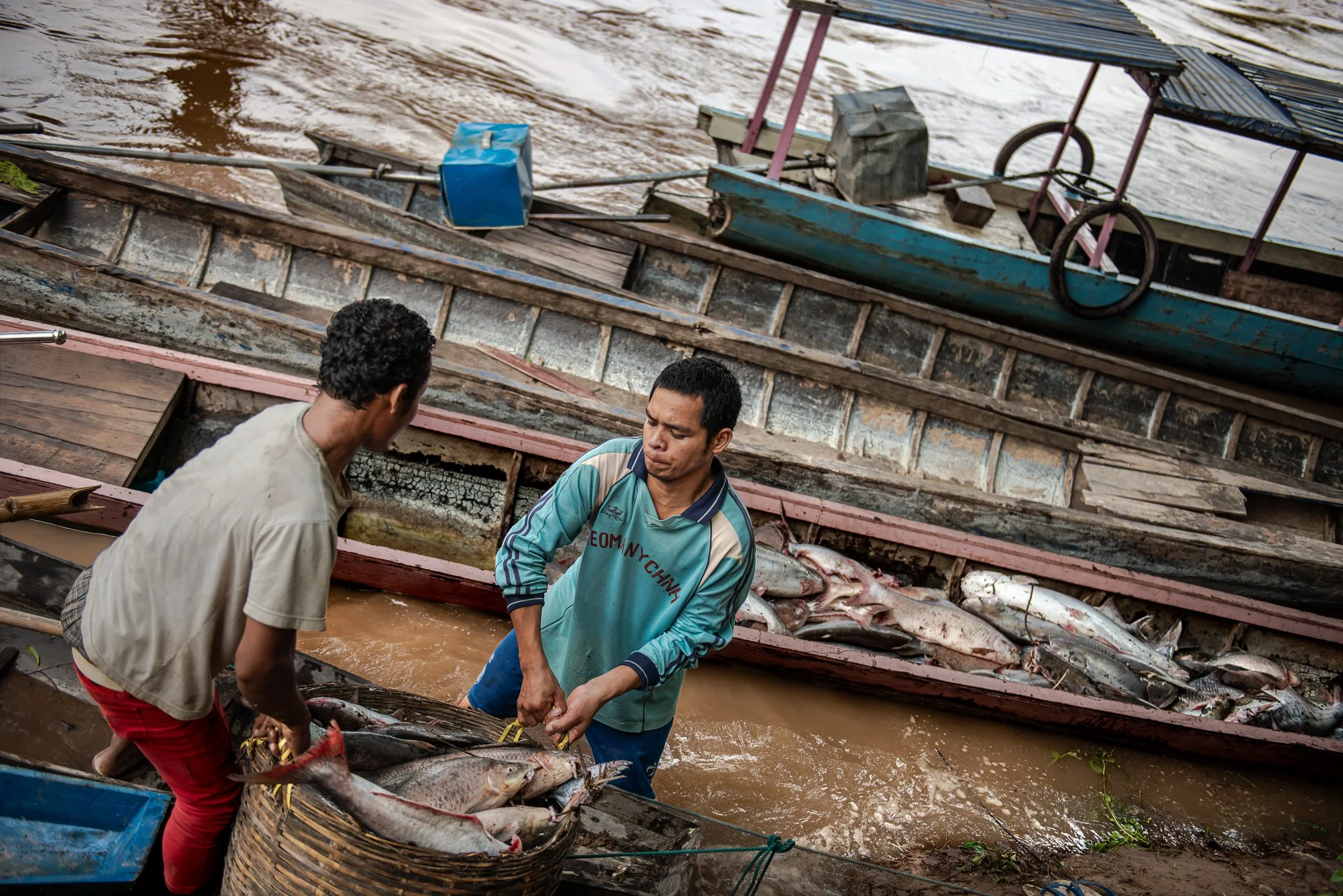
Workers transfer fish from island boats after middlemen have bought the catch from Li trap owners in Si Phan Don. Once gathered from the traps, the fish must move quickly through the next stage of the river economy - from small boats to larger loads, from island landings to buyers on the mainland. This is the less visible labor behind the trade: lifting, sorting, tying, and carrying heavy baskets before the fish are sent onward to markets and restaurants across southern Laos. Between the fisherman and the final buyer, many hands help move the Mekong’s catch from water to commerce.
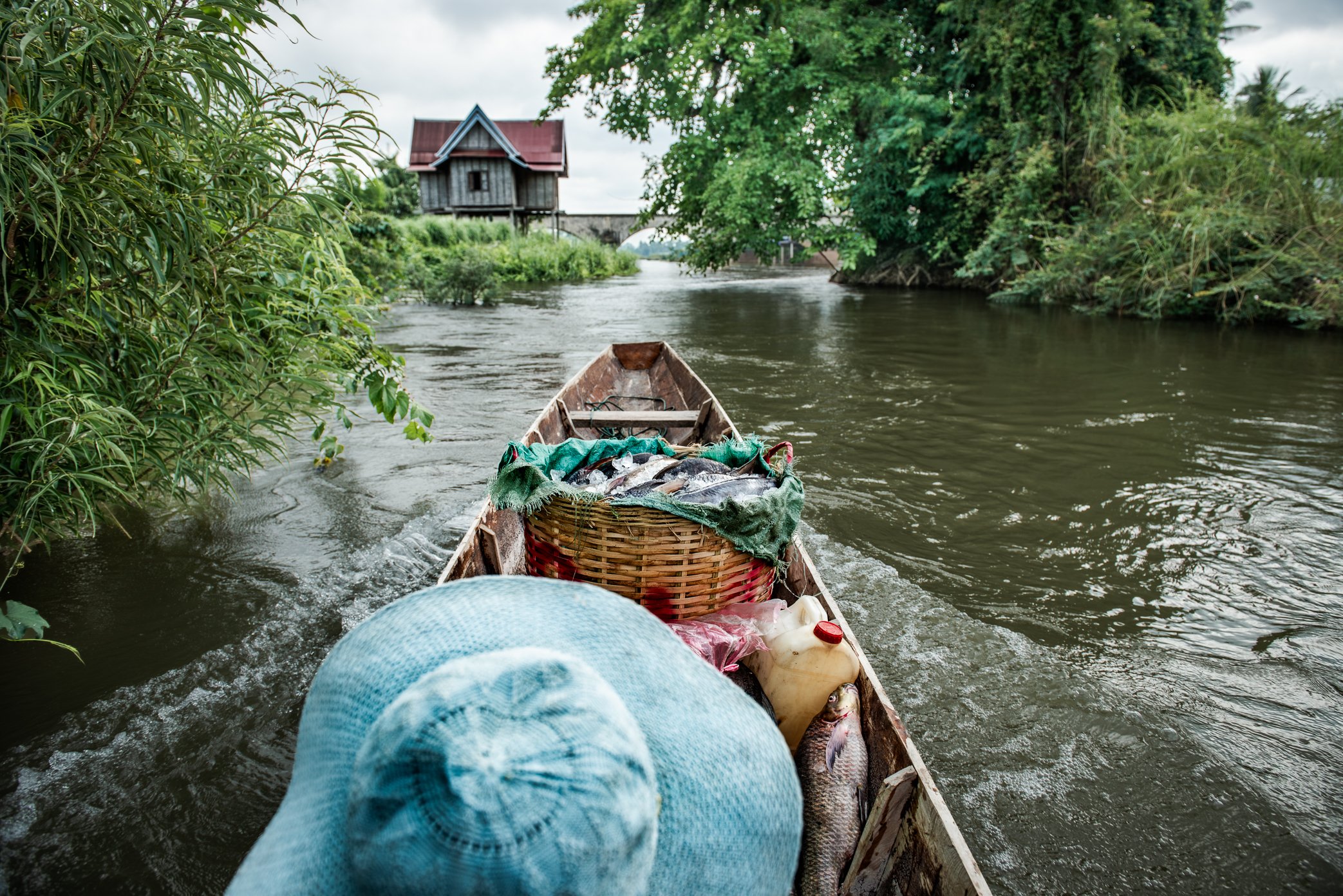
Porn, 53, the wife of a fisherman in Si Phan Don, has recently taken on a second role beyond the household: buying and selling fish. Her family has already completed the construction of three Li traps, but the main migration from the Cambodian side of the Mekong has not yet arrived. Until the river begins to deliver its seasonal catch, she buys fish from other fishermen and carries them by boat toward the mainland trade, where they can be sold on through the central market in Pakse. For families along the Four Thousand Islands, fishing is rarely a single occupation. It is a chain of labor shared across the household - building traps, waiting for the migration, handling the catch, negotiating prices, and moving fish from island waters to market towns. In the uncertain weeks before the main run begins, small trades like this help keep the family economy alive.
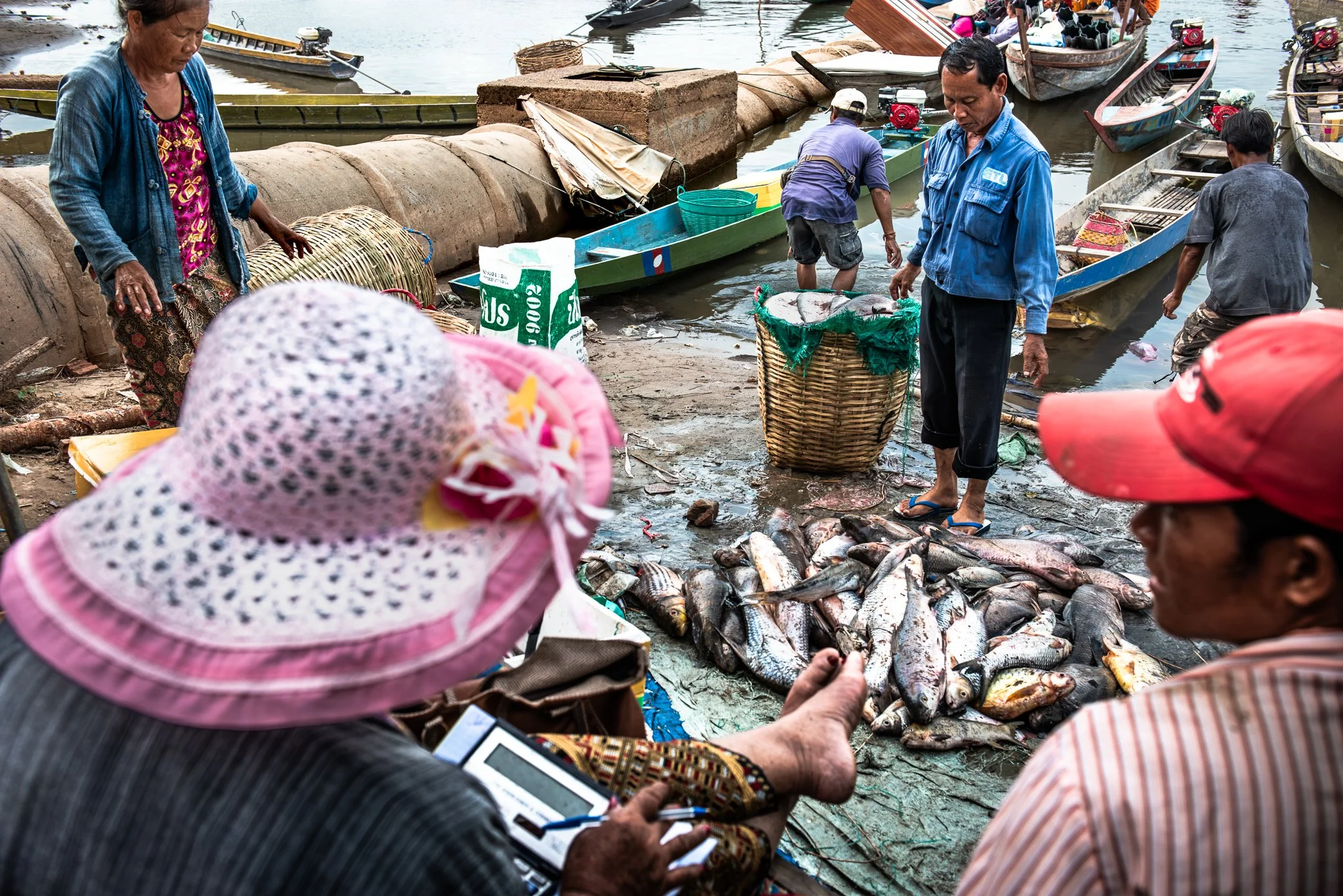
At Nakasang, the first mainland trading point for much of the fish coming out of Si Phan Don, the river’s catch begins its movement into the market economy. Fish brought by boat from the islands are sorted, weighed, and negotiated on the muddy landing before being carried onward to towns such as Pakse and nearby local markets. Here, a buyer from Pakse selects fish from the morning catch, choosing what can be sold fresh and what will move quickly through the day’s trade. For fishermen in the Four Thousand Islands, the journey does not end when the fish leave the trap. The catch must still pass through hands, boats, scales, and bargaining - a chain of small transactions that connects remote river labor to the wider food markets of southern Laos.
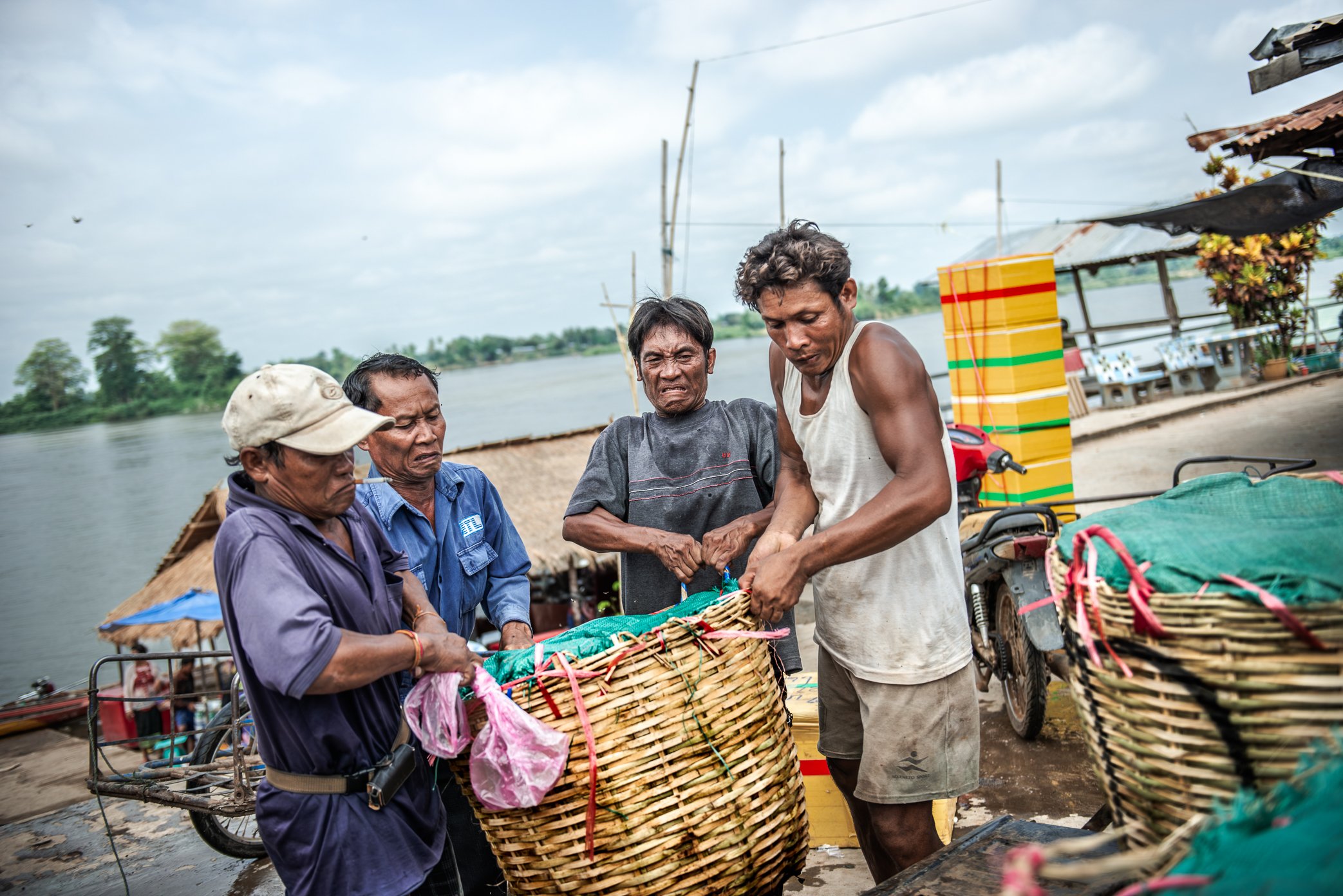
At Nakasang fish market, laborers haul woven baskets of fish from the landing into a pickup truck bound for Pakse, the commercial center of southern Laos. Each basket can weigh around 100 kilograms, heavy with fish brought in from the islands and falls of Si Phan Don. By the time the truck leaves, it may carry more than a ton of river catch. This is where the labor of the Mekong changes form - from traps, boats, and wet hands into transport, weight, price, and trade. What began in the rapids before dawn now enters a wider market chain, moving from fishermen to buyers, from island landings to town stalls, and from the river’s dangerous currents into the daily food economy of southern Laos.
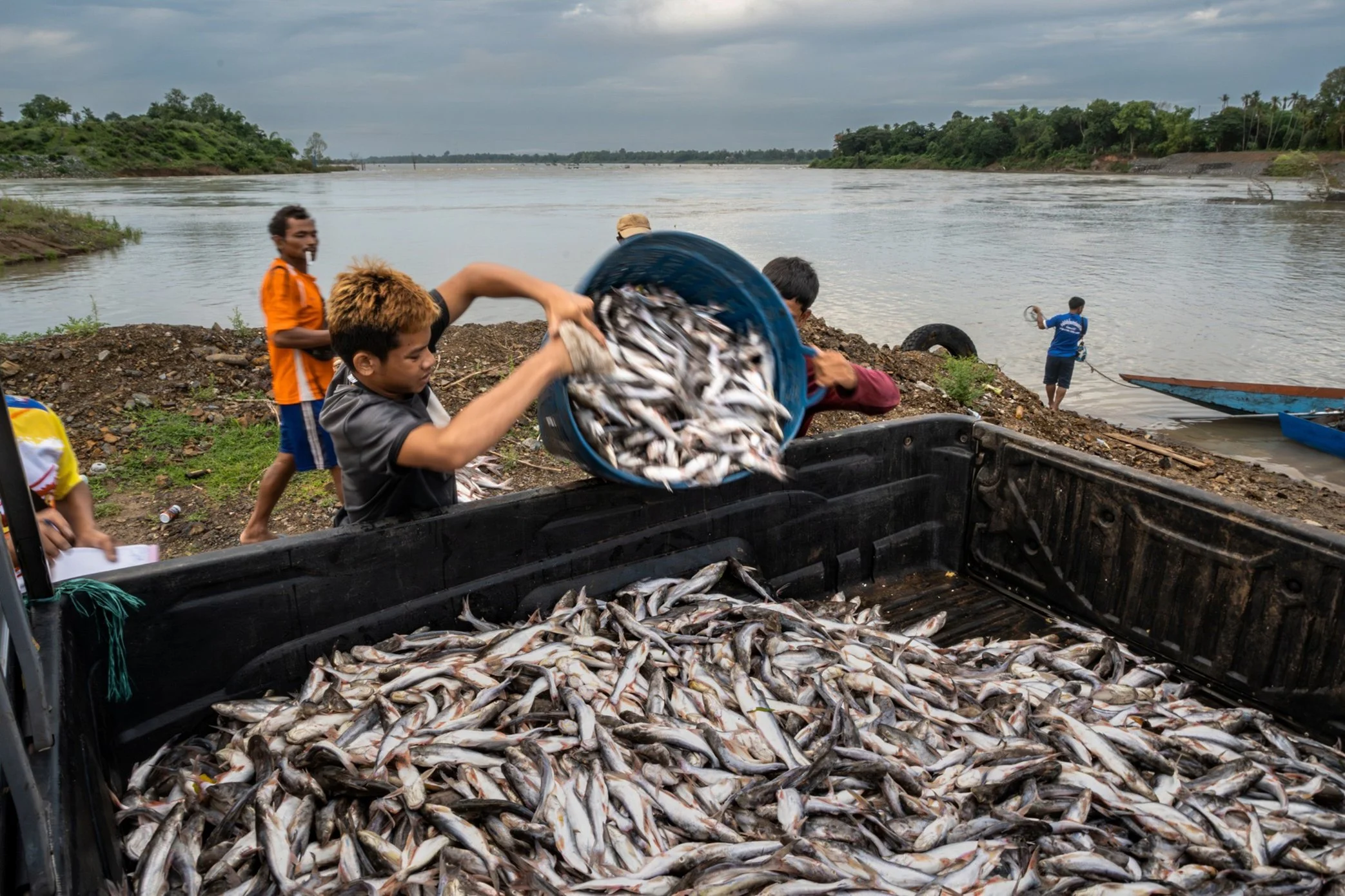
As the fish migration intensifies in Si Phan Don, the catch moves quickly from river to truck. Young laborers load baskets of fish onto a pickup near the Mekong, part of a fast-moving trade that links remote trap sites to buyers and markets farther inland. But heavy catches do not always mean better income. When fish arrive in large numbers, middlemen can push prices down, forcing fishermen to catch more simply to earn enough. In this cycle of abundance and pressure, the river gives generously - while the risk of overfishing grows with each season.
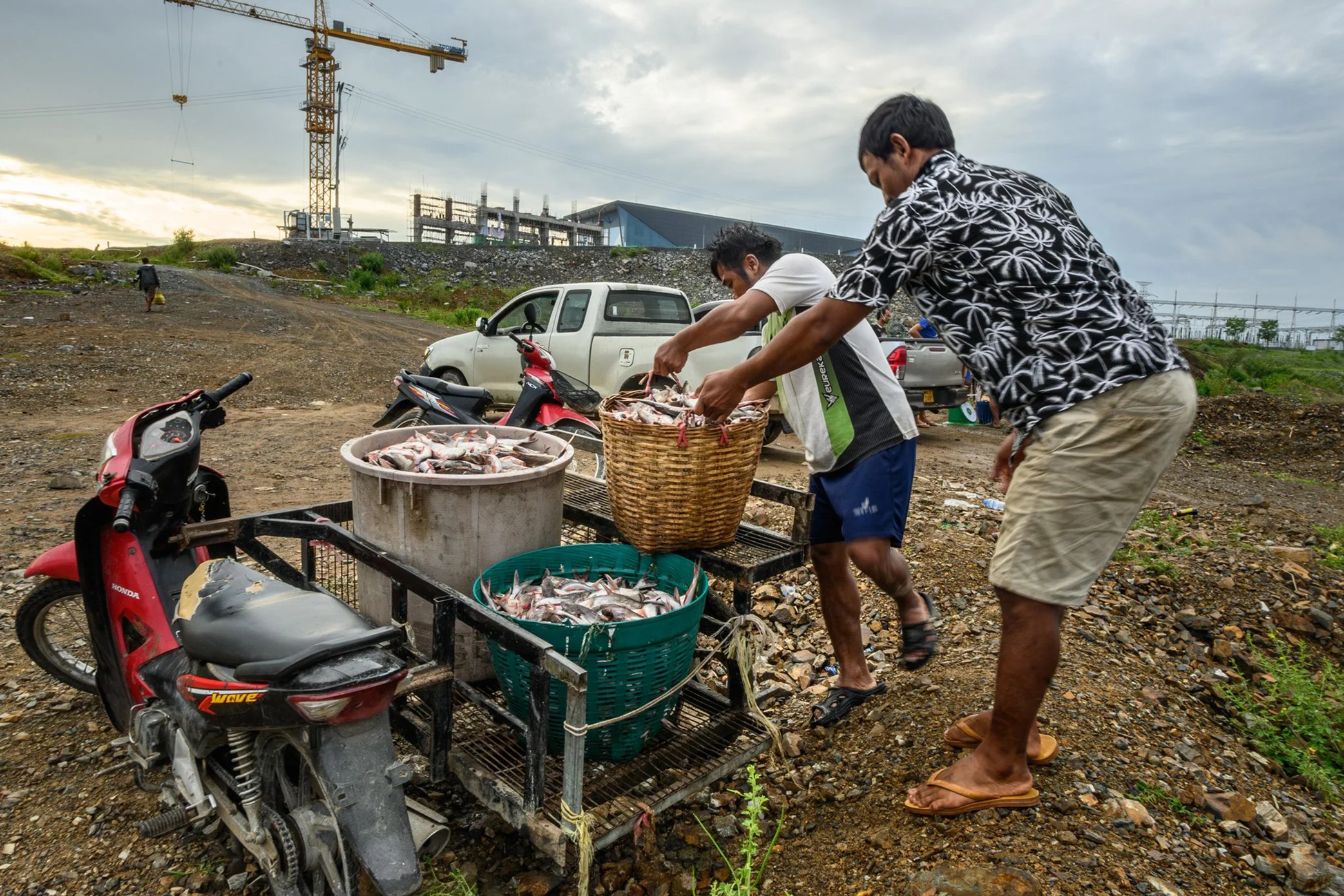
Fish buyers collect the day’s catch from fishermen in Si Phan Don, loading baskets of Mekong fish for resale beyond the river communities. Once the fish leave the traps, they enter another chain of labor - sorted, weighed, transported, and sold through middlemen to markets in southern Laos. For fishing families, this trade turns the river’s seasonal abundance into cash income. But it also places them inside a fragile market system, where the value of each catch is shaped not only by the river, but by buyers, timing, and the pressure to sell before the fish lose freshness.