Tonle Sap: Lives Shaped by the Lake - Cambodia
Tonle Sap is not only a lake in the heart of Cambodia. It is a living system that has shaped generations of people through water, fish, seasons, and necessity. Each morning and each night, boats move across the same vast surface. Some fish to feed their families. Some catch enough to sell. Others cross the line of the law, not out of choice alone, but because poverty and survival leave little room for alternatives.
Today, the lake stands at the center of a growing tension between human need and ecological decline. Oil Lamp Fishing reflects one side of that pressure: an illegal practice born from scarcity, using firelight to attract fish in the dark. Overfishing reveals the larger crisis, as too many nets, boats, and demands press against a lake that can no longer replenish itself as it once did.
What is unfolding on Tonle Sap is not a simple story of crime or conservation. It is a story of survival inside a shrinking margin - where law, poverty, food security, and the future of one of Southeast Asia’s most important freshwater ecosystems are all caught in the same net.
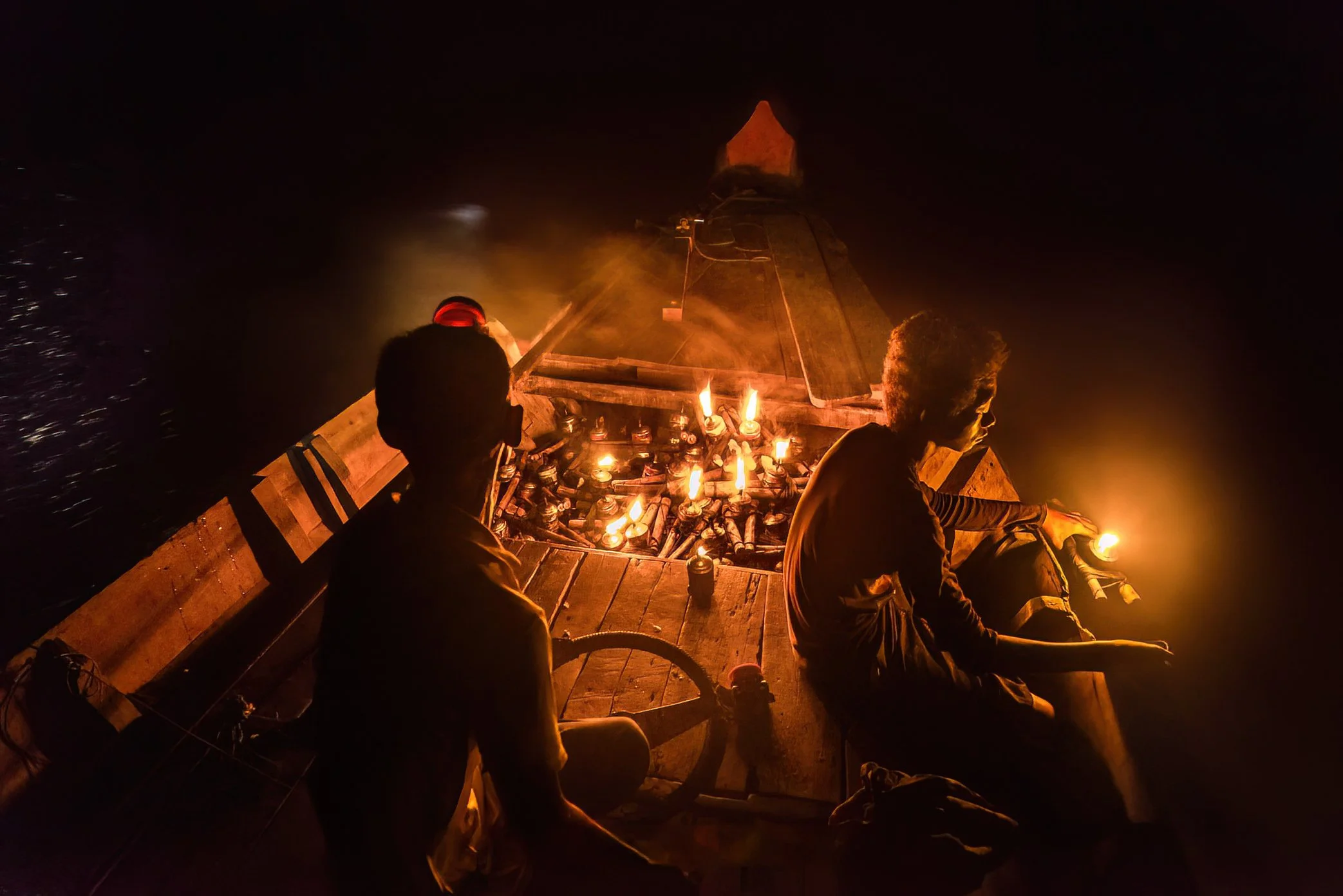
Oil Lamp Fishing, Tonle Sap, Cambodia - On the Tonle Sap, some fishermen still work deep into the night using oil lamps to draw life toward the boat. The flame attracts insects, the insects draw fish, and the water beneath the light becomes a small, moving trap. In the darkness, this form of fishing is both dangerous and difficult to regulate. Kerosene spills, open flames, and unstable wooden boats make each night a risk. For poor fishing families, however, the method remains a way to survive when legal catches are no longer enough. What appears at first as a quiet glow on the lake is also a sign of pressure - on fish stocks, on livelihoods, and on the fragile ecology of Cambodia’s great inland sea. Here, survival often moves in the shadows, between necessity and the law.
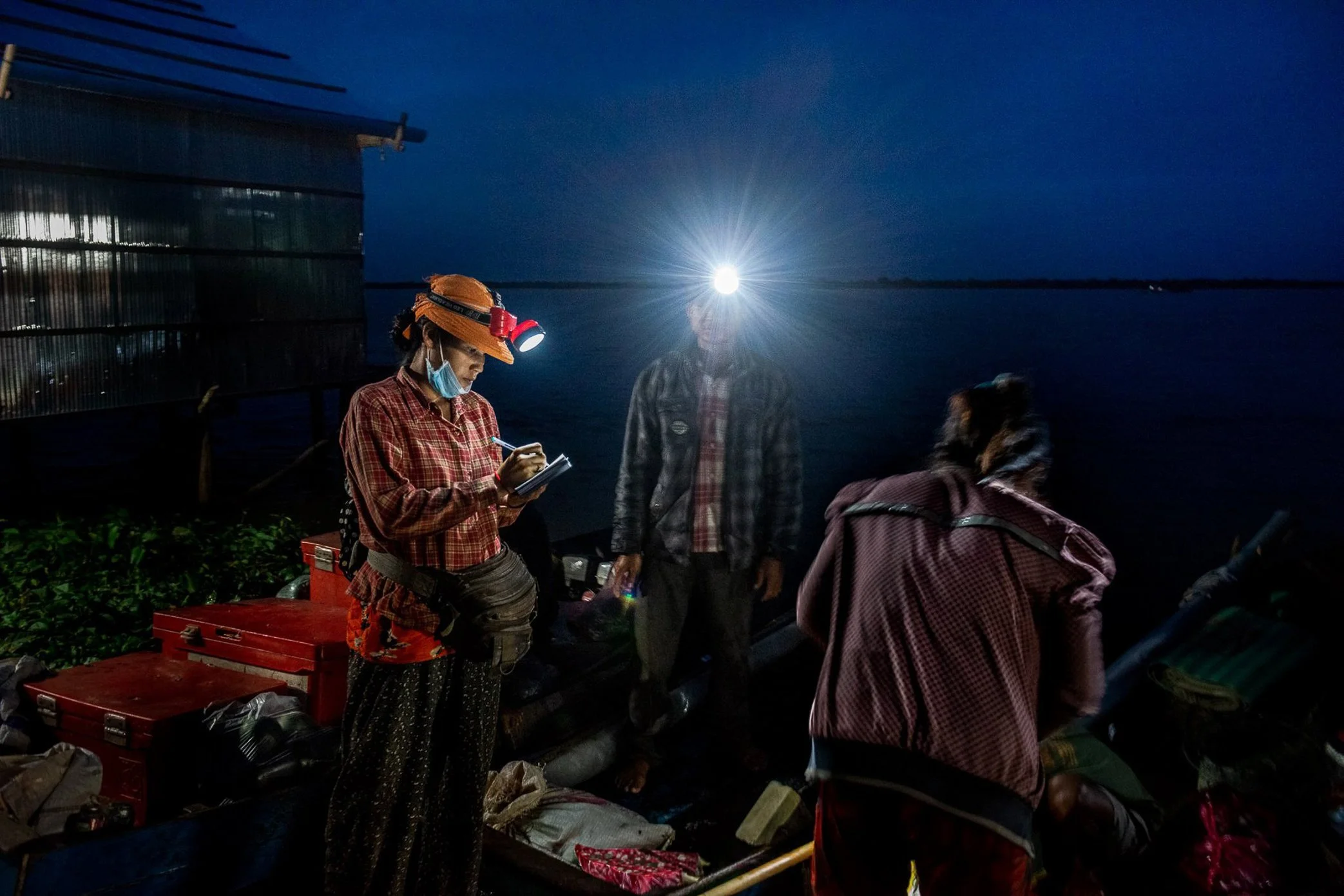
Overfishing on the Tonle Sap, Cambodia - On the Tonle Sap near Siem Reap, fishing does not end when the night is over. Before dawn, middlemen arrive to buy the catch from families who have worked through the dark. For many fishermen, catching more fish is not a choice but a necessity - the daily measure of whether a household can eat, repay debt, and continue living on the lake. But the pressure on the water has become heavier than the lake can carry. Each night, more fish are taken before the Tonle Sap has time to replenish itself. What once sustained generations is now being pushed beyond its natural rhythm. In this fragile balance, survival for one family can become part of a larger loss for the lake itself.