Kalighat: At the Edge of Being Seen
Kalighat is a historic neighborhood in south Kolkata, India, best known for the Kalighat Kali Temple and the dense urban life that surrounds it. Here, faith, poverty, illness, and social inequality exist side by side, often inseparable from one another.
At the far edge of this world are those who gradually slip beyond the notice of society, until what remains is a weakened body on a narrow bed inside a quiet shelter in Kalighat.
These photographs do not provide names, nor do they attempt to explain the full histories of the men within them. They record something quieter and more difficult: what remains when illness, poverty, and abandonment converge, and a human life is reduced to waiting, breathing, and the fragile hope of still being seen.
These images do not ask for pity. They reveal another truth about India - one in which the dignity of the poorest is not always protected by institutions, beliefs, or the grand language of society, but survives instead in small, fragile spaces that continue to receive them as human beings.
In the silence of this room, what is visible is not suffering alone, but a question directed at the social order itself:
When a life has been pushed so far to the margins that almost everything has fallen away, is that person still fully seen?
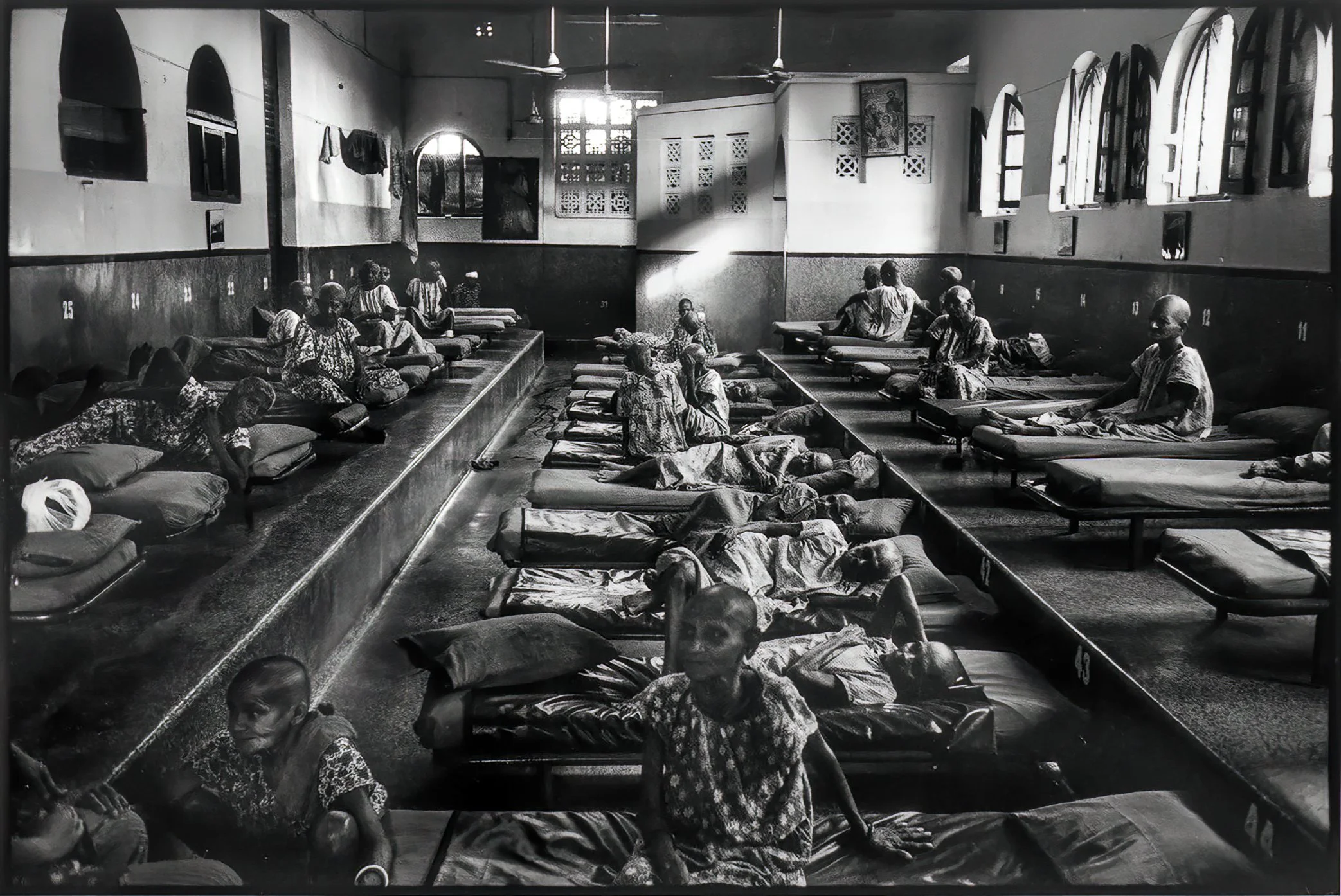
Kalighat, Kolkata, India, 2003 - A ward in Kalighat becomes a temporary refuge for men pushed to the edge of the city’s social order. Some sleep. Some wait. Others sit in silence beneath the high windows, their lives gathered into a single room of beds, light, and stillness. Kalighat is best known as a place of devotion, but beyond the movement of pilgrims and the language of faith lies another reality: the lives of those made almost invisible by poverty, sickness, and abandonment. These men are not presented here as symbols of pity. They are witnesses to a harder truth - that dignity does not always arrive through institutions or belief, but sometimes survives only in the small spaces that continue to receive the forgotten as human beings. In this room, silence becomes evidence.
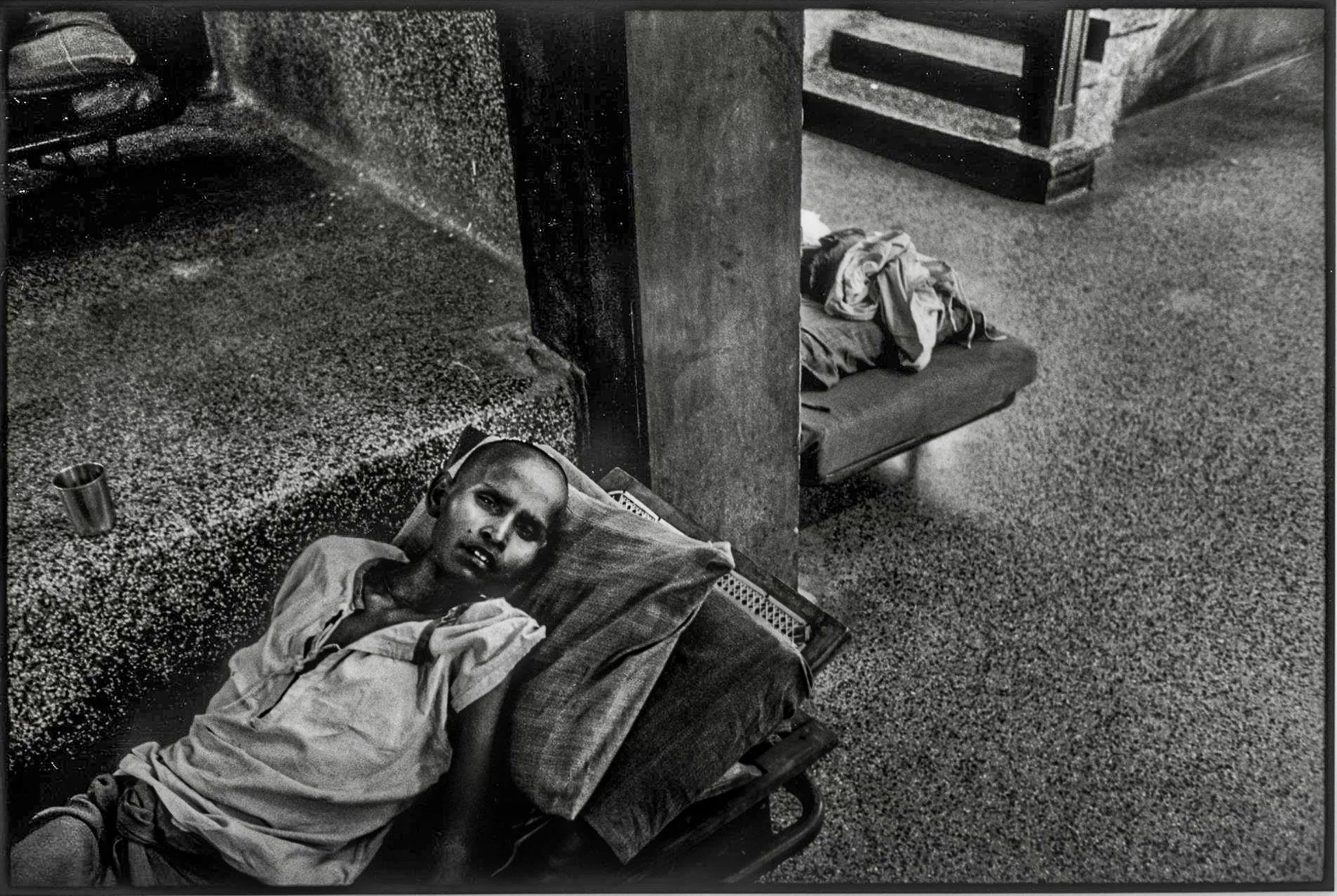
Kalighat, Kolkata, India, 2003 - A young man lies on a narrow bed inside the shelter, his gaze meeting the camera from a place where illness, exhaustion, and abandonment have already taken much from him. There is little in the frame to explain his full history — no family name, no diagnosis, no account of how he arrived here. What remains is quieter and more difficult: a body still breathing, a face still asking to be recognized, and a life suspended between care and disappearance. The photograph does not ask us to look at poverty from a distance. It asks something more direct: When a human being has been pushed this far to the margins, what responsibility remains for the rest of us.
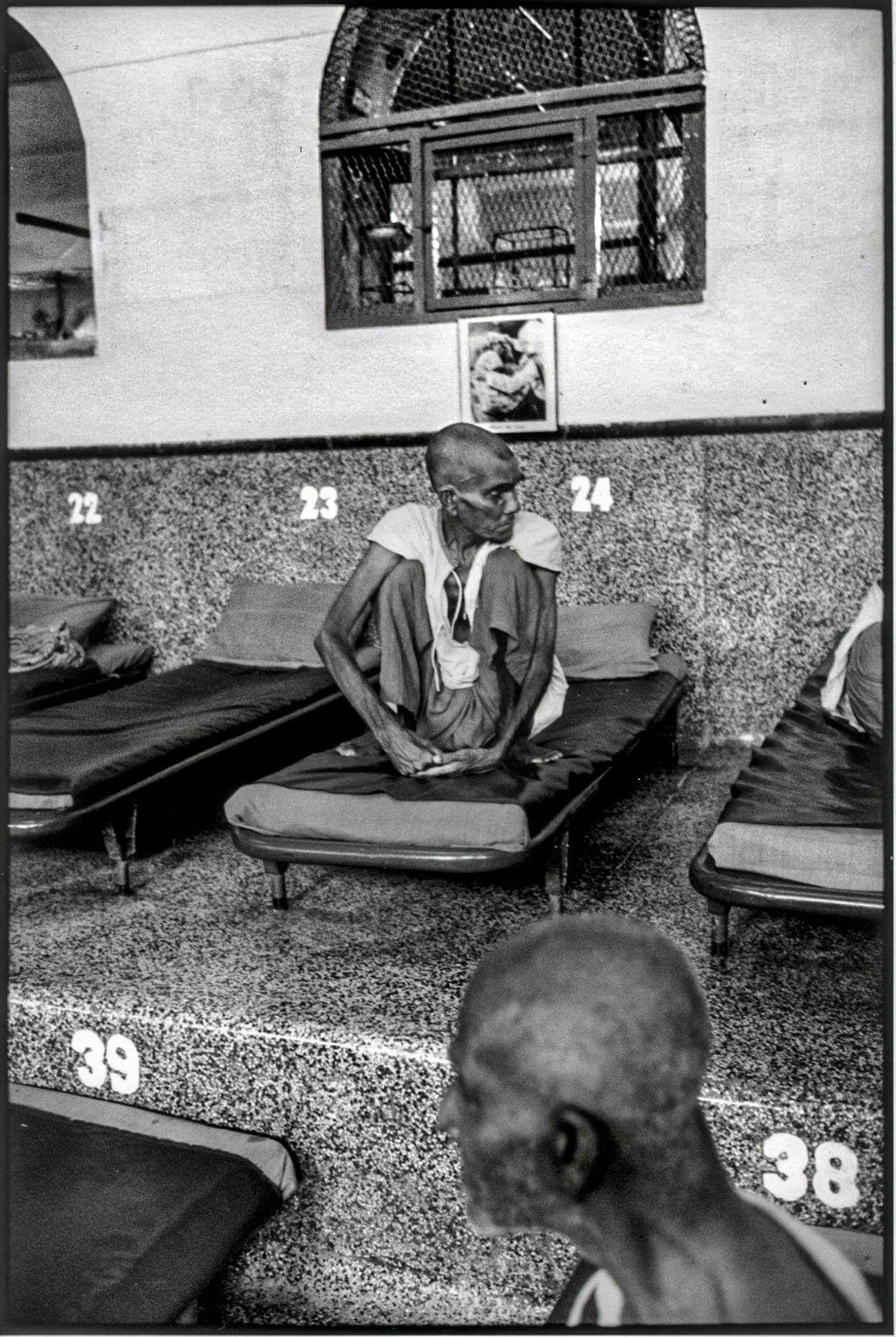
Kalighat, Kolkata, India, 2003 - Inside a quiet shelter in Kalighat, a man sits on a narrow bed beneath numbered walls, his body reduced by illness and age, yet still present with a fragile dignity. Around him, the room carries the signs of institutional care: iron beds, thin mattresses, open windows, and the silence of lives that have drifted beyond the protection of family, work, and ordinary society. This is not only an image of suffering. It is an image of visibility. In a city where faith, poverty, illness, and abandonment exist side by side, the question becomes unavoidable: When a person has lost almost everything, does society still know how to see him as fully human.