Cambodia’s Water Communities
In Cambodia, life on the water is shaped not only by fishing, but by everything the river and lake make possible - food, work, movement, family, faith, and memory.
On the Tonle Sap, floating and stilt-house communities live with the daily rhythm of the lake. Fishing shapes the household from night to morning: men leave for the water, families wait for the boats to return, children prepare for school, and the catch is sorted, packed in ice, carried, processed, or sent toward larger markets. Here, the lake is not only a place to fish. It is the ground beneath daily life.
Farther north, along the Sesan River, that relationship with water carries another story. In villages such as Srekor, the construction of the Lower Sesan 2 Dam brought not only resettlement, but the loss of homes, farmland, temples, ancestral graves, and the riverbank spaces where community life had existed for generations.
Together, these photographs look at Cambodia’s water communities through two connected realities: the fragile survival of families who still live from the lake, and the disappearance of river-based worlds transformed by development. What remains is a question that runs through both places - what happens when the water that sustains a community also becomes the force that changes it forever?
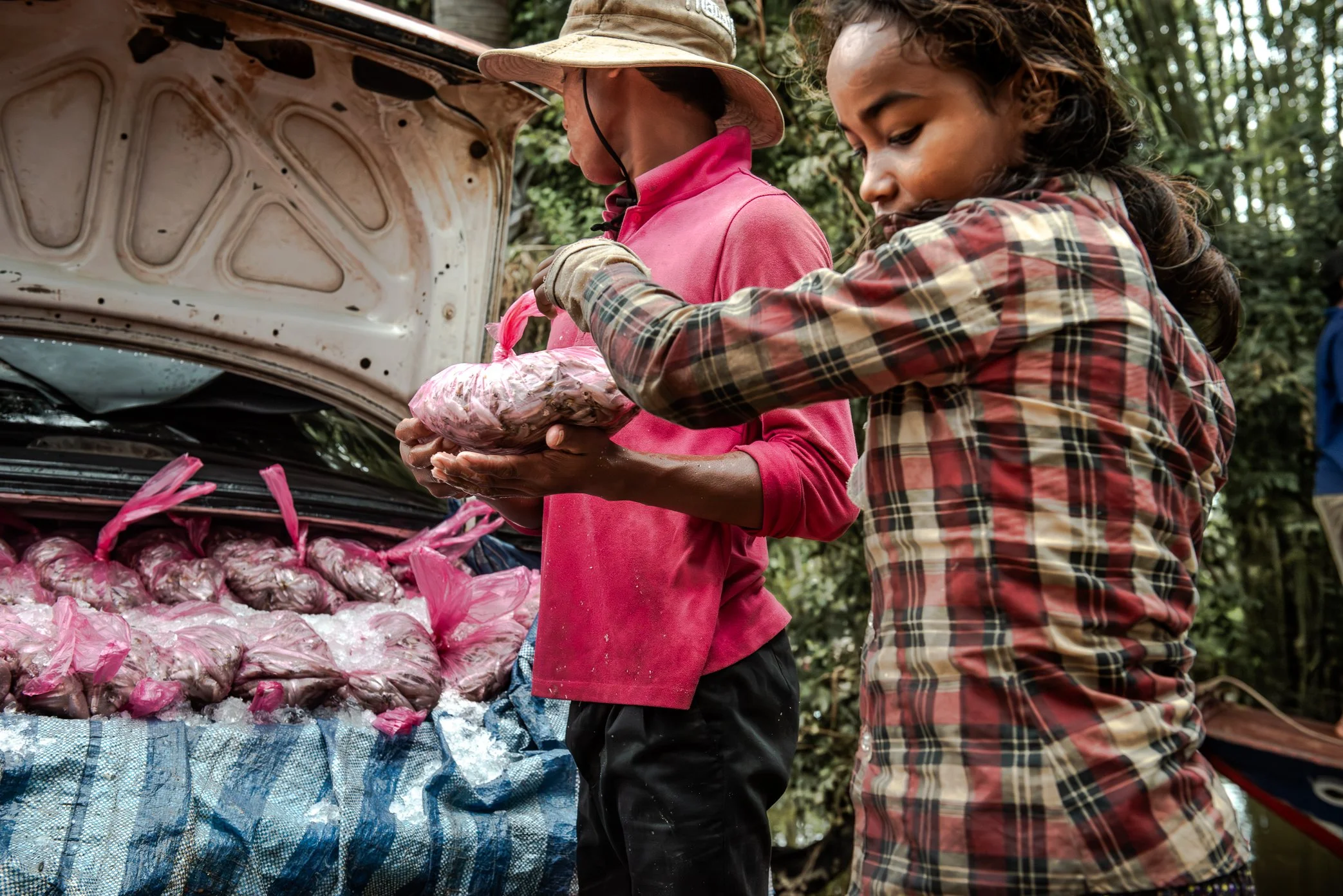
A fishing family in Kampong Phluk packs the previous night’s catch in ice before sending it toward larger markets near Siem Reap. On Cambodia’s Tonle Sap, one of the world’s most productive inland fisheries, the work of fishing does not end when the boat returns. Fish must be sorted, packed, cooled, and moved quickly before the heat reduces their value.
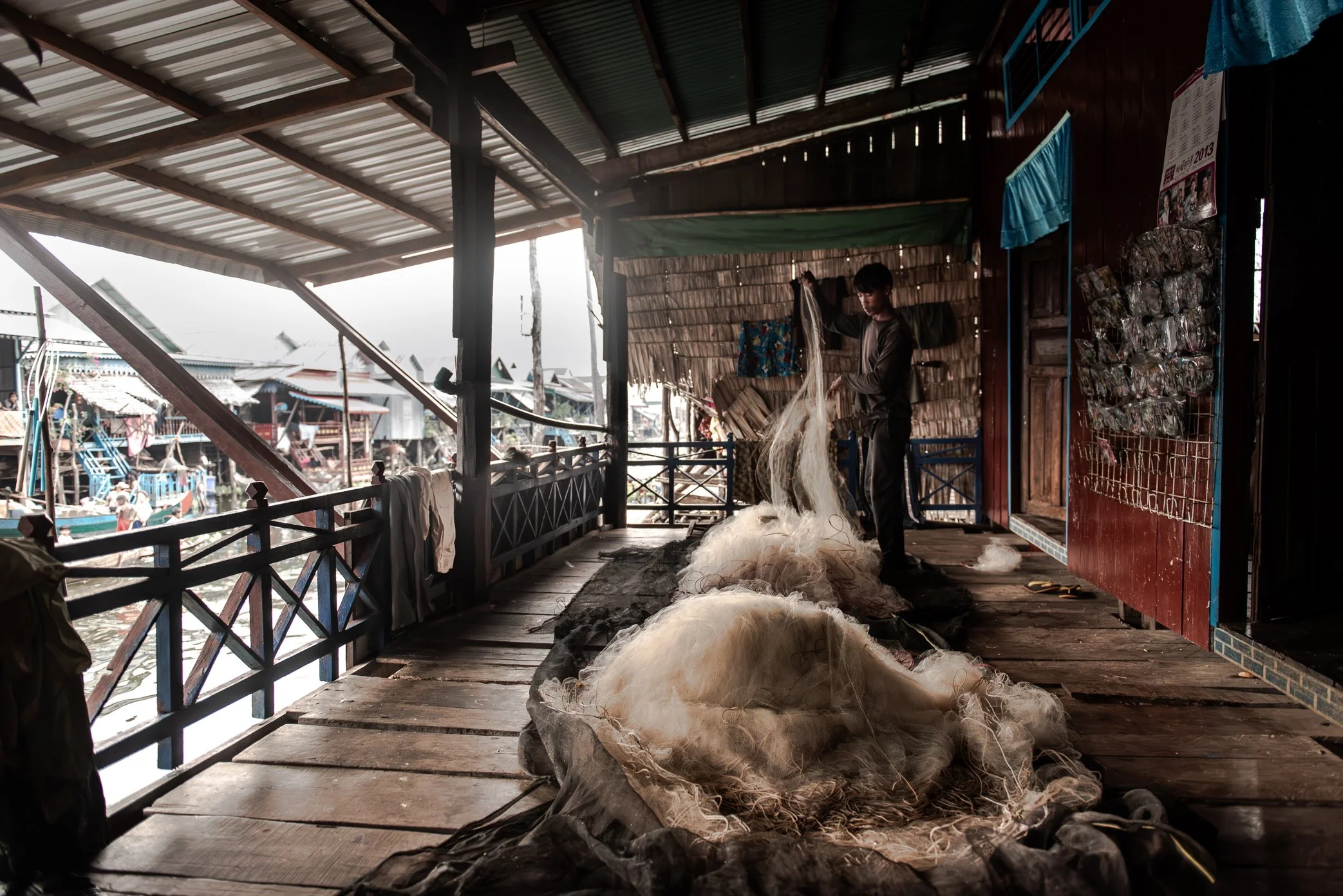
A fisherman cleans and repairs a fishing net outside his home in Kampong Phluk, Cambodia. The net stretches nearly 2,700 meters, a scale that reflects both the dependence of local families on the Tonle Sap fishery and the growing pressure on the lake’s resources. In floating and stilt-house communities, fishing gear is part of daily life - repaired, reused, and carried through seasons shaped by water, migration, and survival.
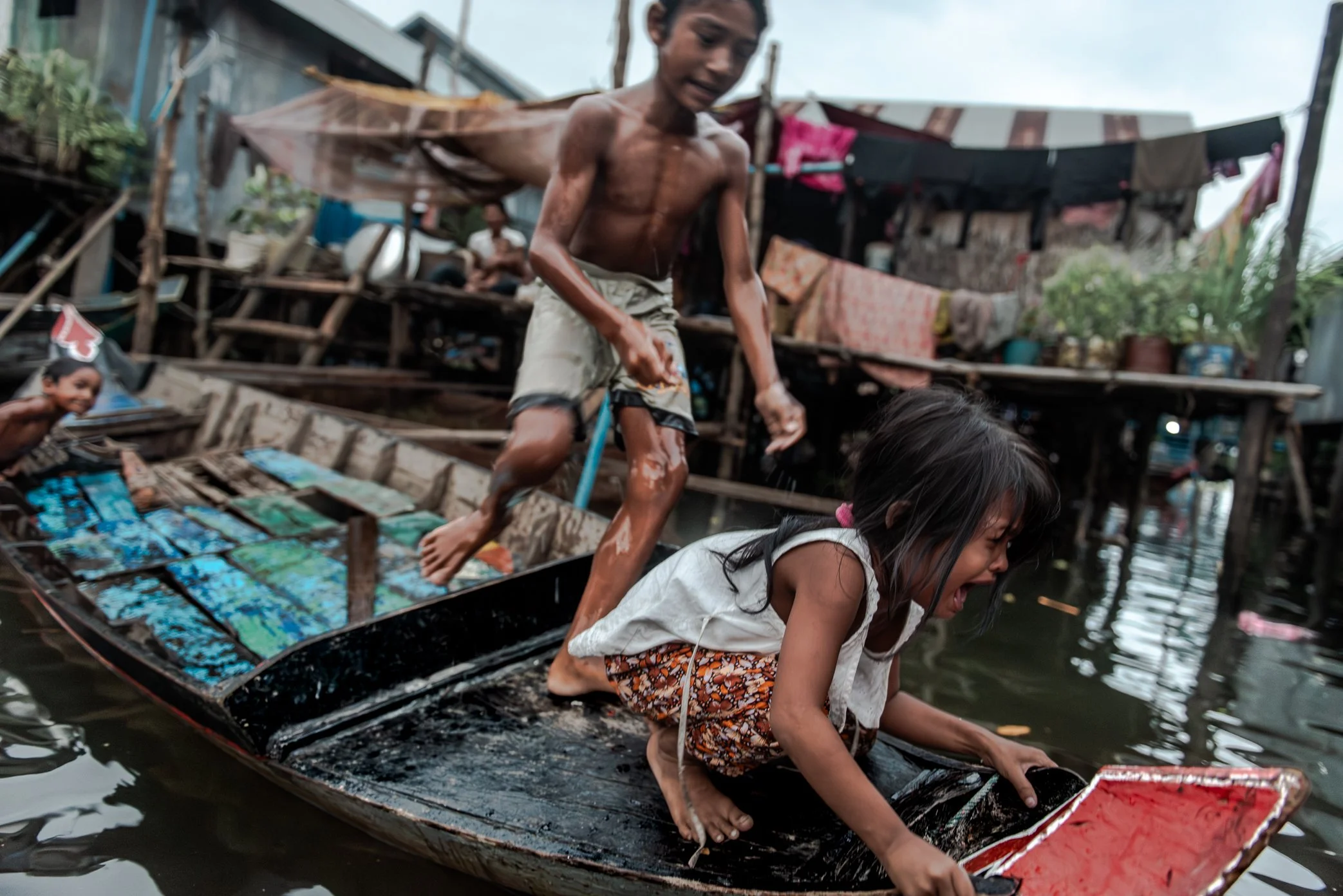
Children move between boats in Kampong Phluk, where daily life is lived on and above the water. In the floating village, even a short journey from one home to another can mean stepping across narrow boats, wet wooden edges, and shifting platforms. For fishermen’s children, the lake is both playground and pathway - a place they must learn to navigate from an early age.
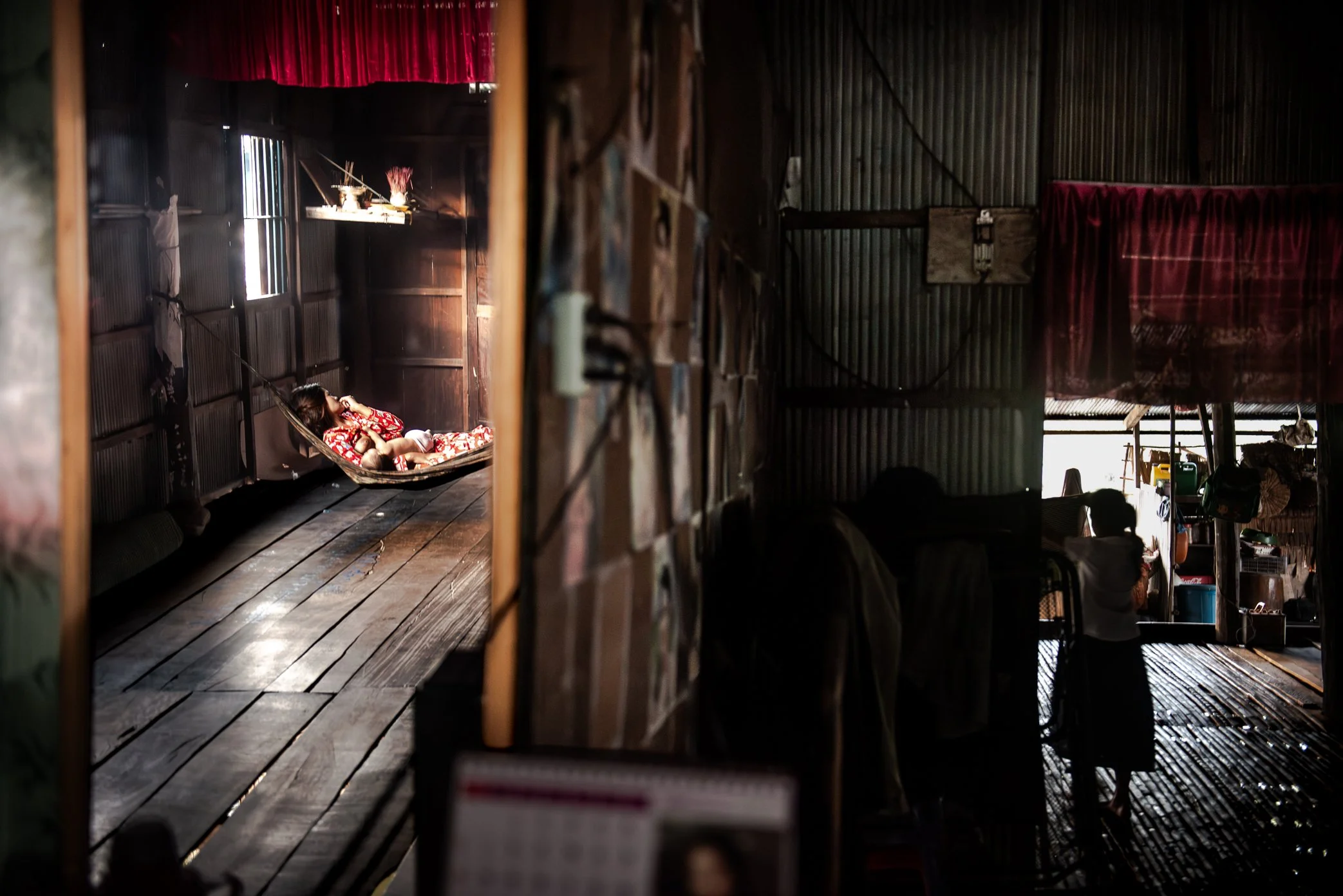
In the early morning inside a stilted home in Kampong Phluk, the wife of a fisherman waits for her husband to return from a night on the Tonle Sap. Their daughter prepares for school nearby, moving through the same quiet hours when the household waits for the boat, the catch, and the income the lake may bring.
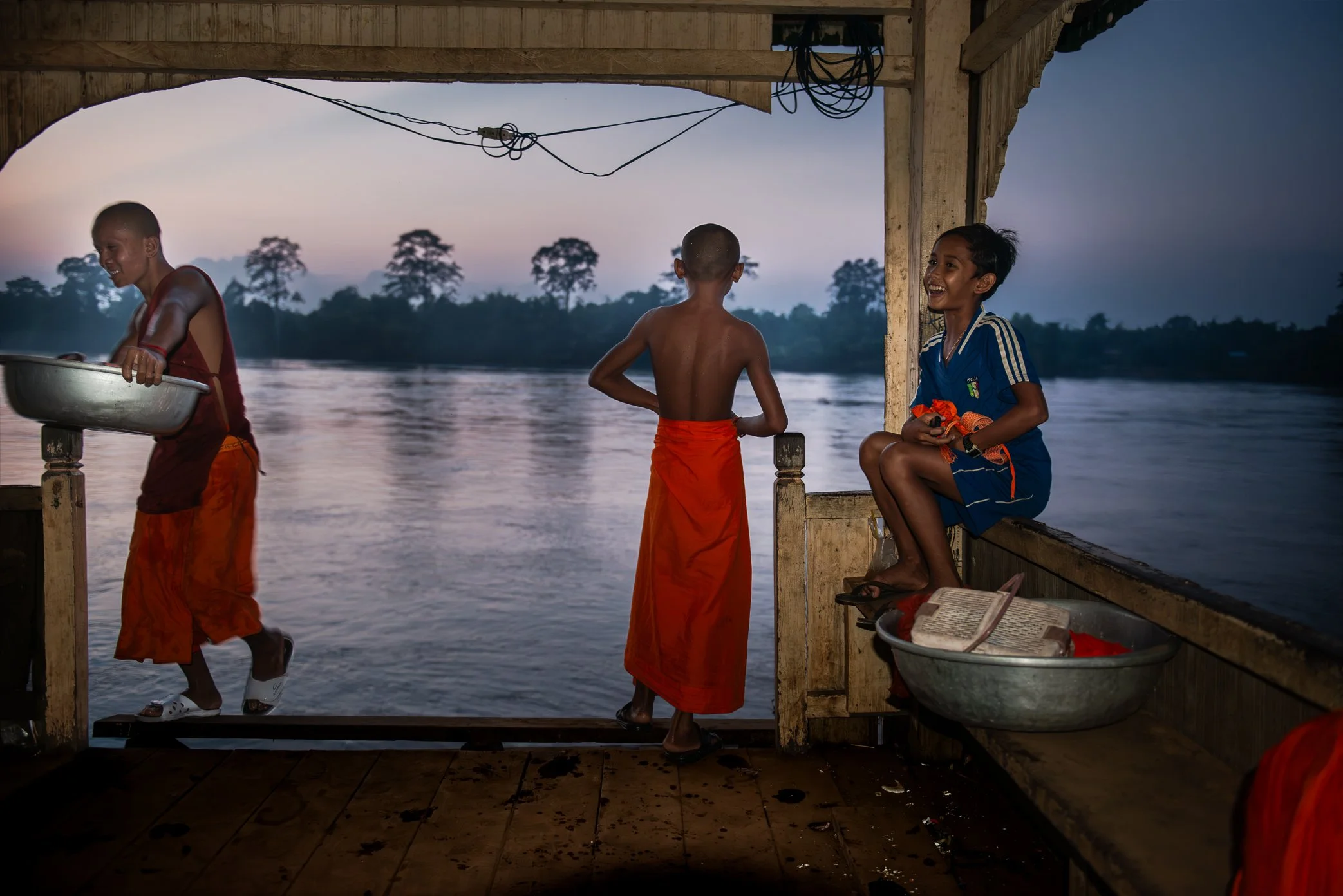
Novice monks move through daily life at a village temple near the Sesan River in northeastern Cambodia, before the area was transformed by the Lower Sesan 2 Dam. For communities such as Srekor and nearby villages, the loss was not measured only in houses or farmland, but in the disappearance of an entire way of life - temples, ancestral graves, riverbank routines, and the shared spaces where children, elders, monks, and families once lived with the rhythm of the water. When the reservoir filled, villages that had existed for generations were submerged or abandoned, forcing many families to leave behind not only their homes, but also the cultural and spiritual landscape that held their community together.
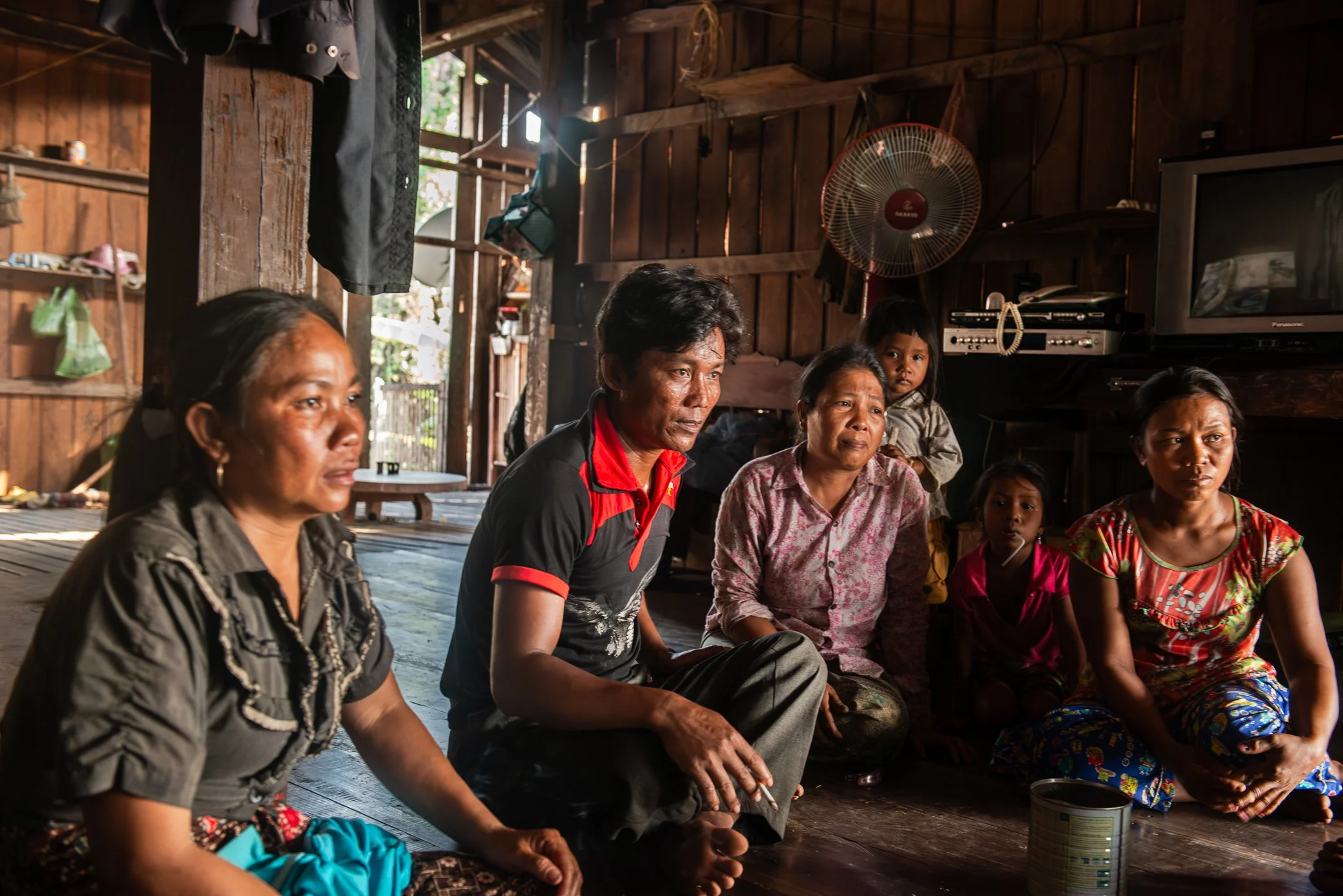
Srekor village, Stung Treng Province, Cambodia. Villagers meet inside a wooden home to discuss compensation and resettlement as the Lower Sesan 2 Dam moves forward. For families in Srekor, the question was not only how much money or land they would receive, but what could replace a life built around the river - homes, farmland, spirit sites, ancestral graves, and a community that had existed for generations. As the dam reservoir filled, Srekor was among the villages forced to leave the riverbank and face an uncertain future on higher ground.